As a Product Manager, we don't want our products to fail. Let us analyze some of the biggest failed products in technology to see why they failed.
This article covers the top tech failures across multiple categories.
We will go over social networks, phones, TVs, wearables, streaming, etc.
The point is to cover a wide variety of product categories to learn the best lessons from each example.
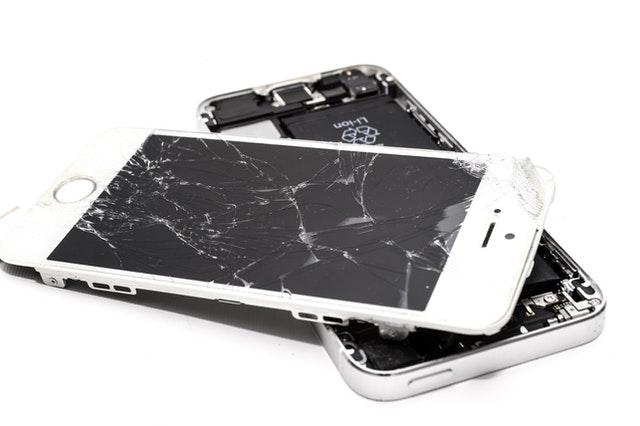
Top 12 Failed Products - List
Here is the list of the top 12 failed products of all time.
-
Orkut
-
Smart Glass
-
Google+
-
Amazon Fire Phone
-
Segway
-
Blackberry
-
Luxury Smart Watch
-
Foldable Smartphones
-
3D Maps (the 2012 Apple Maps launch)
-
3D TV
-
Nokia Smart Phone
-
Quibi
Let us now cover each product failure in detail.
This will help us better understand why some very strong products from some very strong companies failed to make a dent.
Different management lessons will be discussed with each different example.
The product market fit is a key underlying concept across all these examples.
QUIZ
Guess why it failed
Pick the reason the company gave, then read what it said.
Takes about five minutes
Product Failure Examples - Detailed
We will now cover each product failure example in detail.
Orkut
Orkut in the Product Graveyard →
A social network that led in Brazil and India until Facebook passed it.
Orkut was a popular social network and it was a great product, but Marissa Mayer, then a Google vice president, said in 2010 that it never caught on in the US because it got far too slow after launch.
Smartphones were not widely popular back then and the concept of "mobile apps" was primitive.
By the time the app industry on smartphones was starting to boom, Facebook had already made a killing worldwide.
It caught up with MySpace in monthly visitors in April 2008, three months before Apple's App Store opened.
Orkut held on longer in India and Brazil. Facebook passed it in India in July 2010 and in Brazil in December 2011, when comScore still counted 34.4 million Brazilian visitors to Orkut, up 5 percent on the year.
Google's farewell post in 2014 didn't mention Facebook. It said YouTube, Blogger and Google+ had outgrown Orkut, so Google would focus its "energy and resources" on them.


It is important for any social network to exert authority much beyond its size and scale. But, you still need to reach a decent user base.
Smart Glass - Immense Potential
Google Glass in the Product Graveyard →
Lack of a fashion sense is what most people say was the reason for the failure of Google Glass.
The BBC's Rory Cellan-Jones wrote that "it makes its users look daft" on the day in January 2015 that Google said it was closing the Explorer program. PCWorld described a backlash over the price, the "clunky design" and the ability to secretly record video.
Google's own announcement gave no reason. It said Google was closing the program "so we can focus on what's coming next".
Astro Teller, head of Google X, said in March 2015 that Google had allowed "too much attention for the program", so Glass was talked about as if it were a finished consumer product.
"I just didn't know anything about consumer electronics supply chains really," Sergey Brin said in 2025. He hadn't understood how hard it would be to build Glass at "a reasonable price point".
Sameer Samat, president of Google's Android ecosystem, said in May 2026 that the most important thing he had learned from Glass was that "fashion comes first, technology comes second."
The concept was great and it seemed to solve a real world issue. It promised you information without using your phone or your computer.
But, nobody wants something to look clumsy on their face.
In India, Reliance showed off the Jio Glass in 2020, an accessory built for virtual meetings with holographic projections. It never became a mainstream consumer product.
Apple finally launched its own take, the Vision Pro, in 2024, starting at $3,499 in the US. Even Apple's sense of fashion, usually reliable except for the Apple Watch Edition (more on that later), has not convinced people to wear a computer on their face all day.
One version of the idea that is actually selling, Meta's Ray-Ban smart glasses, leads with fashion. They look like regular glasses first and a gadget second. Which proves the original point. Nobody wants something clumsy on their face.
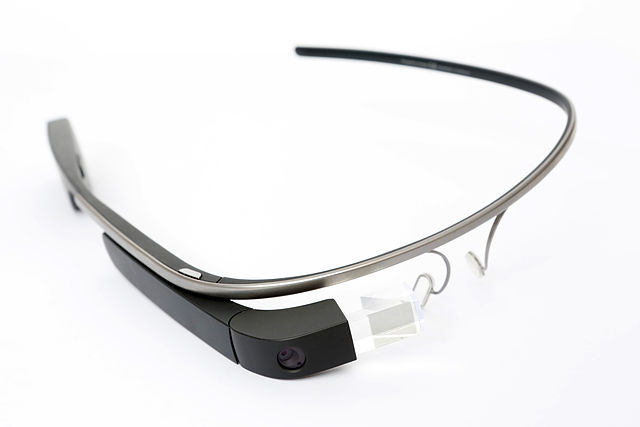
Photo by Tim.Reckmann (resized) · CC BY-SA 3.0 · Source

It is important to have a strategy or framework in place before launching a new product.
Google+
Google+ in the Product Graveyard →
Google has a long list of failed products. I think lack of focus defines this one. Google+ as a social network never even took off. At least Orkut had a great userbase.
To me, the social network was too complex and only seemed to work as a sign-on service for Google.
Remember to follow the KISS principle.
There was no user connect and the product felt forced.
Google's shutdown post in October 2018 said the consumer version had "low usage and engagement", with 90 percent of user sessions lasting less than five seconds, and that a Google+ product meeting consumers' expectations was hard to build and maintain.
It looked like a half hearted attempt by Google to take on Facebook, but it wasn't.
Mashable's 2015 account, based on interviews with more than a dozen Google insiders and analysts, says Google+ had upwards of 1,000 staff and that Google tied employee bonuses to its success. The same account says Google launched it "without a clear plan to differentiate the service from Facebook."
Google shut the consumer version down in April 2019.
Facebook does one thing, but does it right. If you are developing a software, make sure you know why you are building it.


Amazon Fire Phone
Amazon Fire Phone in the Product Graveyard →
I think lack of focus is true for this one as well.
The Kindle e-reader took off because it managed to find a great market fit.
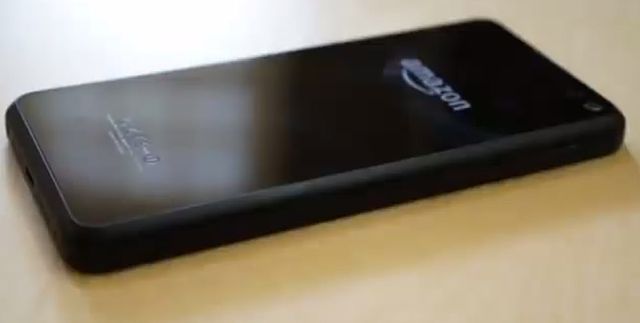
But, the phone entered a crowded market in July 2014 at premium-phone prices, $199 on a two-year contract.
Amazon pitched it as the only smartphone with Dynamic Perspective and Firefly. Fast Company reported that reviewers knocked its gimmicky features, especially Dynamic Perspective, and that in their view the cost was what Amazon got most wrong.
There was no compelling reason to switch over from an iPhone to an Amazon phone.
.jpg)
Amazon's devices chief, David Limp, agreed with the reviewers about the price. "We didn't get the price right," he told Fortune in October 2014. "I think people come to expect a great value, and we sort of mismatched expectations." By then Amazon had cut the on-contract price to 99 cents.
Amazon had already proved with the Kindle that it could build hardware people wanted. Managing wildly different products is just that hard, even for the best product leaders.
Segway - Classic Failed Product
Segway PT in the Product Graveyard →
This was supposed to change personal transport forever. People were supposed to stop walking. Travelling by a Segway was the future.
Well, guess what. People still walk.
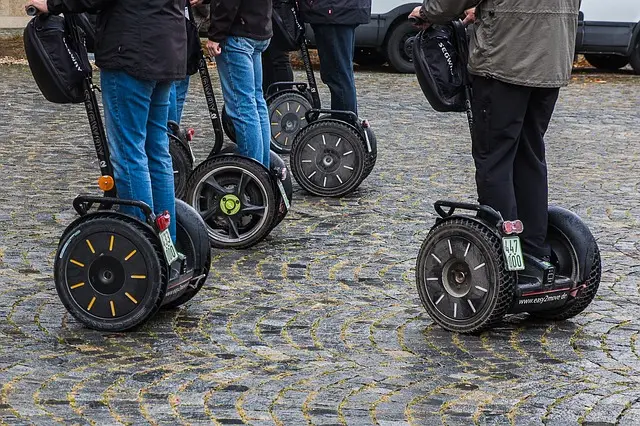
Segway itself retired the original PT in July 2020, after selling only around 140,000 units in nearly two decades. By the end, its buyers were mostly police and security departments and tour groups.
Segway's retirement statement gave no reason for the decision and said the pandemic "was not a deciding factor".
Tony Ho, a Segway vice president, told CNN in June 2020 that at a price starting at $6,000 and sometimes reaching $10,000, only police departments and tour groups could afford it.
In an interview with Fast Company, Judy Cai, Segway's president, also named the PT's durability as one reason sales never grew quickly.
I think this is a great example of a tool that most people didn't need.
Blackberry - Failed Products
BlackBerry in the Product Graveyard →
These were the iPhones of their times. A Blackberry phone was a status symbol. Everyone who was anything owned a Blackberry.
What happened then? A lot of people say Blackberry became complacent.
Fortune's account of the book Losing the Signal says the first iPhone "wasn't perceived as a threat to BlackBerry's core business". Co-founder Mike Lazaridis recalled telling his staff, "If that thing catches on, we're competing with a Mac, not a Nokia."
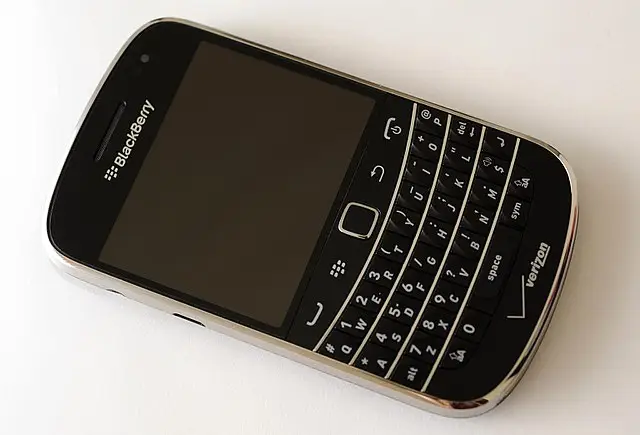
Photo by Steven H. Keys, keysphotography.com (resized) · CC BY 4.0 · Source

Blackberry's own annual filing in March 2013 said it had lost share to Apple's iOS and to Android phone makers, and the first factor it listed was buyers' preference for "devices with access to the broadest number of applications".
In October 2012, a New York Times story, quoted by HuffPost Canada, found owners who said the device had become "a magnet for mockery and derision from those with iPhones and the latest Android phones".
It lost the tag of an "aspirational product". In January 2022 Blackberry switched off the services behind its BlackBerry OS and BlackBerry 10 phones, and said they would "no longer reliably function", phone calls included.
Agility was probably not the hallmark of Blackberry. It probably behaved more like a Waterfall company.
Luxury Smart Watch
Remember the gold Apple Watch Edition, priced at up to $17,000 in 2015? I don't blame you if you don't.
To me, it looked like a replacement for a luxury Swiss watch. Beyonce was seen wearing it.
But what happened? Did it replace the Rolex? Most definitely not.
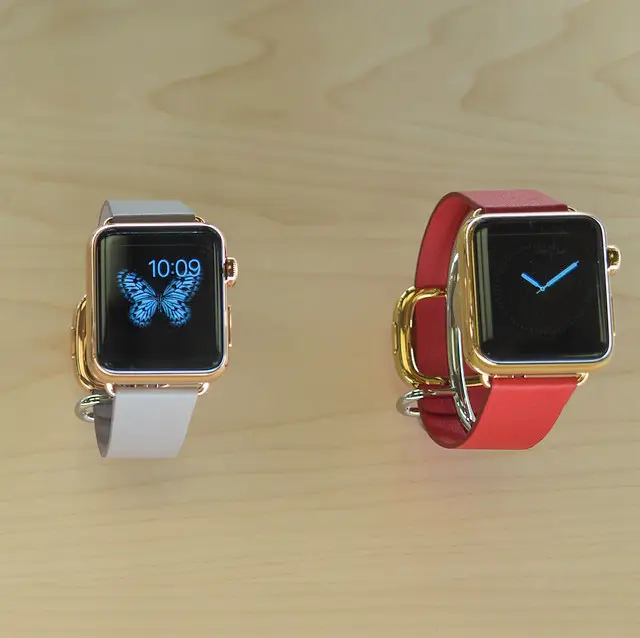
Photo by Jimmy Baikovicius (resized and brightened) · CC BY-SA 2.0 · Source
In September 2016, Apple introduced a ceramic Edition starting at $1,249 in the US and dropped the gold models, about 16 months after they went on sale. Apple never gave a reason. Jeweller magazine asked Apple for comment and got no reply before it published.
Bloomberg reported in 2019, as relayed by MacRumors, that Apple's gold Edition sales were "in the low tens of thousands" of units, with "few after the first two weeks".
Apple has not had very many failed products in the recent past.
I think Apple did not clearly understand its target audience. If the goal was to be a luxury watch, then the target audience was anyone who could afford a Rolex.
The next step was to understand the brand appeal and the product appeal of a Rolex. A Rolex does not sell because it has a voice assistant that can make phone calls for you. A Swiss watch is a timeless piece of luxury, a status symbol. This symbol was not born overnight. It took decades to become a symbol of luxury.
Even if this was a great product, it probably was not managed correctly. It probably also was not priced or marketed correctly.
Foldable Smartphones
Foldable screens have been doing the rounds for years now.
The original Samsung Galaxy Fold launched in 2019 as a device that, Samsung said, was "creating a new mobile category".
Instead, review units started breaking within days, and Samsung had to delay the launch by months to fix the design.
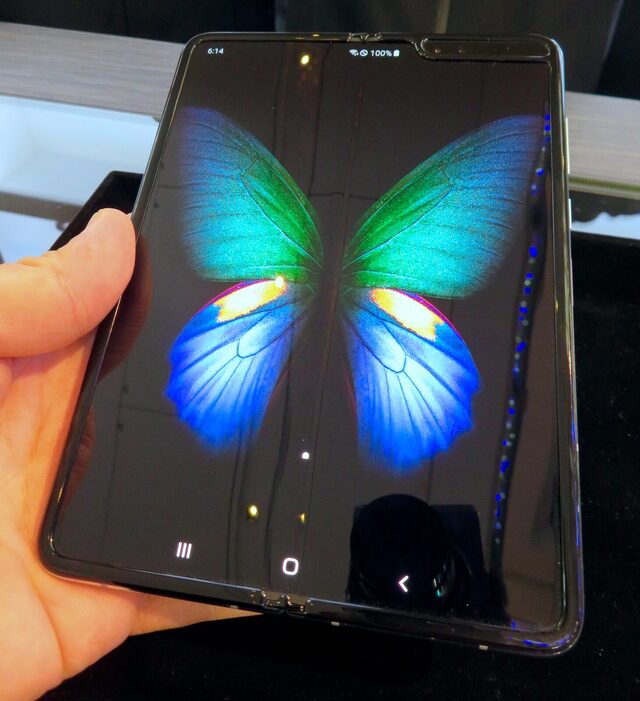
Photo by KKPCW (resized) · CC BY-SA 4.0 · Source

Samsung said the initial findings of its inspection showed the display problems could be associated with impact on the exposed areas of the hinge, and in one case with substances found inside the device. Its mobile chief, DJ Koh, later told The Independent, "It was embarrassing. I pushed it through before it was ready."
The idea of a foldable screen itself sounds flimsy. People drop their phones all the time. I cannot imagine how careful one must be to take care of a foldable screen.
To Samsung's credit, it kept iterating, and foldables have since carved out a small niche. But the first Fold remains a textbook example of shipping before the product was ready.
3D Maps - The Apple Maps Launch
In September 2012, Apple replaced Google's maps on the iPhone with its own Maps app in iOS 6. One of its headline features was Flyover, which Apple described as "photo-realistic interactive 3D views".
Flyover looked buggy from the start. The developers probably didn't use Jira to track their defects!
Washington State's transport department tweeted that, whatever iOS 6 showed, the Tacoma Narrows Bridges "have not melted". AppleInsider described bridges "that appear to be melting into the earth".
Nine days after the release, Tim Cook apologized. "With the launch of our new Maps last week, we fell short on this commitment," he wrote, and he suggested rival map apps while Apple fixed its own.
Eddy Cue, who was put in charge of Maps that October, said in a 2016 interview with Fast Company, reported by TechCrunch, that Apple "had completely underestimated the product, the complexity of it". TechCrunch reported in 2018 that Apple was rebuilding Maps on its own data, and called reliance on third-party data "one of its major pitfalls from the beginning".
In April 2026, Cook called the launch his "first really big mistake" as Apple's boss and told staff, "The product wasn't ready," Bloomberg reported.
Flyover itself survived. In October 2026, Apple's iOS 27 feature list showed it in 359 locations.
Also, not sure how many are aware of this, but the 3D feature rarely works in developing countries.
The 3D feature works great in well mapped cities like New York, but not in New Delhi.
As a Product Manager, we need to have a clear USP in mind. We need to make sure that through out our Scrum or Kanban processes, our focus on the USP is not lost.
3D TV - Failed Products Category
3D TV in the Product Graveyard →
3D TVs were a rage when they were first launched. I bought one too! But the entire category is now a failed product category. Even the last holdouts, LG and Sony, dropped 3D from their 2017 models.
I was even given "complimentary" 3D glasses when I bought my 3D TV. It was finally time to test the TV out. I was super excited and couldn't wait to turn my regular movies into 3D movies.
Nothing happened.
The 3D experience was minimal, at best. More often than not, the 3D experience was extremely under-whelming.

LG's Tim Alessi told CNET that 3D was "just not a key buying factor when selecting a new TV" and that "anecdotal information indicated that actual usage was not high". Samsung had already dropped it from its 2016 models, citing "the limited consumer demand for 3D, and the small amount of content being produced in this format".
I think there were a few failure reasons at play here.
First, the product proposition was not clear.
It was not immediately clear whether any movie on TV can be converted to 3D or only a certain type of movie can be a 3D movie.
For the longest time, I was under the impression that anything could be magically turned into 3D.
But, of course, that was not the case.
Samsung had promised at CES 2010 that its "3D processor can convert 2D content to 3D in real-time", and New Atlas found that the converted effect "isn't as dramatic as watching native 3D content".
Second, the actual user experience at home was very different from the user experience in a movie theatre.
In a cinema hall, people don't mind sitting still with 3D glasses on.
At home, that simply does not happen.
People are distracted by a plethora of things and they constantly have to take off their 3D glasses.
When the BBC said in 2013 that it would suspend its 3D programming for a "lack of public appetite", its head of 3D, Kim Shillinglaw, said audiences found it "quite hassly". She added, "I think when people watch TV they concentrate in a different way."
Failed products are more often than not a result of failed communication.
Nokia Smart Phone
Windows Phone and Nokia Lumia in the Product Graveyard →
I was actually excited by the launch of the Nokia smart phone, coupled with the Microsoft partnership.
The Microsoft UI looked great and the Nokia hardware partnership helped.
But, the phone did not do well.
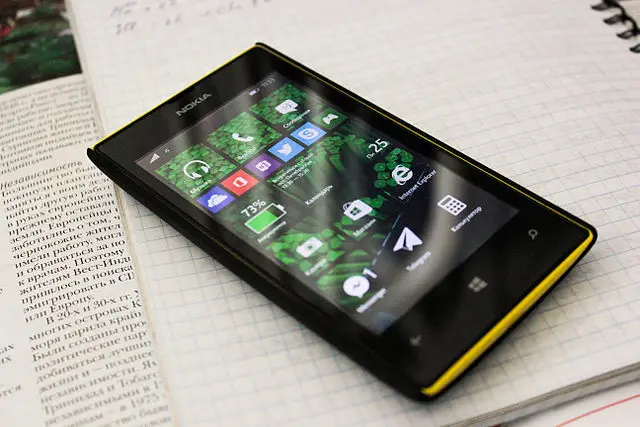
Photo by Enterely (resized) · CC BY-SA 4.0 · Source

One reason for the failure was the lack of third party developer interest in creating another version of their apps, after already building them for the Android and the Apple markets.
Joe Belfiore, a Microsoft corporate vice president, tweeted in October 2017 that Microsoft had paid developers and even written apps for them, but that the "volume of users is too low for most companies to invest". Satya Nadella wrote in his 2017 book Hit Refresh, quoted by Windows Central, that "it was too late to regain the ground we had lost".
This was a lost opportunity for Nokia.
Quibi - The $1.75 Billion Failure
Quibi in the Product Graveyard →
Quibi earns its place on this list because it failed with every possible advantage.
It raised $1.75 billion before launch. It was run by Jeffrey Katzenberg and Meg Whitman. It launched in April 2020 with Hollywood content made specifically for phones, in ten-minute episodes called "quick bites".
Six months later, it announced it was shutting down. The app had about 500,000 subscribers against a first-year projection of more than 7 million, CNBC reported, citing people familiar with the matter. In January 2021 Roku bought Quibi's content distribution rights and didn't disclose the price. MacRumors, citing The Wall Street Journal, put it at less than $100 million.
The failure reasons stack on top of each other. Quibi charged for short mobile video, and analyst Rich Greenfield told NBC News it was hard to break in "as a subscription app without a free initial offering". It launched into lockdowns, when nobody was commuting. And at launch, TechCrunch reported, you could not watch it on a TV or share screenshots of what you were watching.
The founders' shutdown letter said Quibi was likely failing either because the idea itself wasn't "strong enough to justify a standalone streaming service" or because of its timing, and that they suspected "a combination of the two". Katzenberg told CNBC the next day, "We asked people to pay for it before they actually understood what it was."
No amount of funding or star power can substitute for a working product feedback loop. The signal was there within weeks. In October, the founders wrote, "we feel that we've exhausted all our options."
The Same Failure Patterns, Now in AI Projects
The newest entries in this category are not phones or TVs. They are the AI pilots quietly dying inside companies right now.
The failure patterns are the same ones in this list. An AI project priced above what its users expect to pay is the Fire Phone all over again. One that chases the technology instead of the user? That's 3D TV. And Quibi is what happens when a big budget gets mistaken for product market fit.
I wrote a separate breakdown of why AI projects fail and how to spot the warning signs early. If your company is starting an AI initiative, it's much cheaper to learn from someone else's failed product than from your own.
Take the AI readiness assessment before you commit a budget. It takes about four minutes.
Failed Products Conclusion
In the end, success of a product rests on the shoulders of a Product Manager. Equally, if not more important, is the fact that failure also rests on the shoulders of a Product Manager.
That is why it is critical to understand the Product Life Cycle.
At the same time, it is important for a Product Manager to be product agnostic.
A lot of courses available online focus on what is product management. But very few highlight product failures as an example of what can go wrong.
RELATED READING
Best Product Strategy Frameworks
Choosing the right product strategy framework is very important for every product manager. We will go over some top models like Kano, OKR, Hooked, etc. The same frameworks apply when you're shaping…
Product Life Cycle - Definition and Examples (2026)
The product life cycle (PLC) is the series of steps through which every product goes. Product life cycle stages - Introduction, Growth, Maturity and Decline.
What Does A Product Manager Do - Job Description, Role & Responsibility
The Product Manager Job Description has a few things in common across companies. Essentially, the Product Manager is the CEO and the janitor of the product.
Efficient Product Feedback Loop - Best Customer Strategies & Latest Tools
An efficient and easy product feedback loop is an essential component of every successful product. Your target audience should know how to reach out to you.
Must Have Product Manager Skills
This is your critical Product Manager Skills List - Your Ultimate Guide to becoming a great PM. These necessary skills will ultimately define your success.
Why AI Projects Fail: A Pattern Guide for SMB Leaders
I've been on the receiving end of more failed AI projects than I'd like to admit. Some I ran. Some I inherited and tried to save. Some I was asked to do a post-mortem on after the original team had…
Why Most SMB AI Pilots Fail (and 3 Things That Save Them)
Most SMB AI pilots fail. The exact rate depends on how strict you want to be about what counts as failure, but the published numbers and what I see in the field both point in the same uncomfortable…
FREQUENTLY ASKED
- What's the most common reason products fail?
- No real market need. The team built something well-engineered for a problem customers didn't have, or had but weren't willing to pay to solve. The fix is upstream: validate demand before building, not after.
- Is product failure always avoidable?
- No. Some failures come from market timing nobody could have predicted, or from competitive moves that change the market mid-build. The avoidable failures are the ones with predictable patterns: vague strategy, weak feedback loops, mis-priced features, premature scaling. Those are the ones to study.
- What's the most useful lesson from failed products?
- Most product failures rhyme. The patterns repeat: building before validating, scaling before fit, ignoring early signal, and committing to a vision past the point where evidence calls for a pivot. Studying past failures helps not because you'll see your exact situation, but because you'll recognize the shape when it shows up in your own roadmap.