TV and video · OCT 1, 2026 · 6 MIN READ
3D TV

- Company
- Samsung, LG, Sony and others
- Category
- TV and video
- Launched
- 2010
- Ended
- 2017
- Stage reached
- Introduction
- AI product
- No
- Status
- LG and Sony, the last two major makers, dropped 3D from their 2017 TVs
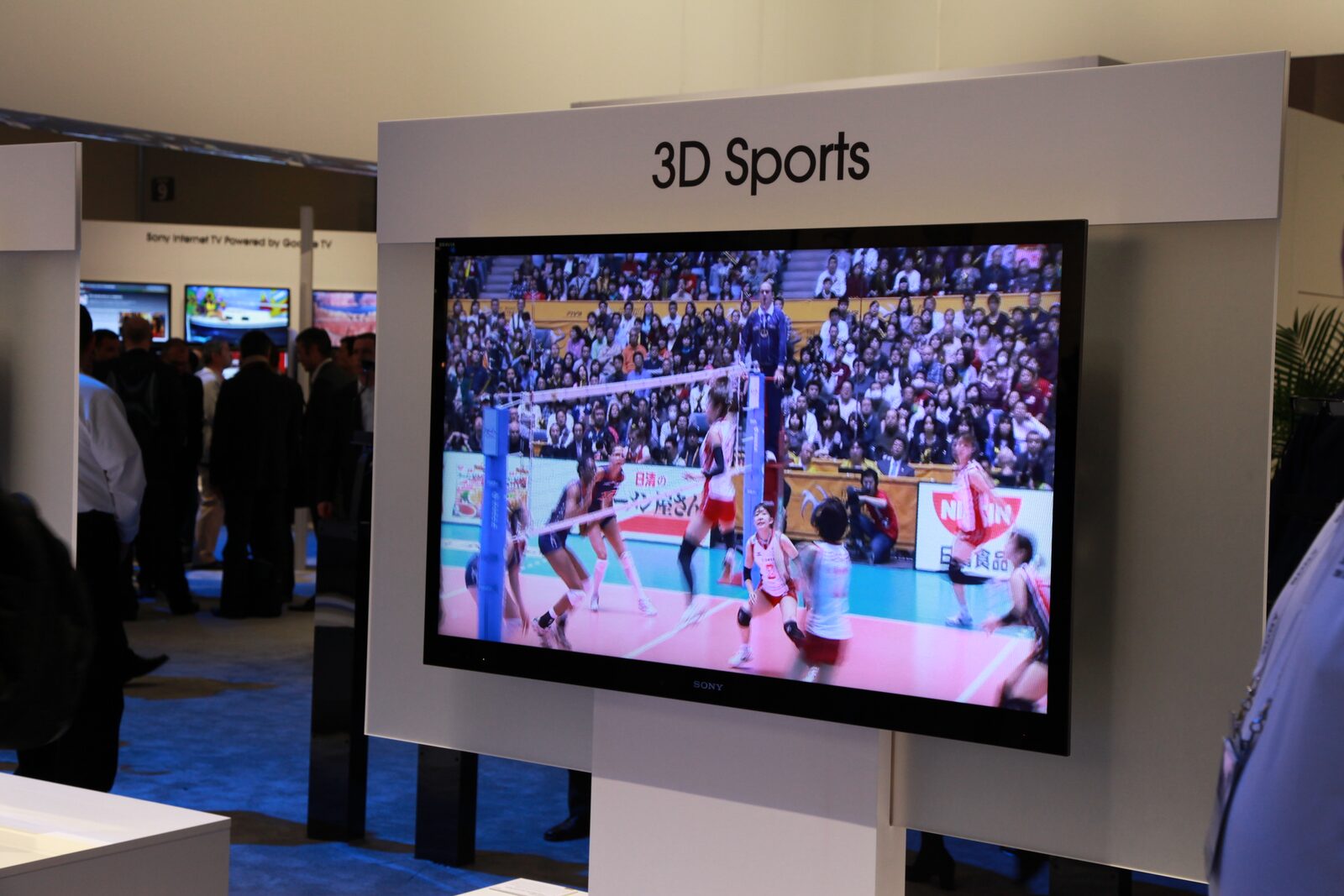
TV makers offered 3D on selected flat-panel sets from 2010, until LG and Sony, the last two major makers still supporting it, dropped 3D from their 2017 models. Millions of sets shipped with the feature, and NPD DisplaySearch said in 2012 that owners hadn't watched much 3D on them.
What it was
3D TV was a television feature that showed movies and shows in 3D to viewers wearing special glasses.
Watching it took a 3D-capable TV, glasses for each viewer and the 3D version of the show or movie, CNET wrote in 2017, though some TVs also offered a simulated 3D mode. CNET said the success of Avatar in 3D at the box office "helped encourage renewed interest in the technology."
At CES 2010, Samsung's president for the US market, Tim Baxter, promised "the complete cinema experience at home", TechRadar reported. The company also said its 3D processor could "convert 2D content to 3D in real-time".
New Atlas wrote in April 2010 that the conversion did add depth, but "the effect isn't as dramatic as watching native 3D content".
What happened
3D TVs were on sale in Korea and the US by March 2010, and by 2017 none of the major TV makers put 3D in their new models.
AP reported on March 9, 2010 that Samsung and Panasonic would start selling them in US stores that week.
Baxter said he expected 3D in 3 million to 4 million of the TVs sold in the US alone that year. In January 2011 DisplaySearch said shipments had made "steady, although slightly disappointing, progress", with 3.2 million 3D TVs expected worldwide for 2010.
NPD DisplaySearch put 3D TVs at 25 million units in 2011, and NPD Group figures reported by CNET had 3D at 23 percent of TV sales dollars in 2012.
DirecTV's n3D channel went live in July 2010. In June 2012 DirecTV cut it to part-time, while saying in a statement that "3D adoption continues to grow", Advanced Television reported.
A year later ESPN said, "Due to limited viewer adoption of 3D services to the home, ESPN is discontinuing ESPN 3D," Sports Video Group reported.
In July 2013 BBC News reported that the BBC would suspend 3D programming indefinitely because of a "lack of public appetite". The BBC said just 5 percent of potential viewers had watched the Queen's Christmas Message and the children's drama Mr Stink in 3D. Kim Shillinglaw, its head of 3D, said 3D had "not taken off" with audiences, who found it "quite hassly".
Vizio left 3D out of the 2014 lineup it announced with its first consumer 4K TVs. In March 2016 Samsung said its 2016 TVs wouldn't have 3D, and Ubergizmo reported that Philips was leaving it out of its 2016 lineup too.
LG and Sony dropped it from their 2017 models. By NPD's count, 3D had fallen to 8 percent of TV sales dollars in 2016.
Why it failed
LG, Samsung and Philips blamed weak demand, while reporting at the time also pointed to the glasses and to how little there was to watch in 3D.
What the TV makers said
LG's Tim Alessi, director of new product development, told CNET in January 2017 that 3D was "just not a key buying factor when selecting a new TV" and that "anecdotal information indicated that actual usage was not high." He said LG dropped it to focus on "new capabilities such as HDR, which has much more universal appeal."
Sony told CNET only that it had acted on "current market trends".
Samsung's 2016 statement to Forbes, as reproduced by Ubergizmo, said the decision was "based on the limited consumer demand for 3D, and the small amount of content being produced in this format."
Ubergizmo also quoted Danny Tack, Philips' director of product strategy and planning: "There are no 3D sources and nobody really wants 3D."
What reporting showed
AP wrote in launch week that the glasses were "relatively bulky" and could make room lights seem to flicker, "making it difficult to combine 3-D viewing with other household activities." It added that "for now, there isn't much to watch in 3-D."
In January 2011 DisplaySearch's Paul Gray said, "TV manufacturers really got ahead of themselves in 2010, and they forgot that a TV is a tool to watch content." People "will only buy a 3D TV if there is enough content to watch", he said, adding that in 2010 there wasn't.
In September 2012, NPD DisplaySearch's Jennifer Colegrove said that even though consumers owned 3D-ready TVs, "they haven't viewed a significant amount of content on them."
At CES 2014, IEEE Spectrum's Stephen Cass reported that one of the answers going around was sports, where inviting people around to watch the big game "didn't really work with handing out glasses".
CNET's David Katzmaier wrote in 2017 that "the one thing most people told me about the 3D feature on their televisions was that they never used it." Over the 2016 holidays, after he reminded his family they had to wear the glasses, 2D was "the unanimous choice" for The Force Awakens.
NPD's Ben Arnold told CNET that consumers had "moved on to other purchase motivators for TV", such as 4K, HDR and smart features.
What later analysis found
Pawel Rotter of AGH University of Science and Technology in Kraków argued in a 2017 commentary in IEEE Technology and Society Magazine that "glasses are hard to accept at home, where watching television is often one of several simultaneous activities."
He also wrote that "a stereo image does not provide as much new information as we could expect."
A 2020 paper by Marian Ehret in the peer-reviewed Malaysian Journal of Media Studies listed factors that held back adoption, "related to technology, health, content, marketing strategy and price."
The stage it reached
3D TV never left the introduction stage, even though for a few years it came on millions of new TVs.
A product reaches growth in the product life cycle when demand has outrun the early adopters. Read alone, 25 million 3D TVs in 2011 looks like that.
I think that number mostly measures the makers' choices. DisplaySearch said in January 2011 that competitive pressures were "rapidly making 3D a compulsory feature".
A feature that came with the set and that owners barely used isn't one I'd count as having found a market. That makes 3D TV a failure, not a decline.
The lesson
I think the lesson is to count use, not units. Track how often owners turn a new feature on, starting in the first month.
Gray said the makers expected "their strong lead to encourage content creators to follow". If your feature needs someone else to make things for it, their plans are part of your launch.
Anything every viewer has to wear needs testing with the whole household. Google Glass had the same blind spot with the people around its wearers.
Say plainly what the feature does. I bought a 3D TV myself and, as I wrote in my list of failed products, expected my regular movies to turn 3D. Nothing happened.
Causes at a glance
Company statement · Weak demand
LG, Samsung and Philips said demand for 3D was low, and LG said usage was too
Company statement · Missing apps, content or partners
Samsung and Philips cited how little content was made in 3D
Source 11
Reporting at the time · Social acceptance
Every viewer needed glasses, which didn't fit how people watch TV at home
Reporting at the time · Unclear value
An analyst said makers got ahead of themselves and forgot a TV is for watching
Reporting at the time · Competition
NPD's Ben Arnold said TV buyers had moved on to 4K, HDR and smart features
Sources
- 1.TechRadar, Samsung: We will be 3D industry leaders
January 2010 · Reporting at the time
- 2.Associated Press, via NBC News, Samsung, Panasonic to start selling 3-D TVs
March 2010 · Reporting at the time
- 3.New Atlas, Samsung out to steal the 3D TV thunder
April 2010 · Reporting at the time
- 4.DisplaySearch, 3D TV Forecast to Reach 3.2 Million Global Shipments in 2010 and 91 Million in 2014
January 2011 · Reporting at the time
- 5.Advanced Television, DirecTV cuts back on 3D output
June 2012 · Reporting at the time
- 6.NPD DisplaySearch, TV to Drive Global Demand for 3D-Ready Devices
September 2012 · Reporting at the time
- 7.Sports Video Group, ESPN To Discontinue ESPN 3D by Year's End
June 2013 · Reporting at the time
- 8.BBC News, BBC 3D programming 'on hold' indefinitely
July 2013 · Reporting at the time
- 9.The Verge, Vizio announces its first consumer 4K TVs, kills all 3D support
January 2014 · Reporting at the time
- 10.IEEE Spectrum, 3-D TV is Officially Dead (For Now) and This is Why it Failed
January 2014 · Reporting at the time
- 11.Ubergizmo, Samsung And Philips Will Not Be Making Any 3D TVs For 2016
March 2016 · Reporting at the time
- 12.CNET, Shambling corpse of 3D TV finally falls down dead
January 2017 · Reporting at the time
- 13.IEEE Technology and Society Magazine, Why Did the 3D Revolution Fail?: The Present and Future of Stereoscopy
March 2017 · Later analysis
- 14.Jurnal Pengajian Media Malaysia, 3DTV Mass Adoption in the United States and the National Football League
December 2020 · Later analysis
More from the graveyard
Aug 2015
Amazon Fire Phone
Amazon · Phones
Amazon ceased sales in August 2015, when the phone sold out
Mar 2023
Google Glass
Google · Wearables
Google stopped selling Glass Enterprise Edition on March 15, 2023
Feb 2025
Humane AI Pin
Humane · Wearables · AI
Sales ended February 18, 2025; Humane said the Pins would go offline February 28, 2025