Phones · OCT 1, 2026 · 7 MIN READ
Amazon Fire Phone
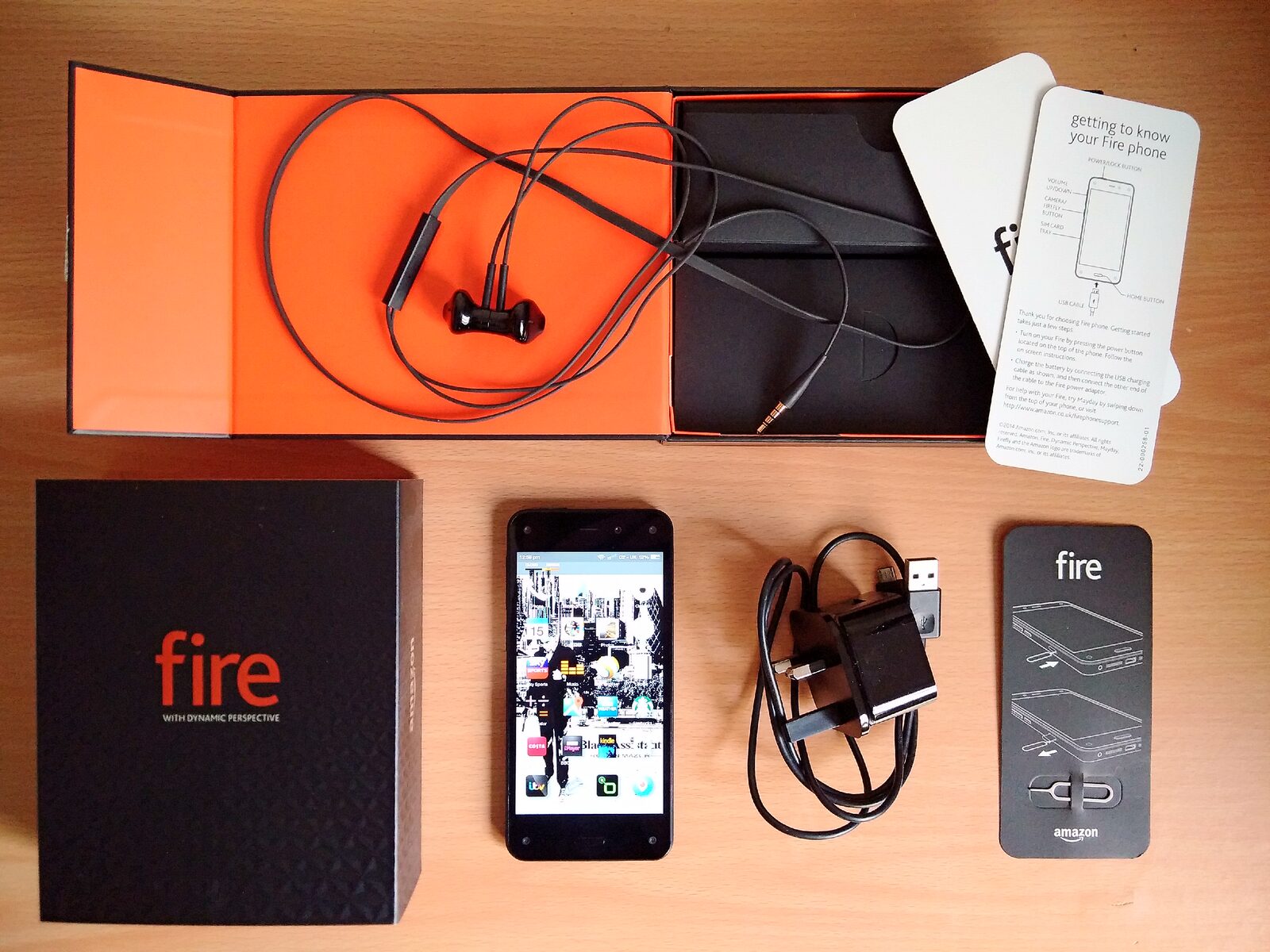

- Company
- Amazon
- Category
- Phones
- Launched
- July 2014
- Ended
- August 2015
- Stage reached
- Introduction
- AI product
- No
- Status
- Amazon ceased sales in August 2015, when the phone sold out
The Fire Phone was Amazon's first smartphone, priced like other premium phones and headlined by a 3D feature that reviewers called gimmicky. Amazon stopped selling it about 13 months after it went on sale.
What it was
The Fire Phone was the first smartphone designed by Amazon, announced on June 18, 2014, with AT&T as its exclusive US carrier.
Amazon's launch release called it "the only smartphone with Dynamic Perspective and Firefly," two features it described as "new breakthrough technologies."
Dynamic Perspective used four cameras and four infrared LEDs on the front to track the user's head and give some apps a 3D effect. Firefly used image, text and audio recognition to identify phone numbers, bar codes, songs and products.
The phone ran Fire OS, which Engadget described as "an Android-based operating system that's customized for Amazon."
Amazon's launch release priced it at $199 for the 32GB model or $299 for 64GB on a two-year AT&T contract.
Fast Company reported that work on the phone began in 2010 and leaned heavily on Lab126, Amazon's R&D unit in California.
What happened
The Fire Phone went on sale on July 25, 2014, and Amazon stopped selling it in August 2015, when its stock ran out.
In August 2014, The Guardian noted that Amazon "famously never gives sales figures" for its devices. From Chitika and comScore data, it estimated that probably no more than about 35,000 Fire Phones were in use after 20 days, and it listed its own caveats.
Three sources later told Fast Company the phone sold "just tens of thousands of units" before the price cuts.
On September 8, 2014, about six weeks after it went on sale, Amazon cut the contract price to 99 cents.
In its 10-Q for the quarter ended September 30, 2014, Amazon recorded charges estimated at $170 million, "primarily related to Fire phone inventory valuation and supplier commitment costs." The Fire phone inventory left on September 30, including stock held by resellers and commitments to buy more from suppliers, came to $83 million.
In the summer of 2015 Amazon cut the price again and included a year of Prime, TechCrunch reported.
At the end of August 2015 the phone sold out in the US and internationally, and Amazon told TechCrunch it did "not plan to replenish supply at this time."
In a 2016 letter to the SEC, Amazon said Fire phone sales weren't material to its net sales or gross profit in 2015.
Why it failed
Amazon's devices chief blamed the price in 2014 and a lack of differentiation in 2016, while reviewers found little reason to switch.
What Amazon said
Amazon's 99-cent release gave no reason for the cut. It said the rate of app submissions to the Amazon Appstore had more than doubled in the weeks after launch, and that 3 of the top 7 downloaded apps and games incorporated features of Dynamic Perspective.
David Limp, Amazon's senior vice president of devices, named the price in October 2014. "We didn't get the price right," he told Fortune. He said people come to expect a great value, and "we sort of mismatched expectations."
Limp also said the 99-cent price yielded significantly better sales, according to Fortune, which gave no figure.
At Business Insider's Ignition conference in December 2014, Amazon CEO Jeff Bezos defended the phone as a bold bet and said, "Ask me in some number of years," NBC News reported.
In July 2016, asked on stage at Fortune Brainstorm Tech what went wrong, Limp gave a different reason. He said the phone segment "is very well-served" and Amazon's phone wasn't "differentiated enough for customers." "We were just unable to get to scale," he said, according to Fortune's transcript.
Bezos's 2018 letter to shareholders, published in April 2019, called the Fire phone "a failure" and said Amazon took "our learnings (as well as the developers)" into its work on Echo and Alexa. It doesn't say what went wrong.
What reporting showed
In The New York Times, Farhad Manjoo wrote that Dynamic Perspective, while technically impressive, "rarely makes for a substantive improvement in how you'll use your phone." Beneath what he called the gimmicks, he found the phone "uncommonly friendly and easy to use."
Geoffrey Fowler's review in The Wall Street Journal, as the Christian Science Monitor quoted it, said the Fire does some things well, then added, "None is a reason most people would switch." The Monitor said he also faulted the camera, the battery and the lack of Google's Play app store.
Charles Arthur of The Guardian wrote that the phone's contract price, in the same range as the iPhone 5S and Samsung's Galaxy S5, surprised people who saw Amazon as "a low-end disruptor."
In October 2014, Fortune noted a 2-star customer rating on the phone's Amazon.com page, with reviews citing a phone that ran hot and "a small selection of apps."
Fast Company's Austin Carr published an insider account in January 2015, based on interviews with more than three dozen current and former employees. He wrote that reviewers knocked the phone's gimmicky features, especially Dynamic Perspective, along with its bland design and disappointing ecosystem, and that in their view the cost was what Amazon got most wrong.
Insiders told him Bezos was "the product manager" on the Fire Phone. A former Lab126 designer said the team was "building it for Jeff." One former engineering head, who worked solely on Dynamic Perspective, said the team "all thought it had no value for the customer."
"Apple is premium, while our customers want a great product at a great price," a high-level Lab126 source told Fast Company.
What later analysis found
Fortune's review of Brad Stone's 2021 book Amazon Unbound quotes it saying Bezos met with the Fire phone team "every few days for three years." Aaron Pressman, who wrote the review, added that all the attention "didn't save the phone from flopping."
The stage it reached
The Fire Phone never left the introduction stage, the first of the four product life cycle stages.
It fits the signals in my introduction stage guide. Amazon didn't give sales figures, as The Guardian noted, and the price moved within six weeks. And Amazon launched into a segment its own devices chief later called "very well-served."
Like the Humane AI Pin, it died before growth, which makes it a failure rather than a decline.
The lesson
I think the Fire Phone's price was the easier problem to fix. Amazon cut it within six weeks, and the phone was off the market less than a year later.
The harder problem was the reason to buy. Amazon's lead feature was Dynamic Perspective. Reviewers shrugged, and if the former engineering head who spoke to Fast Company is right, the people building it didn't think it had any value for customers either.
When the headline feature comes from the top, test it with customers before the launch depends on it. Part of a PM's job is to leave biases at the door, and that includes the CEO's.
Price for the customers you already have, too. Limp said in 2014 that people come to expect a great value. I think a premium price told Amazon's customers this phone wasn't one.
Causes at a glance
Company statement · Pricing
Amazon's devices chief said it didn't get the price right
Source 9
Company statement · Competition
Amazon's devices chief later said it lacked differentiation in a well-served market
Source 13
Reporting at the time · Unclear value
Reviewers found the headline features gimmicky, Dynamic Perspective most of all
Reporting at the time · Missing apps, content or partners
Reviewers faulted the missing Google Play store and a thinner app library
Sources
- 1.Amazon, Introducing Fire, the First Smartphone Designed by Amazon
June 2014 · Company statement
- 2.Engadget, Amazon announces the Fire, its first-ever smartphone
June 2014 · Reporting at the time
- 3.Amazon, Fire, First Smartphone Designed By Amazon, Now Available At AT&T And Amazon
July 2014 · Company statement
- 4.The New York Times, Amazon's Fire Phone: Solid Device Beneath a Layer of Whiz-Bang Frippery
July 2014 · Reporting at the time
- 5.The Christian Science Monitor, Amazon Fire: Game-changer or dud?
July 2014 · Reporting at the time
- 6.The Guardian, Amazon has sold no more than 35,000 Fire phones, data suggests
August 2014 · Reporting at the time
- 7.Amazon, Amazon Fire Phone Now 99 Cents with Two-Year Contract
September 2014 · Company statement
- 8.Amazon.com, Inc., Form 10-Q for the quarter ended September 30, 2014
October 2014 · Company statement
- 9.Fortune, Amazon exec: We priced the Fire Phone wrong
October 2014 · Reporting at the time
- 10.NBC News, Amazon CEO: Fire Phone Was a 'Bold Bet' That Didn't Pay Off
December 2014 · Reporting at the time
- 11.Fast Company, The Real Story Behind Jeff Bezos's Fire Phone Debacle And What It Means For Amazon's Future
January 2015 · Reporting at the time
- 12.TechCrunch, Amazon's Fire Phone Is Off The Market
September 2015 · Reporting at the time
- 13.Fortune, The Exec Behind Amazon's Alexa: Full Transcript of Fortune's Interview
July 2016 · Company statement
- 14.Amazon.com, Inc., Letter to the SEC
July 2016 · Company statement
- 15.Amazon, 2018 Letter to Shareholders
April 2019 · Company statement
- 16.Fortune, Amazon Unbound: Brad Stone's new book on Jeff Bezos's last years won't change your mind
May 2021 · Later analysis
More from the graveyard
Dec 2019
Windows Phone and Nokia Lumia
Microsoft and Nokia · Phones
Microsoft ended support for Windows 10 Mobile on December 10, 2019
Feb 2025
Humane AI Pin
Humane · Wearables · AI
Sales ended February 18, 2025; Humane said the Pins would go offline February 28, 2025
2017
3D TV
Samsung, LG, Sony and others · TV and video
LG and Sony, the last two major makers, dropped 3D from their 2017 TVs
2026
Amazon Go
Amazon · Marketplaces and commerce · AI
Amazon said most Go stores would close February 1, 2026, and its California stores later