Being product agnostic means you can understand and own any product, in any industry, without prior domain experience. The core skills of a Product Manager - customer discovery, prioritization, communication, execution - transfer across products. Everything else gets learned on the job.
And nope, I'm not talking about agnostic vs. atheist. This article only talks about the need to be product agnostic.
Every hiring manager faces this dilemma - Would you hire a Product Manager who does not have experience in your industry/product type? The candidate is brilliant and is a great Product Manager, but does not have experience in your specific domain.
In a survey of my product friends, the majority tended towards “Yes”.
In this article, I try to answer the following 2 questions -
- Can a Product Manager from background A (example, FinTech) add value to a product from background B (let's say, AdTech)?
- When people hire for a diversity of thoughts and experiences, should they extend this to the critical role of a Product Manager?
My answer is "Yes" to both the questions. Let me explain.
Sure, it helps to have a background in a particular field. But, having a Product Manager from an unrelated field can provide a fresh perspective.
An unbiased Product Manager can sometimes provide insights, that others may not notice.
David Epstein's book Range makes the long version of this argument: in complex, fast-changing fields, generalists who have worked across domains tend to beat narrow specialists.
And it is the pattern behind the best product leaders - they carry the same skills from one industry to the next.
So, what does it mean to be product agnostic? If you are a follower of the agile methodology, you can easily claim to be product agnostic. Also, this is very similar to the concept of being industry agnostic, vendor agnostic, technology agnostic, brand agnostic, platform agnostic or market agnostic, which many of us are familiar with.
Example
Hiring Product Managers without any background in a particular industry gets some people really charged up. Personally, in my circle of friends, people either really dislike the idea or strongly support it. There seems to be no middle ground.
In any interview, a common question is -
What Products have you worked on?
In addition to directly answering the above question, we may also want to add in a line that answers the below question -
Are you comfortable with working on a variety of different products?
The unambiguous answer should be "Yes!".
Another example is our ability to comfortably switch between different PM tools.
Even though some of us may swear by Kanban, we should be equally comfortable with Scrum.
Product Agnostic Meaning - Personality Traits
To put it simply, we may not be familiar with the industry of our desired workplace, but we should be comfortable with the following personality traits.

Own Your Product (No Matter Your Background)
If we have been given the opportunity to work on a product outside of our comfort zone - we should grab it.
Shifting toward management meant greater responsibility and influence, but it also meant giving up programming day-to-day in my role, which was hard because it took me out of my comfort zone.
Marissa Mayer
In my career, I have often worked on a variety of different products. And each product has been a great learning experience. I may end up liking one industry over another - but it is important to at least try out different industries.
Do Your Homework
A Product Manager from a different background can definitely provide fresh perspectives. However, those fresh perspectives need to be packaged in the right context, using the right keywords. No new hire wants themselves to be thought of as a rookie.
The new PM is expected to do their research, understand the market, thoroughly look into the competition and of course, talk to the customers.

Then, prepare a product roadmap.
The new PM may use any strategy that they want, but I find the OKR framework to be useful (it is what Google uses).
Question Your Biases
We all have pre-conceived notions about anything and everything.
But, as a Product Manager, it is important to leave our biases at the door.
People who are right most of the time are people who change their minds often.
Jeff Bezos
Don't assume what the customers want. Go ask them. There is no substitute for good old-fashioned face-to-face interviews.
Skip the emails and go sit down with the stakeholders (always communicate like a PM!).

Learn, Unlearn and Relearn
Even the best of us get it wrong. Before we get it right, we may need to unlearn techniques and processes that may have worked on a previous product, but make no sense on the new product.
The illiterate of the 21st century will not be those who cannot read and write, but those who cannot learn, unlearn, and relearn.
Alvin Toffler
For example, if you have worked in the Finance industry, you will be used to a lot of regulations and compliances. Products in the FinTech space need to go through a series of checks and balances. Product Managers accordingly put in buffers into their timelines.
But, if the Product Manager from FinTech would move into a video streaming platform, would the same rigorous financial regulations be applicable? Probably not.
On the contrary, the video streaming platform will be highly agile and will probably be releasing features without any government oversight. The Product Manager would need to unlearn their previous techniques and learn to move quickly with agility.
The same unlearning is happening right now as PMs move on to AI products. The PM role itself is being reshaped by AI, and the PMs adapting fastest are the ones least attached to how they worked before.
Another key aspect to unlearning is trust. We should trust our developers when they tell us something is not feasible. Confining oneself to an echo chamber is never a good idea.
Check and re-check, but don't get unnecessarily stuck up. Be agile and flexible (don't forget the KISS principle).
Value Diversity
If a Product Manager has been hired despite being from a different background, it is imperative for that Product Manager to pay it forward. We should not only be open to diverse opinions, but we should actually seek them out.
Diversity is the secret sauce.
In a Boston Consulting Group (BCG) study of more than 1,700 companies, the ones with above-average diversity in their management teams (including diversity of industry background) reported innovation revenue 19 percentage points higher than the rest: 45% of total revenue versus 26%.
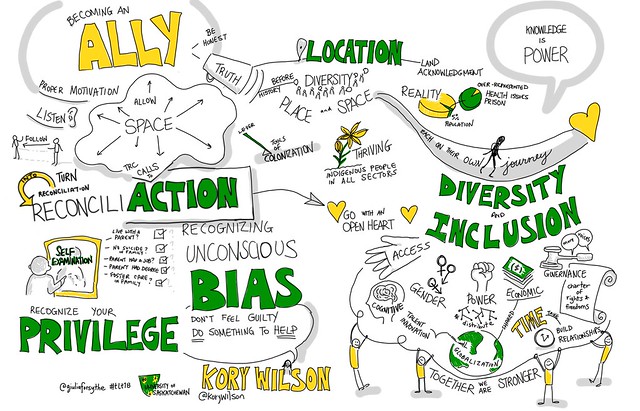
This concept applies to the entire team in general. For example, software engineers should learn to actively participate in the product management process.
And finally.
Stick to the plan!
Goes without saying, but all the hard work will mean nothing if we are not able to stick to the plan. No matter your background or your product, everyone expects a Product Manager to manage their timelines well.
This is where buffers come in handy. If for whatever reason, there is a risk to the timelines, communicate early and course correct.
Once we are comfortable with the basics, there is nothing to fear. Everyone learns about their industry on the job (and not in college).
Product Management 101
The skills mentioned above may seem like product management 101.
The point here is to practice those same skills, independent of the chosen product.
In other words, the above skills are for all Product Managers, irrespective of the exact product.
Of course, there will be strategy changes and scope clarifications depending on the exact product, but the skeletal framework should remain the same.
The key here is to recognize that all Product Managers should inherently be product agnostic.
Also, I am a firm believer in the need to under-promise and over-deliver.
Conclusion - Product Agnostic
In the end, I would hire a Product Manager who has the ability to reinvent themselves as per the product, rather than reinventing the product as per themselves.
A good Product Manager is always product agnostic.
A Product Manager who is not dogmatic about their thoughts and set in their processes is more valuable to me than a Product Manager with experience "in my product".
How do you remain an effective Product Manager in a crisis? Be product agnostic. Trust your intuition and use it. People may not understand your decisions initially, but they will thank you later. A Product Manager's intuition is their greatest gift.
And remember, a good Product Manager should always possess these cross platform critical skills!
RELATED READING
Must Have Product Manager Skills
This is your critical Product Manager Skills List - Your Ultimate Guide to becoming a great PM. These necessary skills will ultimately define your success.
How to Become a Product Manager: 10 Steps That Work
Getting a job in product management is easy. Most people think it is difficult. But, there are easy steps that you can follow to become a Product Manager.
What Does A Product Manager Do - Job Description, Role & Responsibility
The Product Manager Job Description has a few things in common across companies. Essentially, the Product Manager is the CEO and the janitor of the product.
Best Product Strategy Frameworks
Choosing the right product strategy framework is very important for every product manager. We will go over some top models like Kano, OKR, Hooked, etc. The same frameworks apply when you're shaping…
What is Agile Methodology?
What are the Basics of Agile Methodology? You have heard the phrase "Agile Methodology" practically thousands of time. Understanding Agile is at the heart of becoming Product Agnostic.
How To Develop A Product Thinking Mindset? (For Software Engineers)
Every software engineer should develop a product thinking mindset. It is important for engineers to speak up and voice their product opinions and ideas.
Custom AI Agents vs Off-the-Shelf Tools: When Each One Wins
The custom-vs-off-the-shelf question is the most common confusion I see in SMB AI conversations. Owners default to one side or the other based on temperament. Builders want custom. Frugal owners want…
FREQUENTLY ASKED
- What does 'product agnostic' mean for a PM?
- Being product agnostic means you can think about and own a product without being attached to a specific category, tool, or framework. The agnostic PM brings transferable skills (discovery, prioritization, communication) and adapts to the specific product in front of them. The opposite is the PM who can only do what they already know.
- Why does product agnosticism matter more in 2026?
- Because the rate of change in tooling and categories is high. Tools your team learned three years ago may be obsolete. Categories that didn't exist five years ago (AI agents, autonomous systems) are now mainstream. PMs who anchor too hard on specific tools or frameworks fall behind. The agnostic frame is the safer career bet.
- How do I become more product agnostic?
- Take on at least one project per year that's outside your existing comfort zone. Different industry, different product shape, different team structure. The discomfort surfaces the skills you've been treating as 'product instinct' that are actually category-specific. Once you've worked across two or three shapes, you stop needing the safety of the familiar one.