Wearables · OCT 1, 2026 · 6 MIN READ
Google Glass

- Company
- Category
- Wearables
- Launched
- April 2013
- Ended
- March 2023
- Stage reached
- Introduction
- AI product
- No
- Status
- Google stopped selling Glass Enterprise Edition on March 15, 2023
Google sold Glass for $1,500 plus tax in what it called a kind of "open beta", then stopped selling it to the public in January 2015. Sales of the version for businesses ended in March 2023.
What it was
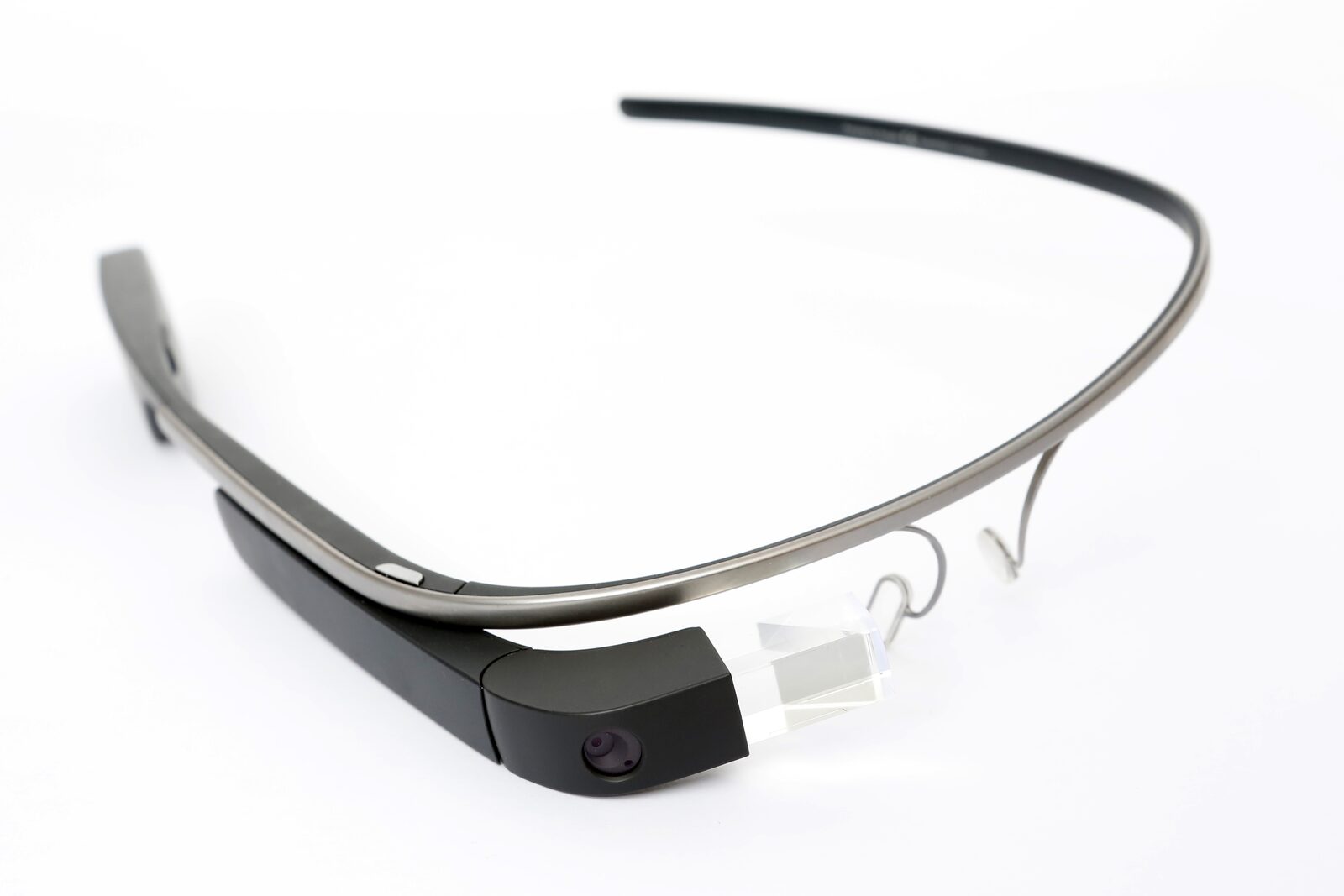
Google Glass was a small computer mounted on eyeglass frames, with a transparent display in the wearer's line of sight.
It had a camera and a microphone, and it could play sound through the wearer's skull with a bone conduction transducer, the BBC reported in 2014.
Glass came out of the Google X lab. Google announced it in April 2012, and at its I/O developer conference that June it let US attendees pre-order a "Google Glass Explorer Edition" for $1,500. Sergey Brin, Google's co-founder, said the same day that the glasses were still buggy, CNNMoney reported.
What happened
The Glass Explorer Program ran from April 2013 to January 2015. Google X says its "living lab" approach was "expanded to the public" through the program.
In May 2014 Google opened sales to anyone in the US, "as long as we have it on hand", Droid Life reported. The UK followed in June with a kit the BBC called "still a prototype" and aimed at developers rather than consumers.
In November 2014, Reuters reported that many developers and early users were "losing interest" in the $1,500 test version.
On January 15, 2015, Google said Glass was "graduating" from Google X and closed the Explorer Program, with January 19 the last day to buy one. TechCrunch reported that owners could keep using Glass but would get no new software updates.
In July 2017, after two years in a limited program, X made Glass Enterprise Edition available to more businesses. It said more than 50, including Boeing and DHL, had been using Glass.
Google announced Glass Enterprise Edition 2 in May 2019.
On March 15, 2023, Google stopped selling Glass Enterprise Edition and said it would support it until September 15, 2023.
Why it failed
Google X's head later said Google let an unfinished device be judged as a finished product, while reporters at the time focused on its camera, its price and the people wearing it.
What Google said
Google's January 2015 post closing the Explorer Program doesn't name a cause. It said Google was closing the program "so we can focus on what's coming next". The March 2023 notice ending Enterprise Edition sales doesn't give a reason either.
Astro Teller, the head of Google X, gave one in March 2015. "The bad decision was that we allowed and sometimes even encouraged too much attention for the program," he said, as Computerworld reported. Instead of being seen as a learning device, he said, Glass "began to be talked about as if it were a fully baked consumer product."
Two years later he told Wired: "Where we got a little off track was trying to jump all the way to the consumer applications." Then he added, "We got more than a little off track."
Years later, at Google I/O in May 2025, Brin said he "just didn't know anything about consumer electronics supply chains really, and how hard it would be to build that and have it be at a reasonable price point," TechRadar reported.
In May 2026, Sameer Samat, Google's president of the Android ecosystem, said the most important thing he learned from Glass was that "fashion comes first, technology comes second." Those words are Android Authority's English rendering of a Yonhap report in Korean.
What reporting showed
In May 2013, eight members of Congress wrote to Larry Page, Google's CEO, asking how Glass handled privacy, PCWorld reported.
"Glass is socially awkward," Mat Honan wrote in Wired after a year of wearing it.
Reuters reported in November 2014 that some people saw the device as "an obnoxious privacy intrusion" and called Explorers "Glassholes".
On the day Google announced the closure, the BBC's technology correspondent Rory Cellan-Jones wrote that Glass "makes its users look daft, and that meant that it was never going to appeal to a wide audience."
The New York Times reported in February 2015 that Glass had been banned from "bars, movie theaters, Las Vegas casinos and other places that did not want customers surreptitiously recording." One former Google employee told the paper, "The team within Google X knew the product wasn't even close to ready for prime time."
Computerworld reported that Google's executives and PR people "were repeatedly putting timeframes on an official Glass release."
Of 16 Glass app makers Reuters contacted for its November 2014 report, nine said they had stopped work on their projects or abandoned them, "mostly because of the lack of customers or limitations of the device."
PCWorld described a backlash in March 2015 over Glass's "$1,500 price, clunky design and ability to secretly record video and take photos." Ian Fogg of the IHS Technology consultancy had told the BBC in 2014 that, to some extent, Google was using the price "to manage take-up".
What later analysis found
Steven Levy's 2017 retrospective in Wired, which quotes Teller and the Glass team, says that in its first effort at presenting Glass, Google "failed to understand who could use it best and what it should be doing." Of the first version, he wrote, "It was buggy, it felt awkward, and it really didn't have a clear function."
A 2020 study by Klein and colleagues, based on 301 documents collected from the web, found that "A key issue was privacy because it was not clear when users were recording or taking pictures of other people around them." The authors also count Glass among digital innovations that are "solutions in search of a problem".
The stage it reached
Google Glass never left the introduction stage, as a consumer product or as a business one.
Glass never got the full consumer launch that the BBC said had been expected, and Reuters reported in 2014 that Google had pushed back the mass-market rollout.
I found no sales figure from Google. Reuters wrote in November 2014 that "Tens of thousands use Glass in the pilot consumer program." Wired reported in 2017 that Alphabet had been selling "hundreds of units" of the Enterprise Edition.
The $1,500 list price was the same at the close in 2015 as at the first pre-order in 2012. On eBay, Reuters found it selling "for as little as half list price".
The lesson
I think the first lesson is that a beta you sell to the public is a launch, whatever you call it. Google wanted feedback from Explorers and got a verdict from everyone else.
If the product isn't ready to be judged, keep the test small, as X later did with Enterprise Edition.
The second is that a wearable camera has users who never bought it, the people around the wearer. I'd test with them from the start.
My list of failed products says most people blame Glass's lack of fashion sense. I don't think it's an accident that the AI glasses in the growth stage in 2026 carry names like Ray-Ban and Oakley.
Causes at a glance
Company statement · Rushed launch
Google X's head said Google let an unfinished device be judged as a finished one
Reporting at the time · Privacy and safety
Its camera raised fears of secret recording, and some bars and cinemas banned it
Reporting at the time · Social acceptance
Wearers were called "Glassholes" and a BBC correspondent said it made them look daft
Later analysis · Unclear value
Wired said the first Glass had no clear function and Google didn't know its best users
Company statement · Pricing
Sergey Brin later said he didn't know how hard a reasonable price would be
Sources
- 1.CNNMoney, Google's glasses are $1,500 - and you can't have them
June 2012 · Reporting at the time
- 2.X, Google Glass - A Google X Moonshot
Company statement
- 3.PCWorld, Lawmakers press Google on Glass privacy
May 2013 · Reporting at the time
- 4.Wired, I, Glasshole: My Year With Google Glass
December 2013 · Reporting at the time
- 5.Droid Life, Now Anyone in the US can Purchase Google Glass and Become an Explorer
May 2014 · Reporting at the time
- 6.BBC News, Google Glass eyewear on sale in UK
June 2014 · Reporting at the time
- 7.Reuters (via The Christian Science Monitor), Is this the end of Google Glass? Some early believers think so.
November 2014 · Reporting at the time
- 8.Google (Google+ post, archived), We're graduating from Google[x] labs
January 2015 · Company statement
- 9.BBC News, Google Glass sales halted but firm says kit is not dead
January 2015 · Reporting at the time
- 10.TechCrunch, Google Glass Explorer Program Shuts Down, Team Now Reports To Tony Fadell
January 2015 · Reporting at the time
- 11.The New York Times, Why Google Glass Broke
February 2015 · Reporting at the time
- 12.Computerworld, GoogleX exec: Where we went wrong with Glass
March 2015 · Reporting at the time
- 13.PCWorld, Google is making Glass 'ready for users,' says Schmidt
March 2015 · Reporting at the time
- 14.X, A new chapter for Glass
July 2017 · Company statement
- 15.Wired, Google Glass 2.0 Is a Startling Second Act
July 2017 · Later analysis
- 16.Google, Glass Enterprise Edition 2: faster and more helpful
May 2019 · Company statement
- 17.Technological Forecasting and Social Change (Klein, Sørensen, Freitas, Pedron and Elaluf-Calderwood), Understanding controversies in digital platform innovation processes: The Google Glass case
2020 · Later analysis
- 18.Google, Glass Enterprise Edition Announcement FAQ
March 2023 · Company statement
- 19.CNBC, Google ends enterprise sales of Google Glass, its augmented reality smartglasses
March 2023 · Reporting at the time
- 20.TechRadar, 'I made a lot of mistakes with Google Glass': Google's Sergey Brin admits missteps but says Android XR has a bright future for one big reason
May 2025 · Reporting at the time
- 21.Yonhap, 구글 "안경은 현실-디지털 잇는 최적도구…AI기기 더 늘어날것"
May 2026 · Reporting at the time
- 22.Android Authority, Android boss reveals the unsurprising reason Google Glass ended up in the tech graveyard
May 2026 · Reporting at the time
- 23.Google (archived), Google Glass - If I Had Glass
Company statement