Personal transport · OCT 1, 2026 · 7 MIN READ
Segway PT

- Company
- Segway
- Category
- Personal transport
- Launched
- March 2002
- Ended
- July 2020
- Stage reached
- Introduction
- AI product
- No
- Status
- Segway retired the PT and ended its US production on July 15, 2020
Time reported that Dean Kamen believed his Segway PT "will be to the car what the car was to the horse and buggy." Segway retired it in July 2020, with about 140,000 sold since 2001, according to a company spokesman.
What it was
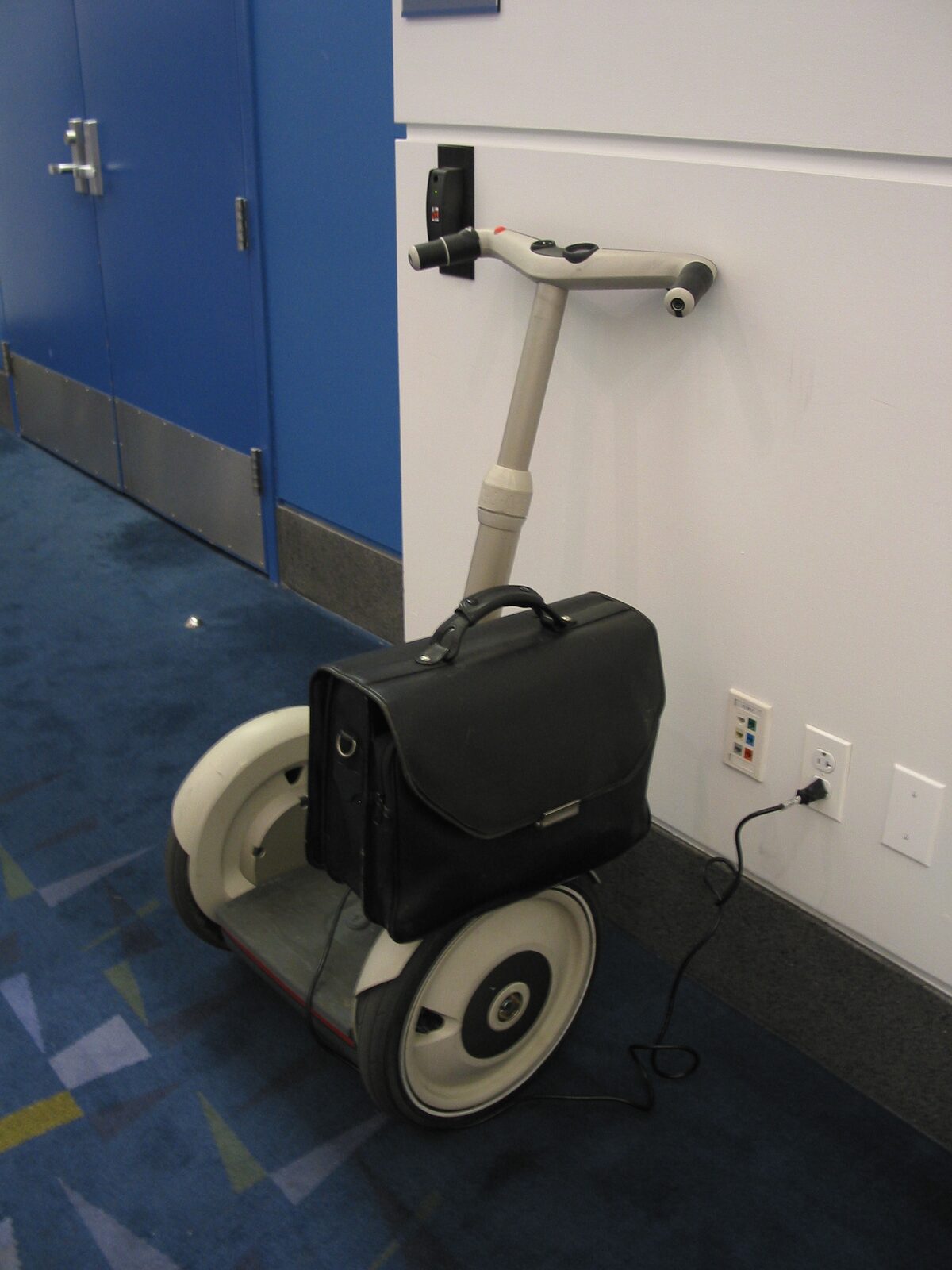
The Segway PT was a battery-powered, two-wheeled vehicle that balanced itself while its rider stood on it.
Time wrote in its launch feature that it had no brakes, no engine, no throttle, no gearshift and no steering wheel.
Segway LLC first sold it as the Segway Human Transporter, or HT. By 2006 it was the Segway Personal Transporter, or PT.
Kamen founded the company in 1999, AP reported. Ninebot, a Chinese company, bought Segway in 2015 and owned it when the PT was retired.
What happened
Segway unveiled the PT on Good Morning America on December 3, 2001, CNN reported.
Time said the PT had cost more than $100 million to develop, and that Segway's new factory would be "capable of churning out 40,000 Segways a month by the end of next year."
Sales began in March 2002, according to a later recall notice. Consumers could order one on Amazon from November 18, 2002, for $4,950. Time had reported that a consumer model was expected to cost about $3,000.
The New Atlantis reported in 2004 that company officials had envisioned perhaps 100,000 sales in the first year, and that "first year sales were only about 6,000."
Two recalls followed, over faults that could let a rider fall. The first, in September 2003, covered about 6,000 units. In September 2006, the second covered all 23,500 Segway had shipped, AP reported, and its customers by then included more than 150 police departments.
Judy Cai, Segway's president, said in 2020 that the PT became "a staple in security and law enforcement" in its first decade, then caught on with vacationers, AP reported.
Fast Company reported on June 23, 2020, that Segway would end the PT, and Cai said it would retire on July 15.
Segway's New Zealand distributor wrote that it was US production of the PT that would end, and that it would keep buying PTs made on Segway-Ninebot's line in China.
Why it failed
Segway gave no official reason for retiring the PT, but its executives pointed to price, a learning curve, long-lasting old units and cheaper scooters. Reporters and former staff added its image and the lack of a clear place to ride it.
What Segway said
Cai's statement, as The Register printed it, said Segway had made "the difficult decision to retire the Segway PT" after "thorough evaluation." She said the pandemic "did impact sales and production" but "was not a deciding factor." The statement gave no other reason.
Tony Ho, Segway's vice president of global business development, said in June 2020 that with prices starting at $6,000 and sometimes reaching $10,000, only police departments and tour groups could afford it, CNN reported.
"Now it seems a bit outdated," Ho said. He added that some police departments had moved to Ninebot's cheaper electric scooters.
Ho also said first-time riders "have to learn to balance," Fast Company reported.
Cai told Fast Company that PT sales had been flat for three years, while their share of Segway and Ninebot's revenue dropped from 5% to 1.5%. One reason sales couldn't go up quickly, she said, was "the quality of it, how durable it is." She said customers still rode their old units, and that this hurt sales of new ones.
Comparing what buyers pay for a scooter and for a PT, she said, "you see the huge difference right there."
What reporting showed
Time wrote at launch that regulators would decide "if it will be allowed to roll on sidewalks," and that $3,000 might strike many as "an awful lot to pay for something they've managed so far to live happily without."
The New Atlantis wrote in 2004 that several places, among them San Francisco and Walt Disney World, had banned Segways from sidewalks. It put the missed forecast down more to "unrealistic expectations" than to the product.
When Segway announced the retirement, AP reported that its original price of around $5,000 was "a hurdle for many customers," and that it was hard to ride and had been banned in some cities.
CNN called the price "a major barrier to adoption" and said batteries, which first cost more than $1,000, were too expensive to make a cheaper version. The Segway also "developed a nerdy reputation," it wrote.
Fortune wrote that it "came to stand for terminal unhipness."
What later analysis found
CNN spoke to 20 former employees, among them former executives, for a 2018 history of Segway, so much of it is the company's own later account.
In 2003, Segway sold PTs at a deep discount to roughly 100 residents of Celebration, Florida. Within a year nearly all of them had stopped riding, CNN reported. "There was a significant dork factor," said Matt Gelbwaks, an early Segway employee. "It was never truly socially accepted."
CNN wrote that developing and testing the PT in secret "kept Segway from figuring out what people might want or need in a scooter." Jonathan Pompa, an engineer, asked, "How do you do product testing if you can't go outside?"
The first buyers had to travel to regional training centers for lessons, CNN said, and once they owned one, "there was no clear place to ride it."
Klee Kleber, Segway's marketing vice president from 2004 to 2007, said, "The price was way out of whack." Jim Norrod, CEO from 2005 to 2009, said the products were too expensive because "I needed the money to run the company."
Outside the company, Paul Carroll, co-author of Billion Dollar Lessons, wrote in 2020 that the Segway had to "either fit on the street or on the sidewalk, and it did neither well."
The stage it reached
The Segway PT never left the introduction stage of the product life cycle.
A product is in the introduction stage when most of its sales still need a demo or a free trial first.
When Roger Brown bought Segway in 2013, six million tourists a year rode Segways on city tours, CNN reported. I'd count each of those tours as a paid demo.
In growth, the price per unit falls. The PT's didn't fall far enough. Models sold from 2002 to 2006 cost $4,000 to $5,500, according to the CPSC, and Ho said in 2020 that prices had since gone up.
Its niche then showed decline signals. Ninebot said in 2018 that the PT's market was shrinking, CNN reported. Like the Humane AI Pin, it never reached growth, so I count it as a failure, not a decline.
The lesson
I think Segway's costliest mistake was building for a mass market before it had watched ordinary people use the PT in public.
Time reported the factory was up in 2001. The Celebration test didn't come until 2003. A test like that belongs in a product feedback loop before you build the factory.
Ask whether people will want to be seen using it, too. I'd ask that of anything worn or ridden in public, Google Glass included.
Then price it against what buyers already have. Kamen pitched the PT against the car. By 2020, Segway's own president was pricing it against a scooter.
Causes at a glance
Company statement · Pricing
Segway's own VP said only police and tour groups could afford it
Reporting at the time · Weak demand
About 6,000 sold in its first year, where officials envisioned perhaps 100,000
Source 4
Later analysis · Social acceptance
Nearly all test riders quit within a year; an early employee cites a dork factor
Reporting at the time · Regulation
Several places banned it from sidewalks, a risk Time flagged at launch
Company statement · Competition
A Segway VP said it seems a bit outdated; some police moved to Ninebot's cheaper scooters
Source 9
Sources
- 1.Time, Reinventing the Wheel
December 2001 · Reporting at the time
- 2.Amazon.com and Segway LLC, Amazon.com to Sell First Segway Human Transporters
November 2002 · Company statement
- 3.U.S. Consumer Product Safety Commission, CPSC, Segway LLC Announce Voluntary Recall to Upgrade Software on Segway Human Transporters
September 2003 · Company statement
- 4.The New Atlantis, America at 10 M.P.H.
June 2004 · Reporting at the time
- 5.U.S. Consumer Product Safety Commission, Segway Inc. Announces Recall to Repair Segway Personal Transporters
September 2006 · Company statement
- 6.Associated Press, via NBC News, Segways recalled because of software glitch
September 2006 · Reporting at the time
- 7.CNN Business, Segway was supposed to change the world. Two decades later, it just might
October 2018 · Later analysis
- 8.Fast Company, Exclusive: Segway, the most hyped invention since the Macintosh, ends production
June 2020 · Reporting at the time
- 9.CNN Business, The Segway is officially over
June 2020 · Reporting at the time
- 10.Associated Press, via Boston.com, The Segway era is coming to a halt
June 2020 · Reporting at the time
- 11.Fortune, The Segway rolls into the sunset
June 2020 · Reporting at the time
- 12.The Register, Segway to Heaven: Mega-hyped wonder-scooter that was going to remake city transport to cease production
June 2020 · Reporting at the time
- 13.Segway New Zealand, US production of PT to end
June 2020 · Company statement
- 14.Insurance Thought Leadership, What to Learn From the Segway's Failure
June 2020 · Later analysis
More from the graveyard
Mar 2023
Google Glass
Google · Wearables
Google stopped selling Glass Enterprise Edition on March 15, 2023
Feb 2025
Humane AI Pin
Humane · Wearables · AI
Sales ended February 18, 2025; Humane said the Pins would go offline February 28, 2025
2019
Tata Nano
Tata Motors · Personal transport
Tata Motors built no Nanos in 2019 and never formally announced the end