Phones · OCT 1, 2026 · 7 MIN READ
BlackBerry
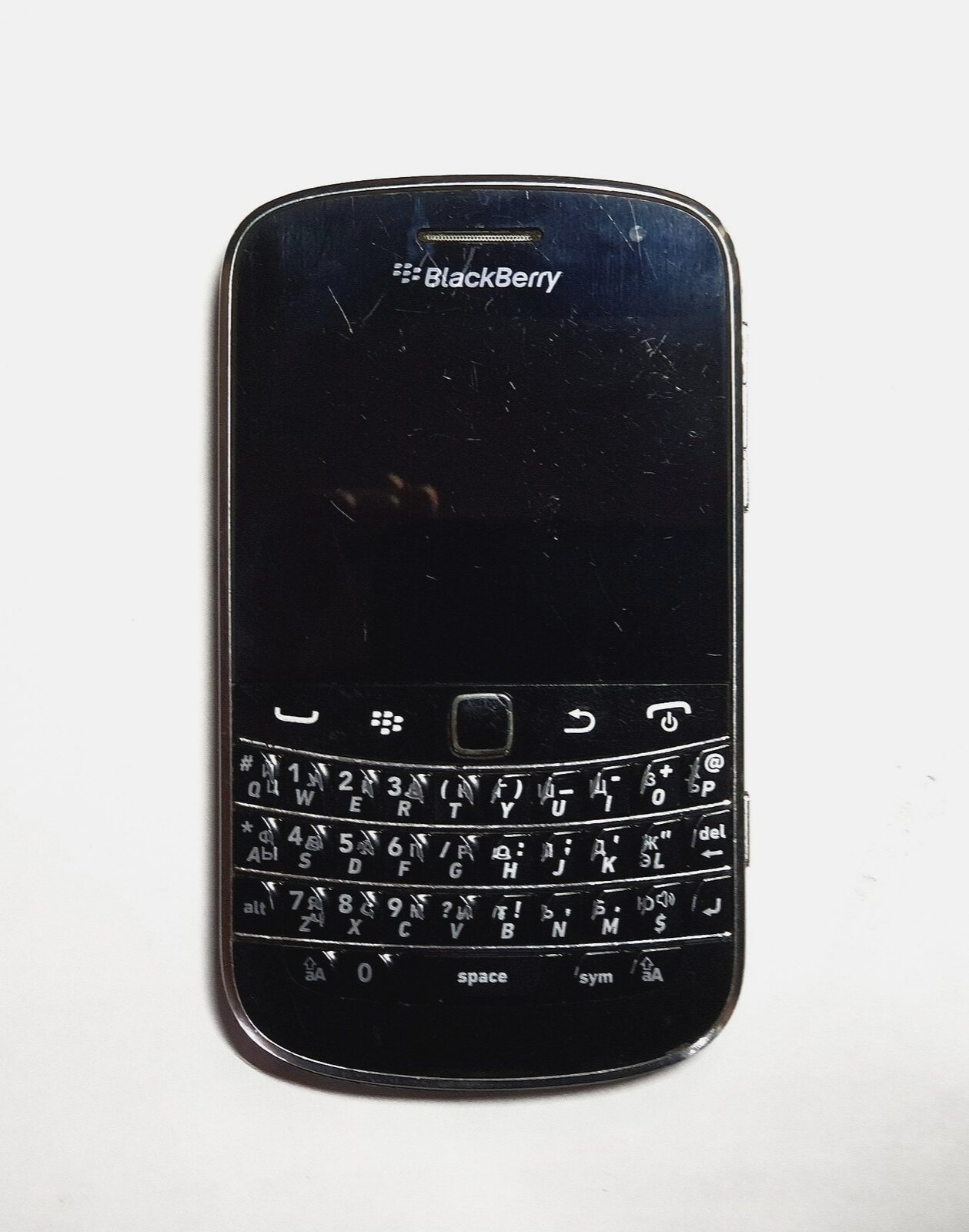

- Company
- Research In Motion (BlackBerry)
- Category
- Phones
- Launched
- January 1999
- Ended
- January 2022
- Stage reached
- Decline
- AI product
- No
- Status
- Legacy BlackBerry OS and BlackBerry 10 services ended on January 4, 2022
Research In Motion shipped about 28.1 million BlackBerry handhelds in fiscal 2013, down 42.7% in a year. Its annual filings blamed the fall in revenue and market share partly on buyers who wanted the broadest choice of apps, like those on iOS and Android.
What it was
BlackBerry was a line of email devices and smartphones made by Research In Motion (RIM), which later took the product's name.
The first one wasn't a phone. History.com dates the BlackBerry 850 to January 19, 1999, and describes it as "a two-way pager with email capability."
RIM called its gadgets BlackBerrys "in honor of their knobby keyboards," Hiawatha Bray wrote in the Boston Globe. By 2001, he wrote, the company had added voice calling.
What happened
BlackBerry grew for years after the iPhone debuted in 2007, then shrank until, in fiscal 2016, it booked revenue on only about 3.2 million handhelds.
In November 2008 RIM put out the Storm, a BlackBerry with a touchscreen and no physical keyboard. RIM sold about 52.3 million BlackBerry devices in fiscal 2011, up 43%, and revenue rose 33.1% to $19.9 billion.
The subscriber base peaked at about 80 million in September 2012. In fiscal 2013, which ended on March 2, 2013, revenue from continuing operations fell 39.9% to $11.1 billion.
On January 30, 2013, RIM introduced two phones running its new BlackBerry 10 operating system, the all-touch Z10 and the Q10, which kept a physical keyboard. The same day, the company began operating under the BlackBerry name.
Demand for the new phones was "lower than anticipated," BlackBerry said in its next annual filing. In September 2013 it reported a charge of about $934 million against inventory and supply commitments, mostly for Z10 phones, and announced it would cut about 40% of its workforce. The next quarter brought a charge of about $1.6 billion, mostly for BlackBerry 10 devices.
CEO John Chen announced on September 28, 2016, that BlackBerry planned to "end all internal hardware development" and outsource it to partners. By December it had licensed TCL Communication to make BlackBerry-branded phones running its secure Android software, and TCL stopped making them in 2020, CNN reported.
BlackBerry ended the legacy services behind its older phones on January 4, 2022. Its end-of-life FAQ warned that devices running BlackBerry 7.1 OS and earlier or BlackBerry 10 would "no longer reliably function," including for phone calls and 9-1-1.
Why it failed
BlackBerry lost its market to Apple's iPhone and to Android phones, and RIM's own 2013 filings conceded the lost share.
What BlackBerry said
The Globe and Mail reported in 2013 that Balsillie, one of RIM's co-CEOs, had called the Storm's launch "an overwhelming success."
Thorsten Heins, CEO since January 2012, wrote to The New York Times in October 2012 that BlackBerry "is growing," with "more than 80 million customers globally," HuffPost Canada reported. The company's results for his latest quarter did report subscriber growth, and its fiscal 2013 financial review put the base at about 76 million by March 2, 2013.
RIM's annual filing in March 2013 said it had lost global share "relative to companies such as Apple with its iOS ecosystem" and to Android phone makers such as Samsung. It listed "consumer preferences for devices with access to the broadest number of applications," the "significant number of new Android-based competitors" and "a growing trend in enterprises to support multiple devices." Carriers' push to sell LTE phones hurt too, it said.
Its financial review added that US results suffered from the lack of an LTE phone and a high-end consumer device before the first BlackBerry 10 phone launched there on March 22, 2013.
In 2015 Chen told Re/code that BlackBerry World, its app store, was "not competitive to Google Play or the iTunes store," Phone Scoop reported. When he announced the plan to end hardware development in 2016, he said it would "reduce capital requirements and enhance return on invested capital."
Explaining why it ended the old services, the FAQ said BlackBerry was "focused on providing intelligent security software and services to enterprises and governments."
What reporting showed
David Pogue's New York Times review called the Storm "the BlackBerry Dud." Both of his review units "had more bugs than a summer picnic," he wrote.
In May 2012 Daniel Levinthal, a Wharton management professor, told Knowledge at Wharton that "once the Apple and Google/Android app ecosystems emerged, RIM as a standalone provider was no longer viable."
The Globe and Mail rebuilt the story in September 2013 from interviews with two dozen past and present company insiders. One former senior insider said the Storm's technology "was cobbled together quickly and wasn't quite ready." The paper reported that the phone was "months late," that sales lagged the iPhone and that customer returns were high.
Citing comScore, the Globe reported that by late 2011 Android had 47.3% of the US market and RIM 16%.
RIM's technology was based on Java and "an operating system built in the 1990s," the paper wrote. "This really meant we were not positioned for the future," said Lazaridis, a co-founder.
The Globe wrote that when BlackBerry 10 was unveiled, market observers generally agreed it was "two years too late," and that many senior insiders shared that view. Patrick Spence, a former executive vice-president of global sales who left in 2012, said "we didn't make the turn fast enough."
The paper also described "deep rifts at the executive and boardroom levels." Lazaridis defended the keyboard, saying "The keyboard is one of the reasons they buy BlackBerrys," while sources close to the board said Heins's team "believed everything was going to full touch." Heins and his executives launched the touchscreen Z10 "with disastrous results," the Globe wrote.
What later analysis found
Jacquie McNish and Sean Silcoff, two of the reporters behind the Globe's 2013 story, wrote the 2015 book Losing the Signal, so these later accounts aren't independent of that story.
Fortune's summary says the first iPhone "wasn't perceived as a threat to BlackBerry's core business." It quotes a top lieutenant saying "It wasn't secure" and "It had rapid battery drain and a lousy keyboard."
Reviewing the book in the Boston Globe, Bray found RIM "too late to offer better software and attractive apps to match offerings from Apple and Android."
Balsillie gave his own account in June 2015 at an event where McNish and Silcoff interviewed him, so it's the former co-CEO's hindsight. "With Storm we tried to do too much," he said, and "That was the time I knew we couldn't compete on high-end hardware," The Canadian Press reported.
The stage it reached
BlackBerry reached the decline stage of the product life cycle, because it grew into a large market and then lost it to a substitute.
RIM also cut prices "to maintain the subscriber base," its fiscal 2013 financial review said, a typical decline-stage move.
By the fourth quarter of 2016, phones running BlackBerry's operating system were 0.0% of worldwide smartphone sales to end users, Gartner reported.
The lesson
The lesson from BlackBerry is to judge a new rival by what the next buyers want, not by what your current buyers praise you for.
My list of failed products starts from the common explanation that BlackBerry got complacent. I don't think that's quite it.
Lazaridis recalled telling his staff, "If that thing catches on, we're competing with a Mac, not a Nokia," The Globe and Mail reported.
I think RIM went wrong by judging the iPhone on BlackBerry's own strengths (security, battery life, the keyboard) while buyers were choosing on apps. Microsoft's Joe Belfiore gave a similar reason for Windows Phone in 2017, writing that its "volume of users is too low for most companies to invest."
I also think RIM's growth made waiting look safe. If a rival changes what buyers choose on, I'd start the rebuild while the old product is still growing.
Causes at a glance
Company statement · Competition
Lost share to Apple's iOS and a wave of new Android phones
Company statement · Missing apps, content or partners
Buyers wanted the apps on iOS and Android, and BlackBerry's store lagged
Reporting at the time · Rushed launch
The rushed Storm touchscreen shipped late and buggy in 2008
Reporting at the time · Timing
BlackBerry 10 arrived in 2013, two years too late in The Globe and Mail's account
Source 19
Company statement · Change of company strategy
It moved phone hardware to partners from 2016 and focused on security software
Sources
- 1.History.com, First BlackBerry device hits the market
April 2024 · Later analysis
- 2.The Boston Globe, 'Losing the Signal' by Jacquie McNish and Sean Silcoff
June 2015 · Later analysis
- 3.Research In Motion, Annual Information Form, fiscal 2013 (Form 40-F exhibit)
March 2013 · Company statement
- 4.Research In Motion, Management's Discussion and Analysis, fiscal 2013 (Form 40-F exhibit)
March 2013 · Company statement
- 5.Research In Motion, Management's Discussion and Analysis, fiscal 2011
March 2011 · Company statement
- 6.Research In Motion, Research In Motion Reports Second Quarter Fiscal 2013 Results
September 2012 · Company statement
- 7.BlackBerry, Annual Information Form, fiscal 2014 (Form 40-F exhibit)
March 2014 · Company statement
- 8.BlackBerry, Press release on preliminary second quarter fiscal 2014 results
September 2013 · Company statement
- 9.BlackBerry, Press release on second quarter fiscal 2014 results
September 2013 · Company statement
- 10.BlackBerry, Management's Discussion and Analysis, fiscal 2016 (Form 40-F exhibit)
April 2016 · Company statement
- 11.BlackBerry, Press release on second quarter fiscal 2017 results
September 2016 · Company statement
- 12.BlackBerry, Press release on third quarter fiscal 2017 results
December 2016 · Company statement
- 13.ABC7 San Francisco (CNN Wire), End of an era: Classic BlackBerry phones will stop working Jan. 4
January 2022 · Reporting at the time
- 14.BlackBerry, BlackBerry 10 and BlackBerry OS Services FAQ (archived January 5, 2022)
September 2020 · Company statement
- 15.HuffPost Canada, RIM New York Times Article Spurs Company To Respond: We're Black Sheep And Proud
October 2012 · Reporting at the time
- 16.Phone Scoop, BlackBerry CEO Says Smartphone Biz Is On a Timer
August 2015 · Reporting at the time
- 17.The New York Times, No Keyboard? And You Call This a BlackBerry?
November 2008 · Reporting at the time
- 18.Knowledge at Wharton, Are RIM's Days Numbered?
May 2012 · Reporting at the time
- 19.The Globe and Mail, How BlackBerry blew it: The inside story
September 2013 · Reporting at the time
- 20.Fortune, What the Blackberry guys said when they saw Apple's iPhone
May 2015 · Later analysis
- 21.The Globe and Mail (The Canadian Press), Failure of Storm smartphone dealt major blow to BlackBerry, Balsillie says
June 2015 · Later analysis
- 22.Gartner, Gartner Says Worldwide Sales of Smartphones Grew 7 Percent in the Fourth Quarter of 2016 (archived copy)
February 2017 · Reporting at the time
- 23.Windows Central (Joe Belfiore's tweets), Microsoft's Joe Belfiore says Windows 10 Mobile features and hardware are no longer a focus
October 2017 · Company statement