Phones NOV 8, 2026 7 MIN READ
Palm Pre and webOS
My post on failed products examples covers twelve famous cases from tech and why each one failed.



The timeline as text
- January 2009Palm unveiled the Pre and webOS at CES
- June 6, 2009The Pre went on sale on Sprint for $199.99 after a rebate
- January 2010Verizon began selling the upgraded Pre Plus and Pixi Plus
- February 26, 2010Palm's quarterly sell-through fell 29%, to 408,000 phones
- April 28, 2010HP agreed to buy Palm for about $1.2 billion
- July 1, 2010HP completed the purchase
- February 2011HP announced the Pre 3, the Veer and the TouchPad
- August 18, 2011HP said it would discontinue webOS phones and the TouchPad
- December 2011HP said webOS would become open source
- February 2013LG agreed to buy webOS to use in smart TVs
- Company
- Palm
- Category
- Phones
- Launched
- June 2009
- Ended
- August 2011
- Stage reached
- Introduction
- AI product
- No
- Status
- HP said on August 18, 2011 that it would discontinue webOS phones and the TouchPad
The Palm Pre got good reviews and still sold too slowly. It launched on Sprint alone after Verizon backed out, reached Verizon only after the Motorola Droid, and HP, which bought Palm in 2010, dropped webOS phones just over a year later.
What it was
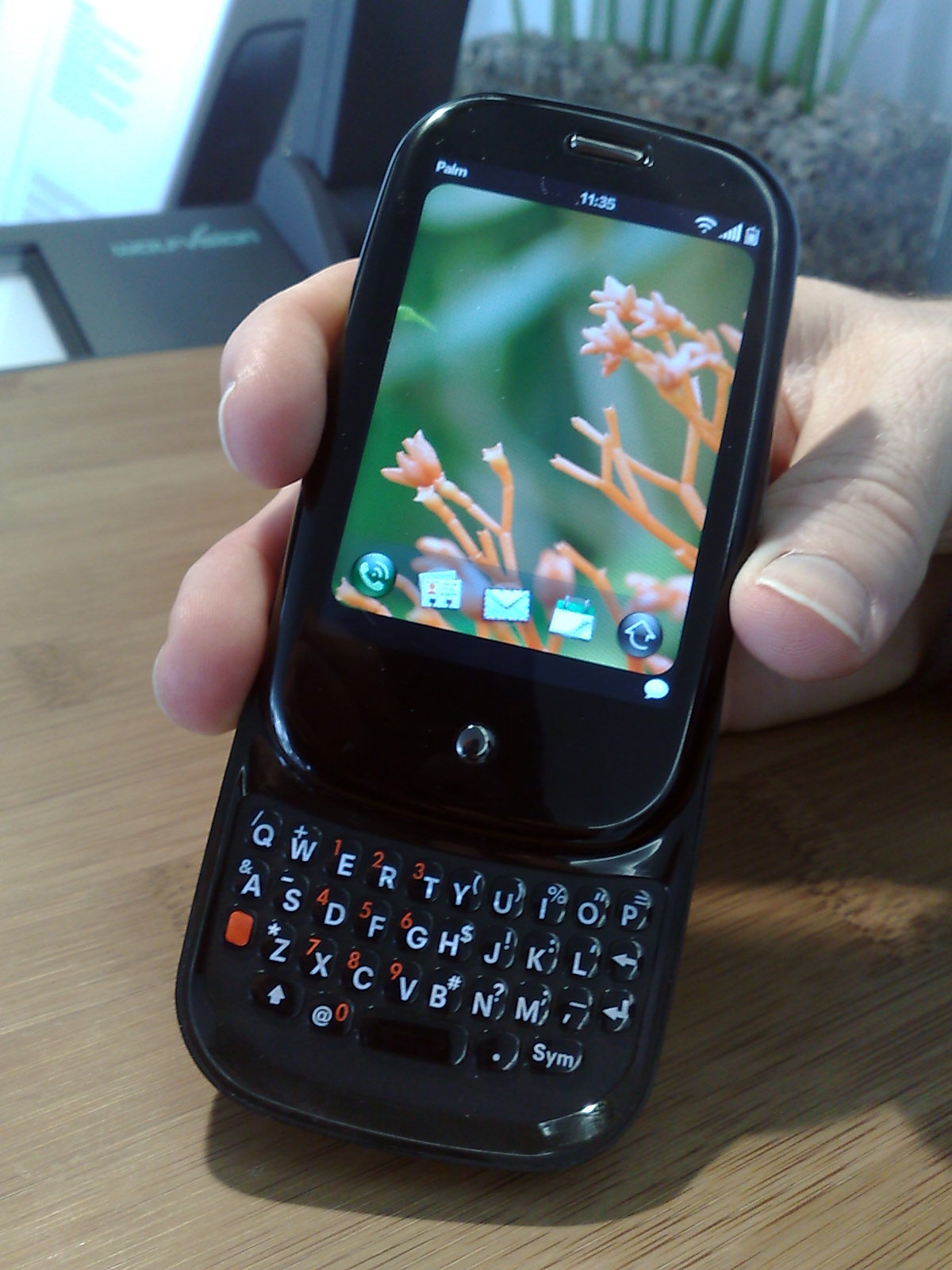
The Palm Pre was a touchscreen smartphone with a slide-out keyboard, and webOS was the new operating system Palm built for it.
Palm unveiled both at CES in January 2009, when Ed Colligan was its CEO. The Pre had a 3.1-inch touch screen and a QWERTY keyboard, and it couldn't run the old Palm OS apps, MacRumors reported.
webOS could run several apps at once, which AP pointed out the iPhone couldn't do.
Palm had sold nearly a third of itself to the private equity firm Elevation Partners in 2007, AP reported, and brought in Jon Rubinstein, a former Apple executive, as executive chairman. He became Palm's CEO in June 2009.
Sprint, at first the only US carrier selling it, priced the Pre at $199.99 with a two-year contract after a $100 mail-in rebate, its May 2009 announcement said.
What happened
The Pre went on sale on Sprint on June 6, 2009, and less than a year later Palm agreed to sell itself to HP.
Reuters reported that the phone had been "greeted by rave reviews", and that launch lines were far shorter than for the first iPhone.
Palm added a cheaper phone, the Pixi, in November 2009. Verizon began selling upgraded versions, the Pre Plus and Pixi Plus, in January 2010.
Sales went the wrong way. Palm sold 810,000 phones in the quarter to August 28, 2009 and 573,000 in the next, AP reported. By Palm's own count, sell-through for the quarter to February 26, 2010 was 408,000, down 29% from the quarter before. Both figures are for all of Palm's phones, not the Pre alone.
That quarter Palm took a $45.3 million charge for purchase commitments that exceeded forecast demand. Verizon alone accounted for 90% of that quarter's revenue, Palm's quarterly filing shows.
On April 28, 2010, HP agreed to buy Palm for $5.70 a share in cash, an enterprise value of about $1.2 billion. The deal closed on July 1, 2010.
In February 2011 HP announced the Pre 3, a small phone called the Veer and a tablet, the HP TouchPad, which went on sale in the US on July 1, 2011, according to The Verge.
On August 18, 2011, HP said it would discontinue "operations for webOS devices, specifically the TouchPad and webOS phones." The Pre 3's US launches on AT&T and Verizon were scrapped, The Verge reported.
In December 2011 HP's new CEO, Meg Whitman, said webOS would be open sourced, The Verge reported. LG agreed in February 2013 to buy webOS to adapt it for smart TVs, The Register reported.
Why it failed
Palm blamed slow consumer adoption and the Droid's head start on Verizon, and HP said the devices missed its targets. Insiders later pointed to lost carrier deals and a rushed platform.
What Palm and HP said
Palm's quarterly filing in April 2010 blamed "slower than expected consumer adoption" of its phones, which led to "lower than expected order volumes from wireless carriers". It also said the flood of new smartphones made it harder to stand out and "to achieve appropriate support from wireless carriers".
On the March 2010 earnings call, Rubinstein blamed the order of launches, InfoWorld reported: "If we could have launched at Verizon prior to the Droid, I think we would have gotten the attention the Droid got." He said Palm's exclusive deal with Sprint had kept the Pre off Verizon until then.
HP's August 2011 results release said the webOS devices "have not met internal milestones and financial targets." The same release set out a plan to focus HP on "fewer fronts".
On the call, Léo Apotheker, then HP's CEO, said HP had made "a bet on webOS" a year earlier and set "clear metrics and milestones", Cult of Mac reported. "However, our devices were not successful," he said.
What reporting showed
AP reported in March 2010 that many analysts thought Palm's phones were good, but that Palm "simply hasn't been able to make potential customers realize this." Now that neither carrier had them exclusively, Verizon and Sprint were probably not advertising them as hard as they would have, AP wrote.
AP reported that several analysts doubted Palm would stay independent for more than a year or two, and wrote that it "could be too late" to stop the momentum of the iPhone and BlackBerry.
Donna Dubinsky, a Palm co-founder, told AP that spinning off Palm OS in 2003 was a "huge strategic error". Once Palm had to create a new operating system, she wrote in an email to the agency, "it lost several years."
What later analysis found
The Verge's 2012 account rests on interviews with current and former Palm employees, so it's insiders' hindsight.
Verizon was Palm's first choice to carry the Pre but backed out, The Verge reported, which left Sprint, "a company with a much smaller and less lucrative customer base". Rubinstein told FierceWireless in 2013 that Palm "almost had deals with Verizon and with Vodafone" before both pulled out at the last minute, InformationWeek reported. Of the sale to HP, he said, "Talk about a waste."
Palm also threw out its interface layer and switched to another with six months to go before CES, The Verge reported. The CES demos weren't faked, but much of the functionality was still missing underneath, and one source said, "The emperor had no clothes." Palm shipped six updates before the end of 2009 to close gaps and fix bugs.
The Sprint exclusive was "frequently cited as a killer", The Verge wrote. By its account, Verizon ordered a large number of the Plus models and promised to make the Pre Plus its headline phone, but the Droid's launch in November 2009 "sucked the air right out of the room". The carrier later refused shipment on most of the phones Palm had made for it, which several of The Verge's sources called "the final nail in Palm's coffin."
Under HP, Palm didn't get the financial support it had expected, sources told The Verge. Apotheker, named HP's CEO in September 2010, wanted Palm to be "cash-flow neutral", one source said.
The stage it reached
The Pre and webOS died in the introduction stage, the launch period of the product life cycle, when sales are small and costs run well ahead of revenue.
Palm's phone sales fell for two quarters straight after the Pre's first quarter on sale.
The company around it was already shrinking. Palm's sell-through fell 52% from a year earlier in the quarter that ended about a week before the Pre launched, the company reported. webOS never reached growth, so I count it as an introduction-stage failure inside a declining company.
The lesson
I think the carriers that sold the Pre decided its fate more than the phone did. Verizon backed out before launch, and by the time it sold webOS phones it had the Droid to push.
If your launch depends on one partner, ask what that partner gains from your rival before you sign the exclusive.
One source told The Verge it takes "billions and billions of dollars over a bunch of years to buy yourself into third place", pointing at Microsoft's Windows Phone. HP judged webOS against its milestones and quit less than 14 months after the deal closed.
If you buy a third platform, decide before you sign how many years of losses you'll fund.
Causes at a glance
Company statementWeak demand
Palm reported slower than expected adoption and smaller carrier orders
Company statementCompetition
Palm's CEO said the Droid reached Verizon first and took the attention
Source8
Company statementChange of company strategy
HP dropped the devices in a company overhaul aimed at fewer fronts
Reporting at the timeTiming
AP wrote it could be too late to stop the iPhone and BlackBerry
Source6
Later analysisMissing apps, content or partners
Rubinstein said Verizon and Vodafone pulled out late, leaving Sprint to launch it
Later analysisRushed launch
Palm replaced its interface layer six months before the CES unveiling
Source14
Sources
- 1.MacRumors, 'Palm Pre' Smartphone Announced: WebOS, Wireless Charging, App Store
January 2009 · Reporting at the time
- 2.TechCrunch (Sprint's announcement), Official: Palm Pre to launch on June 6 for $200
May 2009 · Reporting at the time
- 3.Engadget, Palm Pre goes on sale nationwide, line forms on the right
June 2009 · Reporting at the time
- 4.Reuters, via NBC News, Fans gather for 'iPhone killer' Palm Pre launch
June 2009 · Reporting at the time
- 5.Palm, Palm Reports Q4 and FY 2009 Results
June 2009 · Company statement
- 6.AP, via Phys.org, Palm Inc. teeters in crowded smart phone market
March 2010 · Reporting at the time
- 7.Palm, Palm Reports Q3 FY 2010 Results
March 2010 · Company statement
- 8.InfoWorld, Palm CEO: Sprint deal prevented WebOS from making a splash on Verizon
March 2010 · Reporting at the time
- 9.Palm, Quarterly report (Form 10-Q) for the quarter ended February 26, 2010
April 2010 · Company statement
- 10.HP and Palm, HP to Acquire Palm for $1.2 Billion
April 2010 · Company statement
- 11.Palm, Current report (Form 8-K) on the completed merger with HP
July 2010 · Company statement
- 12.HP, HP Reports Third Quarter 2011 Results and Initiates Company Transformation
August 2011 · Company statement
- 13.Cult of Mac, HP Q3 Conference Call: TouchPad Is "Not Gaining Traction" [Duh!]
August 2011 · Reporting at the time
- 14.The Verge, Pre to postmortem: the inside story of the death of Palm and webOS
June 2012 · Later analysis
- 15.InformationWeek, Palm's Rubinstein Laments 'Wasted' Sale To HP
June 2013 · Later analysis
- 16.The Register, Ex-Palm CEO Rubinstein wishes HP sale never happened
June 2013 · Later analysis
More from the graveyard
Dec 2019
Windows Phone and Nokia Lumia
Microsoft and Nokia Phones
Microsoft ended support for Windows 10 Mobile on December 10, 2019
Jan 2022
BlackBerry
Research In Motion (BlackBerry) Phones
Legacy BlackBerry OS and BlackBerry 10 services ended on January 4, 2022
Aug 2015
Amazon Fire Phone
Amazon Phones
Amazon ceased sales in August 2015, when the phone sold out