Wearables NOV 25, 2026 7 MIN READ
Microsoft Band
My post on failed products examples covers twelve famous cases from tech and why each one failed.



The timeline as text
- October 29, 2014Microsoft announces Microsoft Health and the $199 Band
- October 6, 2015Microsoft unveils the Band 2 at an event in New York
- October 30, 2015The Band 2 goes on sale in the US at $249.99
- February 2016SuperSite for Windows reports more Band 2 skins tearing
- September 13, 2016ZDNet's contacts say no new Band is coming in 2016
- October 3, 2016The Band 2 disappears from Microsoft's online store
- March 1, 2019Microsoft announces the end of Band apps and offers refunds
- May 31, 2019Band apps and the Health Dashboard shut down
- Company
- Microsoft
- Category
- Wearables
- Launched
- October 2014
- Ended
- May 2019
- Stage reached
- Introduction
- AI product
- No
- Status
- Microsoft stopped selling the Band in October 2016 and shut down its apps and services on May 31, 2019
Microsoft Band failed because reviewers found it bulky and uncomfortable, Band 2 straps split for many owners, and reporters read it as a vehicle for Microsoft Health more than a hardware business. Sales ended in October 2016, and its apps and services shut down on May 31, 2019.
What it was
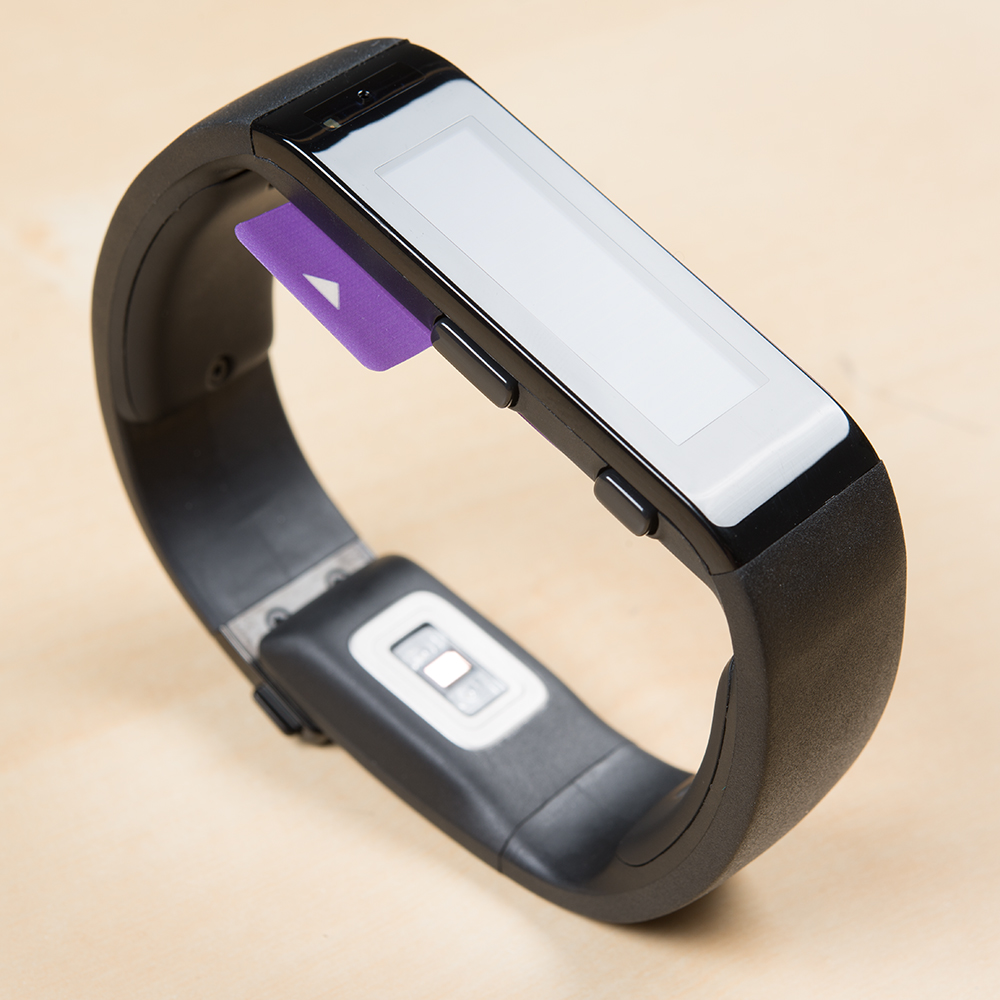
Microsoft Band was a fitness tracker that also showed notifications for calls, emails and texts, built by Microsoft for its Microsoft Health service.
The company announced both on October 29, 2014. Its launch post led with Microsoft Health, a cloud service to store and combine fitness data, and called the Band "a smart band designed for Microsoft Health." It was meant to be worn 24 hours a day, the post said.
The Band cost $199 and had 10 sensors, Microsoft said. PCWorld listed an optical heart rate sensor and GPS among them, and reported that it worked with Android phones, iPhones and Windows Phones. Microsoft said it was on sale in the US "in limited quantities" online that day and in its own stores from October 30.
The same post said other device makers could "license our 10 wrist-worn sensor modules." Microsoft Health's launch partners included Jawbone, maker of the UP fitness band.
Windows Central's Daniel Rubino wrote that week that the Band was "best thought of as a demonstration device for Microsoft's sensor and software technology."
What happened
Microsoft unveiled the Band 2 at an event in New York on October 6, 2015, with a curved screen and a barometer. It went on sale in the US on October 30 at $249.99, Microsoft said.
In February 2016, Rod Trent of SuperSite for Windows wrote that he was "seeing more and more reports" of splits and tears in the thin skin along the Band 2's sides.
On September 13, 2016, Microsoft told ZDNet's Mary Jo Foley that it still sold the Band 2 and remained committed to "exploring the wearables space." Her contacts said no new Band was coming that year. She also heard that Microsoft had disbanded a group trying to run Windows 10 on the Band.
The Band 2 disappeared from Microsoft's online store on October 3, 2016, ZDNet reported. Microsoft said it had "sold through our existing Band 2 inventory" and had "no plans to release another Band device this year."
Later that month, Windows Central's Zac Bowden published photos of a waterproof Band 3 prototype and wrote that Microsoft had halted its development.
On March 1, 2019, Microsoft announced that its Band apps and Health Dashboard would end on May 31, The Verge reported. Its support page offered refunds of $79.99 for a first Band and $175 for a Band 2 to owners under warranty or who had synced one in the previous three months.
Microsoft ended the apps and services on May 31, 2019, Windows Central reported in June.
Why it failed
Reviewers faulted the Band's bulk, comfort, battery life, price and purpose, and owners reported torn straps. Microsoft gave no reason for ending it in any statement I found, and a Windows Central editor later said he'd heard Microsoft sold the Band 2 at a loss.
What Microsoft said
None of Microsoft's statements that I found explains the decision. In October 2016, it said it had no new Band planned that year and would "continue to invest in the Microsoft Health platform," which it called open to "all hardware and apps partners."
Foley wrote that day that she was still waiting for Microsoft to say when and why it pulled the Band.
The 2019 support page gave dates and refund terms, but no reason.
What reporting showed
Reviewers of the Microsoft Band liked its software and struggled with its hardware. After two hours wearing the first Band, The Verge's David Pierce wrote, "it's big, and it's heavy."
Lauren Goode's Band 2 review for The Verge found it "still unbending and uncomfortable to wear, especially to bed," with battery life of "two days at best." She called it a fitness tracker "with the short battery life of a smartwatch," and wrote that even Microsoft didn't seem entirely sure "who it's really for." At $249, up from $199, it cost more than a lot of other step counters, she wrote.
Her best guess was that Microsoft "isn't in it for the hardware" and wanted people using Microsoft Health. Foley made a similar case at ZDNet, writing that the Band's "real purpose" was to build the user base for Microsoft services. She added that hardware had been "a supporting player" at Microsoft under CEO Satya Nadella.
On quality, Foley wrote that Microsoft had "been plagued by quality issues" with the Band 2, with the skins on "more than a few users' devices" splitting. Trent wrote that Microsoft was replacing torn bands, though owners had to ship them back and wait about two weeks.
When sales ended, The Verge's Chris Welch wrote that the Band, "often criticized for its awkward, uncomfortable design, never really caught on."
What later analysis found
The later accounts I found come from Zac Bowden, a Windows Central senior editor who collects Microsoft prototypes, not from Microsoft.
Reviewing a Band 3 prototype in 2018, he wrote that the line's durability "was never great."
In March 2019, he wrote that the primary reason Microsoft killed the Band was "very likely" that "it wasn't making any money for Microsoft." He said he'd heard "through numerous sources" that Microsoft sold the Band 2 at a loss, even at about $250. The durability problems were "unacceptable," he wrote, and likely played "a huge part" in the Band's end.
He also argued that with Lumia phones and Windows 10 Mobile near their end, it was safer for Microsoft to drop the Band "before it poured too much money into Band."
The stage it reached
Microsoft Band died in the introduction stage, the launch period of the product life cycle, when awareness is low and sales are small.
The Band launched in limited quantities, and the second model, a year later, cost $249.99 against the first's $199. Companies in this stage often won't report volume, and none of the Microsoft posts I read gave a sales figure.
In October 2016, The Verge wrote that Microsoft had decided to "cede the market" to Fitbit, Samsung, Garmin, Misfit and Apple, among others.
No source I read showed it growing, so I count it as a failure, not a decline.
The lesson
I think the Band shows the risk of hardware built to promote a platform. Microsoft's launch post put Microsoft Health first and the Band second.
Owners paid $199 or $249.99 for a band meant to be worn day and night, and the strap had to last.
If your device exists to seed a service, hold it to the standard of a product anyway. Test it for months of real wear, and work out what each unit costs you before you ship the second version.
Microsoft dropped the device in 2016 and the service in 2019, with refunds for recent users and owners under warranty. If you might walk away from hardware people wear every day, decide before launch what you'll owe them when you do.
Causes at a glance
Reporting at the timeQuality and reliability
Band 2 skins split on more than a few units, ZDNet and SuperSite for Windows reported
Reporting at the timeUnclear value
Reviewers found it bulky and short on battery, and its audience unclear
Reporting at the timePricing
The Band 2 cost more than a lot of step counters, The Verge's review said
Source7
Reporting at the timeChange of company strategy
Hardware was a supporting player under Satya Nadella, ZDNet's Mary Jo Foley wrote
Later analysisBusiness model and costs
A Windows Central editor heard Microsoft sold the Band 2 at a loss
Source16
Sources
- 1.Microsoft (Official Microsoft Blog), Introducing Microsoft Health
October 2014 · Company statement
- 2.PCWorld, Meet Microsoft Band, Microsoft's $200, fitness-focused wrist wearable
October 2014 · Reporting at the time
- 3.The Verge, Wearing the Microsoft Band, the next big thing in fitness tracking
October 2014 · Reporting at the time
- 4.Windows Central, Why Microsoft Band is in short supply (it's not a marketing conspiracy)
November 2014 · Reporting at the time
- 5.Microsoft (Official Microsoft Blog), Microsoft unveils new era of Windows 10 devices at event in NYC
October 2015 · Company statement
- 6.Microsoft Devices Blog, Pre-order now: Surface Book, Surface Pro 4, and Microsoft Band 2
October 2015 · Company statement
- 7.The Verge, Microsoft Band 2 review: An identity crisis on your wrist
October 2015 · Reporting at the time
- 8.SuperSite for Windows, Growing Concerns Over Tears in Microsoft Band 2 Skin
February 2016 · Reporting at the time
- 9.ZDNet, Don't expect a new Microsoft Band device this year (or maybe ever)
September 2016 · Reporting at the time
- 10.ZDNet, Microsoft pulls Band listings from its Store; admits no Band 3 this year
October 2016 · Reporting at the time
- 11.The Verge, The Microsoft Band is dead
October 2016 · Reporting at the time
- 12.Windows Central, More photos reveal a slimmer, waterproof (and likely canceled) Microsoft Band 3
October 2016 · Reporting at the time
- 13.Windows Central, Microsoft Band 3 review: The best wearable Microsoft never released
January 2018 · Later analysis
- 14.The Verge, Microsoft to offer Band refunds, announces end of apps and services
March 2019 · Reporting at the time
- 15.Microsoft Support, End of support for the Microsoft Health Dashboard applications and services: FAQ
March 2019 · Company statement
- 16.Windows Central, Did Microsoft kill its Band wearable too soon?
March 2019 · Later analysis
- 17.Windows Central, Liquid Daffodil officially drops support for its Microsoft Band apps
June 2019 · Reporting at the time
More from the graveyard
Jul 2017
Jawbone UP
Jawbone Wearables
Jawbone was being liquidated by July 2017, The Information reported
Dec 2016
Pebble
Pebble Technology Wearables
Shut down on December 7, 2016, after selling its software assets to Fitbit
Dec 2019
Windows Phone and Nokia Lumia
Microsoft and Nokia Phones
Microsoft ended support for Windows 10 Mobile on December 10, 2019
Nov 2015
Zune
Microsoft Consumer hardware
Microsoft said in October 2011 it would no longer make Zune players, and retired Zune services on November 15, 2015