Consumer hardware NOV 10, 2026 6 MIN READ
Zune
My post on failed products examples covers twelve famous cases from tech and why each one failed.



The timeline as text
- October 23, 2001Apple introduced the iPod
- September 14, 2006Microsoft unveiled Zune, a 30GB player with wireless sharing
- November 14, 2006Zune went on sale in the US at $249.99
- January 9, 2007Apple announced the iPhone
- January 2009Microsoft reported Zune revenue down 54% in the holiday quarter
- September 15, 2009The touch-screen Zune HD went on sale
- October 2011Microsoft said it would no longer produce Zune players
- November 15, 2015Microsoft retired Zune services
- Company
- Microsoft
- Category
- Consumer hardware
- Launched
- November 2006
- Ended
- November 2015
- Stage reached
- Introduction
- AI product
- No
- Status
- Microsoft said in October 2011 it would no longer make Zune players, and retired Zune services on November 15, 2015
Zune failed because it reached a market the iPod already led, five years late, and the executive who ran it later called it "a chasing product" that nobody had a reason to go out and get. Microsoft said in October 2011 that it would make no more Zune players.
What it was
Zune was Microsoft's portable media player and music store, launched as its challenge to Apple's iPod and iTunes.
Microsoft unveiled it on September 14, 2006: a 30GB player with wireless sharing, an FM tuner and a 3-inch screen, in black, brown or white. It went on sale in the US on November 14, 2006, priced at $249.99. A Zune Pass music subscription cost $14.99 a month.
The feature that set it apart was wireless Zune-to-Zune sharing. A friend could play a song you sent "up to three times over three days," Microsoft's announcement said, and flag it to buy.
Apple had introduced the iPod on October 23, 2001.
What happened
Zune started far behind the iPod and never closed the gap.
In December 2006, Microsoft said it expected to sell 1 million Zunes through the first half of 2007, the Associated Press reported. Apple said it had sold 39 million iPods in the 12 months to September 30, 2006. NPD ranked Zune second among MP3 players in its first week and fifth by Black Friday week, when rivals, some much cheaper, ran promotions.
Time, citing Bloomberg Television, wrote in May 2009 that only 1.2 million Zune players were sold between launch and mid-2007.
On January 9, 2007, Apple announced the iPhone, which PCWorld later called "a widescreen iPod that could also make phone calls and surf the Web."
In January 2009, Microsoft's quarterly filing reported that "Zune platform revenue decreased $100 million or 54%" in the holiday quarter, "reflecting a decrease in device sales."
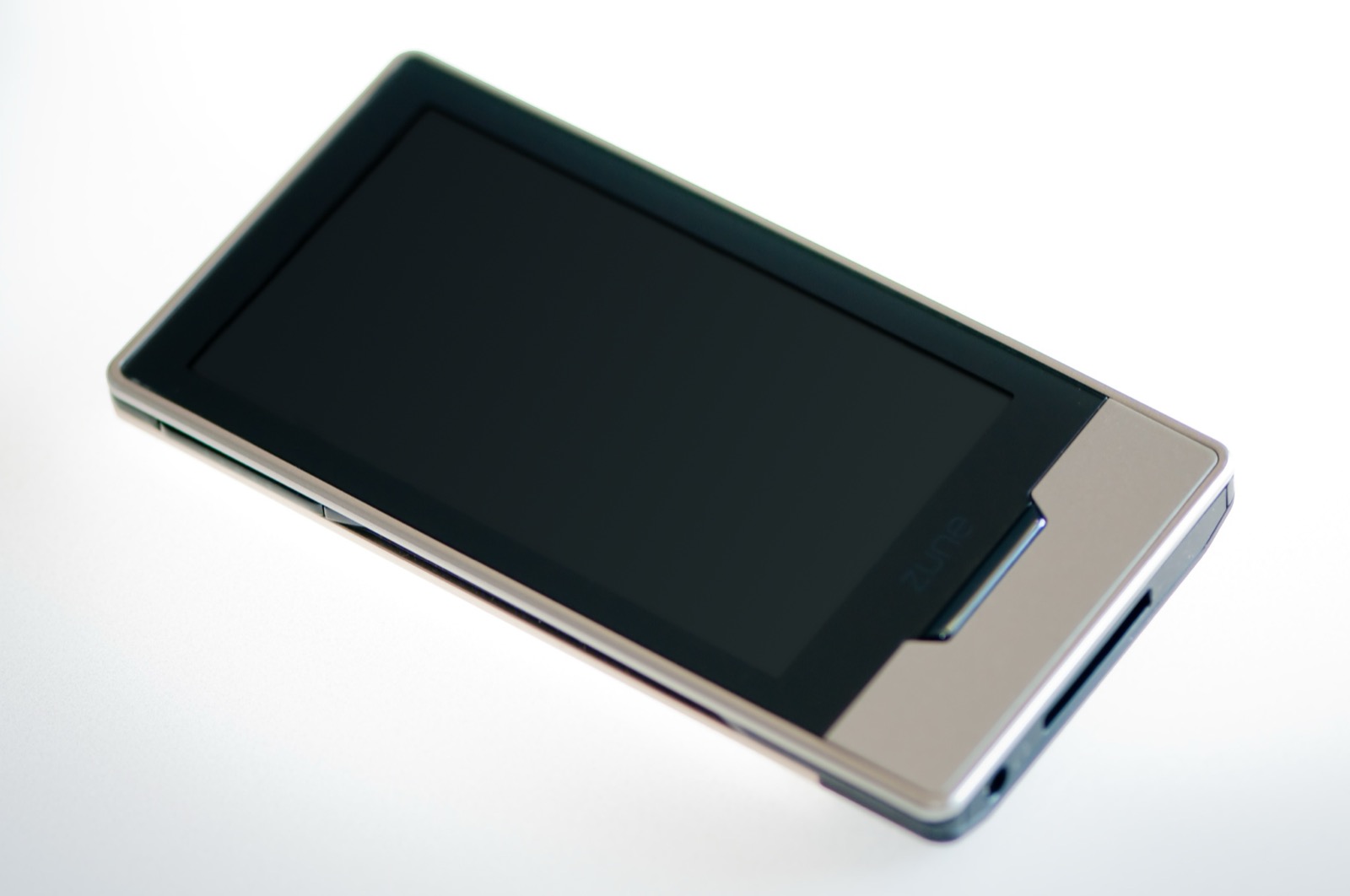
The touch-screen Zune HD went on sale on September 15, 2009. Engadget's review called it "a fine, fine device." Microsoft's designers later made the Zune HD's text navigation system "the centerpiece" of Windows Phone, Farhad Manjoo wrote in Slate.
In October 2011, Microsoft updated a Zune support page to say "we will no longer be producing Zune players," PCWorld reported. Microsoft retired Zune services on November 15, 2015, and converted Zune Music Pass subscriptions to Groove Music Pass.
Why it failed
By Microsoft's own account, Zune's revenue fell with its device sales, and in 2011 the company said Windows Phone would be the focus of its mobile music. Reporting showed Zune far behind the iPod, and the executive in charge later said it chased Apple into a market that was already leaving.
What Microsoft said
In its first weeks on sale, Microsoft cast Zune as a first step that would succeed even as a small No. 2 to the iPod among higher-end music players, the AP reported in December 2006. Bryan Lee, a Microsoft corporate vice president, still said it expected to eventually "be the leader" in the category.
Its January 2009 filing put the revenue drop down to lower device sales. Adam Sohn, a Zune spokesman, named steep discounting as a possible factor, including "massive special prices" on the older 30GB players, along with the economy and a shrinking MP3 category, paidContent reported. paidContent added that the shrinking category "didn't seem to hurt iPod sales in the holiday quarter."
The 2011 support page that announced the end of the players said that "Windows Phone will be the focus of our mobile music and video strategy." It gave no other reason.
What reporting showed
The AP wrote in December 2006 that Zune had debuted "to mixed reviews," and that its wireless sharing had been "panned for allowing shared music to be played only three times in three days before expiring."
By July 2009, NPD Group analyst Ross Rubin put Zune's share in the first half of the year at 2%, against about 70% for the iPod, MarketWatch reported. IDC analyst Susan Kevorkian said a survey the previous fall had found 4.8% of portable media player owners with a Zune and 61% with an iPod. "If Zune were going to make a strong move against the iPod, it already would have," she said.
Time put Zune on a May 2009 list of the decade's biggest tech failures, compiled by 24/7 Wall St., while the players were still on sale. "Sales were dreadful during the first several months after the launch," the list said.
What later analysis found
Robbie Bach, former president of Microsoft's Entertainment and Devices Division, who left Microsoft in 2010, spoke about Zune at a Seattle entrepreneurs' event in May 2012, GeekWire reported.
"If I had hindsight, 20-20, and could do Zune over again, we would skip portable media players completely," he said. Instead, he would have gone to the Windows Mobile team for "the coolest music service for your phones ever." The portable music market, he said, "was already leaving when we started."
He called Zune "a chasing product" that "actually wasn't a bad product," but said "there wasn't a reason for somebody to say, oh, I have to go out and get that thing." Its marketing message was "very confused," he said, which was "as much my fault as anybody's." He also blamed the music industry, which he said "just didn't get it" and was "so hooked on the drug of what Apple was supplying them" that it couldn't see it needed something else.
Manjoo bought a used Zune HD for a Slate column in October 2012. He found it "just as good as an iPod," but wrote that "there's no way in which it's better than an iPod," and that this was why it was doomed. "Its only sin was that it came a few years late," he wrote.
The stage it reached
Zune died in the introduction stage, which my product life cycle guide describes as the launch period, when awareness is low and sales are small.
I found no sign that it reached growth. Manjoo wrote that it "never got past the single digits in market share," and Microsoft's Zune revenue fell by more than half in its third holiday season.
I count it as a failure rather than a decline, because it never had a market of its own to lose.
The lesson
I think Zune's lesson is that matching the leader isn't a reason to buy. Bach said nobody had a reason to go out and get one.
Microsoft did pick a difference, wireless sharing, and then capped it at three plays in three days.
Bach's fix in hindsight was a music service for phones, which I read as a bet on where the market was going.
If you're entering late against a leader that, in Bach's words, has made "remarkably few mistakes," I'd look for the thing it can't do yet. Without one, I'd take Bach's hindsight and skip the device.
Causes at a glance
Reporting at the timeCompetition
NPD put its share at 2% in the first half of 2009, against about 70% for the iPod
Source9
Company statementWeak demand
Microsoft reported Zune revenue down 54% in the 2008 holiday quarter
Source7
Later analysisTiming
Five years behind the iPod, in a market a former executive said was already leaving
Later analysisUnclear value
Its division head later called it a chasing product with a confused message
Company statementChange of company strategy
Microsoft said Windows Phone would be the focus of its mobile music and video strategy
Sources
- 1.Microsoft, Microsoft's Zune Delivers Connected Music and Entertainment Experience
September 2006 · Company statement
- 2.Microsoft, Microsoft to Put Zune Experience in Consumers' Hands on Nov. 14
September 2006 · Company statement
- 3.NBC News (The Associated Press), One million Zunes by June? Microsoft says yes
December 2006 · Reporting at the time
- 4.Apple, Apple Presents iPod
October 2001 · Company statement
- 5.Time (24/7 Wall St.), The 10 Biggest Tech Failures of the Last Decade: Microsoft Zune
May 2009 · Reporting at the time
- 6.CBS News (paidContent.org), Microsoft's Zune: $100 Million Sales Drop Plus Layoffs Equals Questions
January 2009 · Reporting at the time
- 7.Microsoft (SEC filing), Form 10-Q for the quarter ended December 31, 2008
January 2009 · Company statement
- 8.Engadget, Zune HD review
September 2009 · Reporting at the time
- 9.MarketWatch, Microsoft's Zune continues to struggle
July 2009 · Reporting at the time
- 10.Microsoft (Zune.net), Microsoft introduces a powerful new Zune media player, PC software and online services
September 2009 · Company statement
- 11.Microsoft (Zune.net), Zune player support and service
October 2011 · Company statement
- 12.PCWorld, Microsoft Says No More Zunes, It's All About the Phone Now
October 2011 · Reporting at the time
- 13.GeekWire, Robbie Bach's four startup lessons from Xbox and Zune
May 2012 · Later analysis
- 14.Slate, Microsoft Zune: How one of the biggest flops in tech history helped revive a great American tech company
October 2012 · Later analysis
- 15.Microsoft Support, Zune retirement FAQ
December 2015 · Company statement