Wearables NOV 14, 2026 7 MIN READ
Jawbone UP
My post on failed products examples covers twelve famous cases from tech and why each one failed.
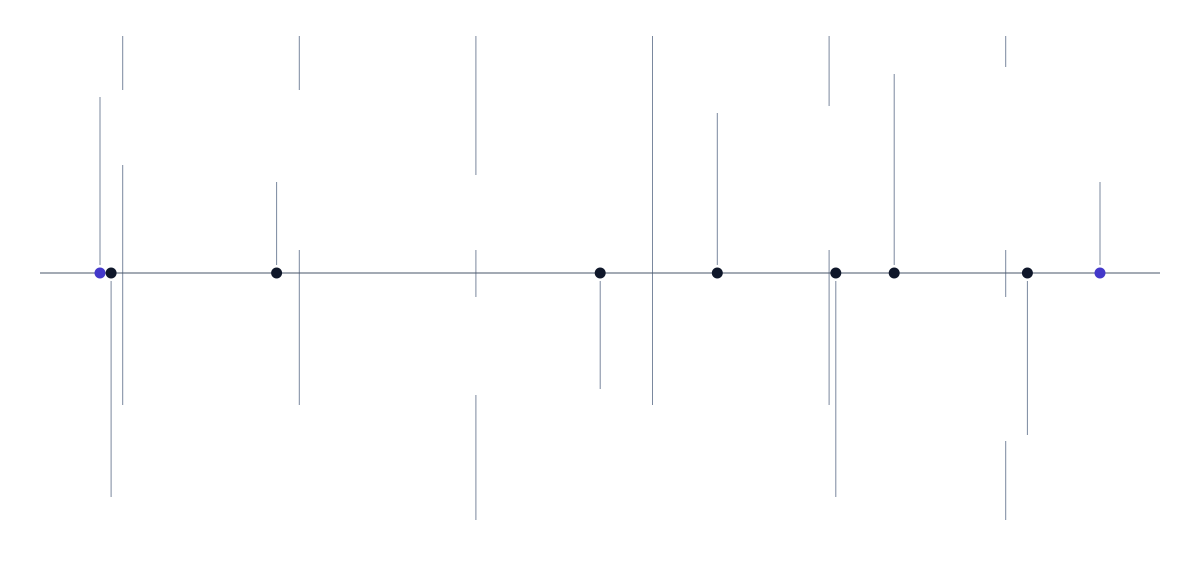

The timeline as text
- November 2011UP goes on sale in the US at $99.99
- December 8, 2011Offers full refunds and says it has paused UP production
- November 2012A rebuilt UP goes on sale at $130
- September 2014Raises $147 million at a $3.2 billion valuation, per PitchBook
- May 2015Sues Fitbit, alleging it plundered confidential information
- January 2016A $165 million round halves its valuation to $1.5 billion
- May 2016Reported to have stopped making UP bands; Jawbone denies it
- February 2017Reported to be preparing a shift from consumer bands to clinicians
- July 2017Reported to be in liquidation
- Company
- Jawbone
- Category
- Wearables
- Launched
- November 2011
- Ended
- July 2017
- Stage reached
- Growth
- AI product
- No
- Status
- Jawbone was being liquidated by July 2017, The Information reported
Jawbone UP failed because its first bands broke within weeks of launch, Fitbit and cheaper trackers outsold it, and, by its co-founder's account, Jawbone couldn't pair a reliable band with good margins. The company was being liquidated by July 2017, after raising more than $900 million, Reuters reported.
What it was
Jawbone UP was a wristband that tracked steps and sleep, with an iPhone app that logged meals from photos.
Its maker, San Francisco-based Jawbone, was co-founded by Hosain Rahman and Alexander Asseily and had made Bluetooth headsets and the Jambox speaker before it. Rahman was its CEO.
Its launch release of November 3, 2011 priced UP at $99.99 at Jawbone.com, Apple, AT&T, Best Buy and Target from November 6. It called the band "water-resistant", for wear "even in the shower."
What happened
Jawbone UP "sold out instantly" after its November 2011 launch, Roelof Botha of Sequoia Capital, who sat on Jawbone's board, said years later.
Some units "died suddenly within the first week of use," Macworld reported. On December 8, 2011, Rahman wrote to owners offering a full refund to anyone who wanted one, even if they kept the band. Jawbone had "temporarily paused production," the letter said, as MacRumors quoted it.
A rebuilt UP went on sale at $130 in November 2012, Macworld reported.
In September 2014 Jawbone raised $147 million at a $3.2 billion valuation, according to PitchBook figures cited by Reuters.
It sued Fitbit in California state court in May 2015, alleging that Fitbit had "systematically" plundered its confidential information by luring away employees who brought sensitive material with them, Fortune reported.
Jawbone laid off 15% of its staff in November 2015, Reuters reported. In January 2016 it raised $165 million in a round, led by the Kuwait Investment Authority, that halved its valuation to $1.5 billion.
Tech Insider reported in May 2016 that Jawbone had stopped making UP trackers and sold its remaining stock to a third-party distributor, Engadget wrote. It tried to sell itself that year and found no buyer, Reuters reported, citing investors with knowledge of the matter.
In February 2017, TechCrunch reported that Jawbone was preparing to move from "low-margin fitness bands" sold to consumers to a health service sold mainly to clinicians.
The Information reported in July 2017 that Jawbone was being liquidated, and TechCrunch confirmed it. Rahman was reportedly starting a separate company, Jawbone Health Hub, backed by a new investor. Reuters put the start of the proceedings in June.
Why it failed
Jawbone blamed the first bands' failures on two capacitors and gave no reason I could find for the liquidation. Reporting at the time pointed to rivals that outsold it and products that shipped late. In 2023 the founders and Botha added the testing, the margins and a cash gap Jawbone never caught up with.
What Jawbone said
Rahman called the failures "unacceptable" in his December 2011 letter. He wrote that Jawbone had "found an issue with two specific capacitors in the power system" that affected some bands' ability to hold a charge, and that it was fixing a syncing problem in the band's hardware.
Travis Bogard, Jawbone's vice president of product management and strategy, told Macworld the company hadn't yet pinned down the root cause. Asked about the impact on Jawbone's bottom line, he said it looked at "what's the best thing to do for the customer," adding, "Profitability will sort itself out if we do those things right."
When the May 2016 reports said it was leaving wearables, Jawbone said in a statement that "Speculation that Jawbone is exiting the wearables business or going out of business altogether is false."
I found no statement from Jawbone giving a reason for the liquidation. A spokesman declined to comment to Reuters, and Rahman didn't respond.
What reporting showed
When Jawbone sued, Fortune wrote that Fitbit led health tracking devices with a market share of "nearly 85%", citing Fitbit's IPO prospectus, with Jawbone, Apple and Nike competing for second place.
In December 2015, IDC gave Jawbone less than 3% of the wearables market, TechCrunch reported.
Fortune wrote at the liquidation that Jawbone "struggled to ship products on time and was outmaneuvered by rivals like Fitbit." Gartner's Angela McIntyre told NBC News that "execution issues" had made it slower to market than its competitors.
In Engadget, Daniel Cooper called the first UP "a disaster" and said his UP3 review unit broke after three weeks. The UP3, a $180 band that couldn't tell the time, was hard to justify when a phone could track activity just as well, he wrote, and Xiaomi's Mi Band was priced at around $22.
One insider told TechCrunch in February 2017 that Jawbone had burned $6 million a month at its peak.
Technology executives and financiers told Reuters that Jawbone showed how a flood of cash can keep alive companies with no future, and that it could have been an acquisition target years earlier had it raised less money.
What later analysis found
Its founders looked back in 2023 on Sequoia's Crucible Moments podcast, hosted by Botha. As a Sequoia partner who sat on Jawbone's board, he speaks as an insider, not an outside analyst.
Rahman said water "was getting into the product and it was shorting out a few capacitors." Jawbone had tested water resistance with pure water, he said, but real water carries skin oils, lotion and soap, which got through the band's glue seals.
Botha said the team didn't test how the band held up "after weeks of use." Multi-week testing wasn't the standard at the time, he said, and Jawbone had to deliver large quantities to big retailers for Christmas all at once.
By his estimate, what he called the recall cost about $100 million. With orders for the rebuilt band piling up in late 2012, Rahman said, Jawbone was "2 million units or so behind on open purchase orders" and lacked the cash to build them, so it turned to debt.
Whether it raised debt or equity didn't matter, Asseily said, because Jawbone could "never catch up" while it kept raising money to fill the cash gap.
He said it came down to "being too enamored by our ability to design fancy things," and not following through with reliable products at good margins. "If you do not have good margins, you cannot build a business," he said.
The stage it reached
Jawbone UP reached the growth stage, the second of the four product life cycle stages, and lost its place there.
After the relaunch, orders ran ahead of the cash to fill them, by Rahman's and Botha's account. In 2015 Fortune counted Jawbone among the companies fighting for second place behind Fitbit. That fits the stage, when sales climb and competitors pile in.
It didn't hold. IDC had Jawbone under 3% of wearables in December 2015, and its last major upgrade, the UP4, shipped in April 2015, TechCrunch reported. Botha said Jawbone stopped production in early 2016.
The lesson
I don't think offering the refund was the mistake. Botha said skipping it might have done worse damage to the brand.
Before the refund, by Rahman's and Botha's account, Jawbone tested the band in pure water and didn't check how it held up after weeks of wear. If you make hardware, test it the way people actually wear it, for longer than your return window, before you ship it in volume.
After it, Jawbone kept raising money to fill a cash gap, Asseily said. Work out what each unit earns after returns and replacements before you raise money to cover a gap. If that number is thin, fix it first.
Causes at a glance
Company statementQuality and reliability
Its CEO said two capacitors stopped some of the first bands holding a charge
Later analysisRushed launch
It was tested in pure water, not for weeks of wear, before a Christmas rollout
Source13
Reporting at the timeCompetition
Fitbit led the market, and Xiaomi priced a tracker at around $22
Later analysisBusiness model and costs
A co-founder said Jawbone couldn't pair reliable products with good margins
Sources
- 1.Jawbone (PR Newswire), UP by Jawbone with MotionX Technology Empowers You to Live a Healthier Life
November 2011 · Company statement
- 2.Macworld, Jawbone announces Up refund program
December 2011 · Reporting at the time
- 3.MacRumors, Jawbone CEO Offers Full Refund to UP Wristband Purchasers, Halts Sales
December 2011 · Reporting at the time
- 4.Macworld, Jawbone re-releases Up wristband sleep and fitness tracker
November 2012 · Reporting at the time
- 5.Fortune, Jawbone Sues Fitbit Over Secret Stealing Allegations
May 2015 · Reporting at the time
- 6.Engadget, Jawbone is reportedly stopping production on all of its fitness trackers (update)
May 2016 · Reporting at the time
- 7.TechCrunch, Jawbone looks to drop consumer wearables for clinical services
February 2017 · Reporting at the time
- 8.TechCrunch, Jawbone is being liquidated as its CEO launches a related health startup
July 2017 · Reporting at the time
- 9.Fortune, Jawbone Begins Liquidating Its Assets
July 2017 · Reporting at the time
- 10.NBC News, Consumer Tech Company Jawbone Is Going Out of Business
July 2017 · Reporting at the time
- 11.Engadget, Jawbone's demise heralds the end of the wearables industry
July 2017 · Reporting at the time
- 12.Reuters (via techpartner.news), Jawbone was a 'death by overfunding' in Silicon Valley
July 2017 · Reporting at the time
- 13.Sequoia Capital (Crucible Moments), Jawbone: The Rise and Fall of the First Wearable Technology Company
November 2023 · Later analysis