Personal transport NOV 9, 2026 7 MIN READ
DeLorean DMC-12
My post on failed products examples covers twelve famous cases from tech and why each one failed.


The timeline as text
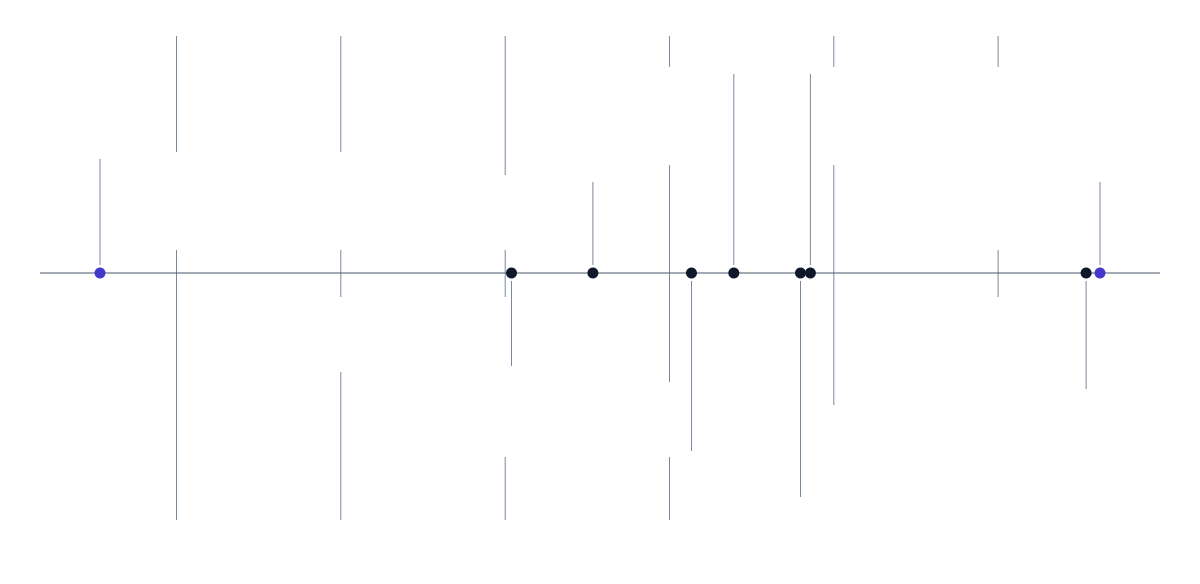
- July 1978British government aid for the Belfast car project began
- January 1981The first DMC-12s came off the Dunmurry line
- July 1981The factory added a second shift
- February 19, 1982The Belfast company went into receivership
- May 24, 1982Receivers suspended production, citing unsold stock
- October 19, 1982Final rundown of the plant began; DeLorean arrested the same day
- November 10, 1982Liquidators appointed after a court ordered a winding up
- July 1984Public Accounts Committee reported on the public money lost
- August 1984John DeLorean acquitted of the drug charges
- Company
- DeLorean Motor Company
- Category
- Personal transport
- Launched
- 1981
- Ended
- October 1982
- Stage reached
- Introduction
- AI product
- No
- Status
- Production stopped in May 1982, and the receivers began the Belfast plant's final rundown on October 19, 1982
The DeLorean DMC-12 failed because too few buyers in the US wanted a $25,000 sports car with a modest engine during a slump in car sales, and its Belfast factory had been built for far more of them. Receivers took over the Belfast company in February 1982, eight months before John DeLorean's arrest.
What it was
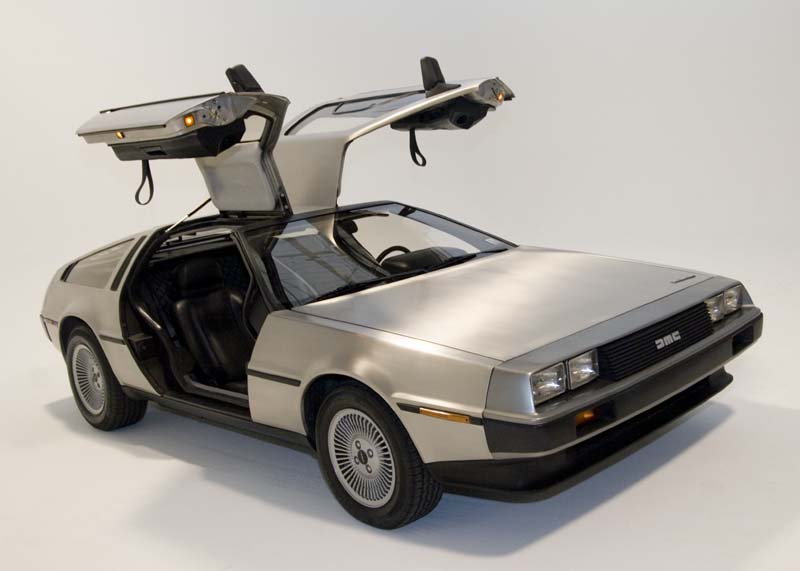
The DMC-12 was a sports car with gull-wing doors and an unpainted stainless steel body, built by John DeLorean's company at Dunmurry, near Belfast.
DeLorean had been the youngest person to run a division at General Motors, the ABA Journal wrote. He left GM in 1973 and set up his own company two years later.
Giorgetto Giugiaro styled it. Car and Driver reported that Colin Chapman's engineers at Lotus laid out its backbone frame, with a Renault-based V6 in the back.
Time put the price at $25,000. DeLorean had wanted to sell it for $12,000, which is where the name DMC-12 came from, CNN reported in 2019.
The British government backed the factory. Between July 1978 and February 1982 it provided some £77 million, the Northern Ireland Audit Office reported, for a plant meant to build up to 30,000 cars a year.
What happened
The DMC-12 was in production for less than a year and a half. Its first cars came off the Dunmurry line in January 1981, according to CNN.
Reviews that December were mixed. Road & Track said it was "impressed" with the car, but noted its 130 bhp and timed it at 10.5 seconds from 0 to 60 mph. Car and Driver wrote that "Early cars were cobby in appearance," though its newer test car "looked terrific overall."
In July 1981 the factory added a second shift, Northern Ireland Secretary James Prior later told the House of Commons.
By February 1982, only half of the 7,000 cars shipped to the US had sold, Time reported. DeLorean announced 1,000 layoffs and asked the government for more money. A spokesman for Margaret Thatcher's government said it did not regard DeLorean "as a bottomless pit."
On February 19, 1982, Prior told MPs that De Lorean Motor Cars Ltd, the Belfast company, was insolvent and that there was "no question of further public money." It went into receivership that day.
The receivers kept the plant going for three months. On May 24, 1982, they suspended production, blaming "the large stocks of unsold cars" in the US and Belfast and a potential investor pulling out, a minister told the Commons.
With no investor found, Prior announced on October 19, 1982, that the receivers were beginning the final rundown of the plant. The same day, John DeLorean was arrested in Los Angeles on drug charges, The Christian Science Monitor reported. A jury acquitted him in August 1984, persuaded that he had been entrapped, the ABA Journal wrote.
Liquidators were appointed on November 10, 1982, after a court ordered the company wound up, according to a written answer in Parliament.
About 9,000 DMC-12s were built in all, according to the Ulster Transport Museum.
Why it failed
The DMC-12 failed because it sold far below plan in a weak market, and the company ran out of money to wait for buyers. John DeLorean blamed financing and the British government. The government blamed the company's sales forecasts.
What DeLorean Motor Company said
As he announced the layoffs in February 1982, John DeLorean said the Thatcher government had "done everything to me except put me in a torture chamber," Time reported. He also said, "we just didn't have enough inventory financing to permit us to keep all the workers aboard."
While seeking British government money, he had predicted that Americans would buy 20,000 of his cars in 1982, Time wrote. None of the statements I found from him or the company blamed the car, its price or demand.
What reporting showed
Time wrote that DeLorean "had not reckoned on the continued disastrous slump in U.S. auto sales."
Prior gave the government's view in the Commons on the day of the receivership. On the reports he had seen, he said, talk of 18,000 to 20,000 sales a year had been "far too ambitious so early on," when 8,500 to 9,000 "would have been much more realistic." He called the second shift "the fundamental management mistake."
The road tests pointed at the engine. Road & Track called its time to 60 mph "not quick for a sports/GT car in this price category." On the Waterford Hills road course, Car and Driver said, the DeLorean was held back most "by its simple lack of power."
What later analysis found
Parliament's Public Accounts Committee reported in July 1984 that DeLorean's companies had received about £77 million of UK taxpayers' money "and lost most of it within four years." Its chairman, Robert Sheldon, quoted that finding in a 1985 Commons debate.
The committee called the project "one of the gravest cases of the misuse of public resources" and found "misplaced optimism by Government and its advisers." Sheldon told MPs that more than $17 million paid to GPD, a Swiss-based company registered in Panama, for the car's development "was misappropriated without detection." None of it was used to develop the car, he said.
Later accounts fault the car itself. The ABA Journal called it "overpriced, underpowered and plagued by mechanical defects." CNN reported that the first cars "had quality control issues, which didn't help with sales," and that a Corvette cost around $16,000 at the time.
The Ulster Transport Museum says problems with parts, including the gull-wing doors, "damaged its reputation."
Graham Brownlow, an economist at Queen's University Belfast, argued in a 2014 paper that neither DeLorean's "psychological flaws" nor the supposed weakness of activist industrial policy was a compelling explanation. He pointed to "lax cost control, poor productivity and general reliance on subsidy," which held output back through 1981. Citing an earlier book, he noted that discounts were already being offered on unsold cars by late 1981.
The stage it reached
The DMC-12 died in the introduction stage, the launch period in the product life cycle.
DeLorean's Belfast company went into receivership about 12 months after full-scale production began, the Audit Office said.
In its whole life the plant built fewer than a third of the 30,000 cars a year it was planned for.
Like the Segway, it had a factory sized for a forecast that buyers never met.
Its cult status came from the Back to the Future films, the Ulster Transport Museum notes, and the first of them came out three years after production stopped.
The lesson
I think the DeLorean's lesson is in its second shift, not in John DeLorean's arrest. The factory had stopped building cars five months before that.
In July 1981, about six months after the first cars came off the line, DeLorean added the shift. By February, half the cars shipped to the US were unsold and the company was insolvent.
It's the introduction-stage mistake I worry about most, letting funding run far ahead of sales. Public money made the forecast easier to believe, I suspect.
If you're about to add capacity for a new product, wait for sales to show the demand, and write down the sell-through number that would justify the next shift.
Causes at a glance
Reporting at the timeWeak demand
Half of the 7,000 cars shipped to the US were unsold by February 1982
Reporting at the timeTiming
It reached American buyers during a deep slump in US car sales
Source1
Reporting at the timePricing
Road tests found its 130 bhp engine slow for a car costing about $25,000
Later analysisQuality and reliability
Early cars had quality problems that hurt sales, later accounts say
Company statementBusiness model and costs
John DeLorean blamed a lack of inventory financing and the British government
Source1
Later analysisBusiness model and costs
Lax cost control and reliance on subsidy, a 2014 study found
Sources
- 1.Time, Ante-Up Time
February 1982 · Reporting at the time
- 2.UK Parliament (Hansard), De Lorean Motor Cars Ltd
February 1982 · Reporting at the time
- 3.UK Parliament (Hansard), De Lorean Motor Company
May 1982 · Reporting at the time
- 4.UK Parliament (Hansard), De Lorean Motor Company
October 1982 · Reporting at the time
- 5.UK Parliament (Hansard), De Lorean Motor Company (written answer)
November 1982 · Reporting at the time
- 6.Road & Track, 1982 DeLorean DMC-12: The Vintage Road & Track Test
December 1981 · Reporting at the time
- 7.Car and Driver, Tested: DeLorean vs. Chevy Corvette, Datsun 280-ZX, Ferrari 308GTS, Porsche 911
December 1981 · Reporting at the time
- 8.The Christian Science Monitor, News In Brief
July 1984 · Reporting at the time
- 9.UK Parliament (Hansard), Public Accounts (debate on the De Lorean report)
May 1985 · Later analysis
- 10.Northern Ireland Audit Office, Department of Enterprise, Trade and Investment: De Lorean: The Recovery of Public Funds
February 2004 · Later analysis
- 11.ABA Journal, October 19, 1982: John DeLorean Arrested
October 2011 · Later analysis
- 12.Queen's University Centre for Economic History (Graham Brownlow), Soft Budget Constraints and Regional Industrial Policy: Reinterpreting the Rise and Fall of De Lorean
October 2014 · Later analysis
- 13.CNN, DMC DeLorean: The troubled past of the car that went back to the future
May 2019 · Later analysis
- 14.Ulster Transport Museum (National Museums NI), DeLorean DMC-12
Later analysis
More from the graveyard
Nov 1959
Edsel
Ford Motor Company Personal transport
Ford confirmed on November 19, 1959 that it had discontinued the Edsel
2019
Tata Nano
Tata Motors Personal transport
Tata Motors built no Nanos in 2019 and never formally announced the end
Jul 2020
Segway PT
Segway Personal transport
Segway retired the PT and ended its US production on July 15, 2020