Games and consoles NOV 18, 2026 7 MIN READ
Ouya
My post on failed products examples covers twelve famous cases from tech and why each one failed.

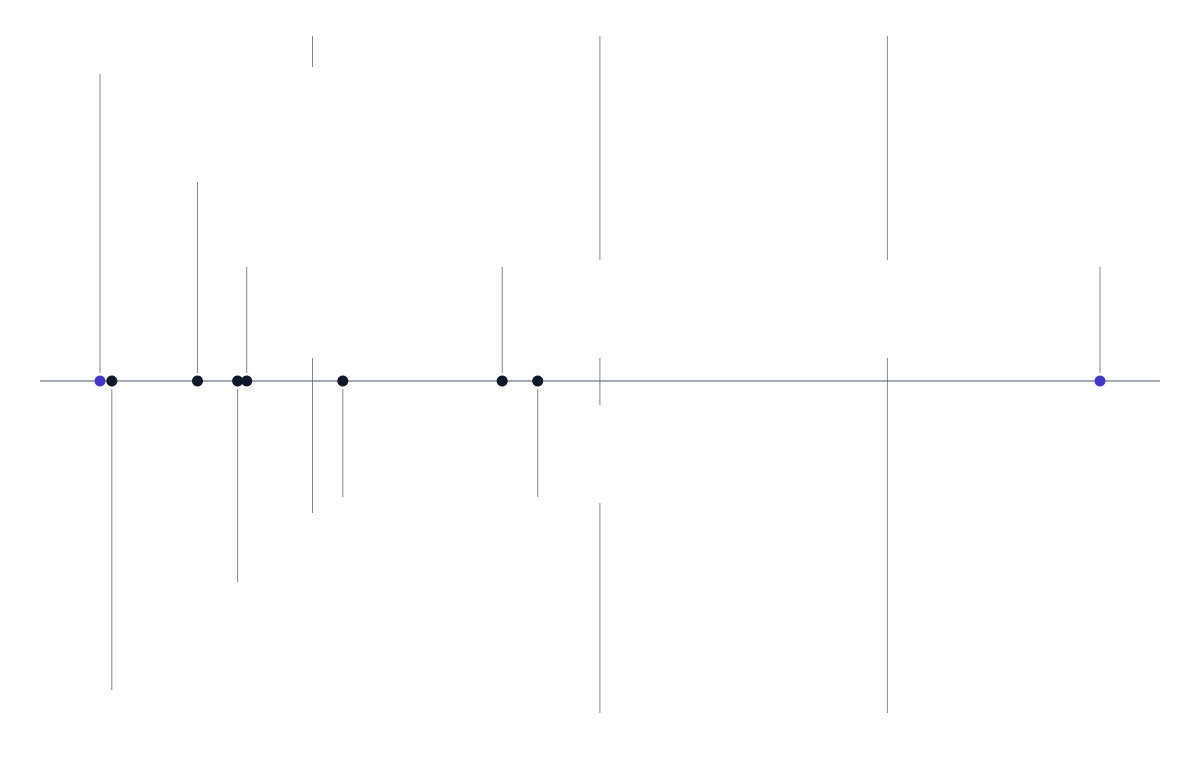
The timeline as text
- July 10, 2012Kickstarter campaign opens with a $950,000 goal
- August 9, 2012Kickstarter closes with $8,596,475 from 63,416 backers
- March 2013Consoles start shipping to Kickstarter backers
- June 25, 2013Goes on sale in the US, UK and Canada at $99
- July 18, 2013Launches the $1 million Free the Games Fund
- March 19, 2014Says it will let developers charge up front
- April 28, 2015Fortune reports Ouya tripped a debt covenant and is for sale
- July 27, 2015Razer says it bought Ouya's software; the console is discontinued
- June 25, 2019Razer's date for shutting the Ouya store and accounts
- Company
- Ouya
- Category
- Games and consoles
- Launched
- June 2013
- Ended
- June 2019
- Stage reached
- Introduction
- AI product
- No
- Status
- Razer set June 25, 2019, as the shutdown date for the Ouya store and accounts; the console was discontinued in 2015
Ouya raised nearly $8.6 million on Kickstarter for a $99 Android games console. It failed because it reached stores unfinished, with a controller reviewers disliked and few games worth buying it for. In 2015, Fortune reported, its maker had tripped a debt covenant and put itself up for sale.
What it was
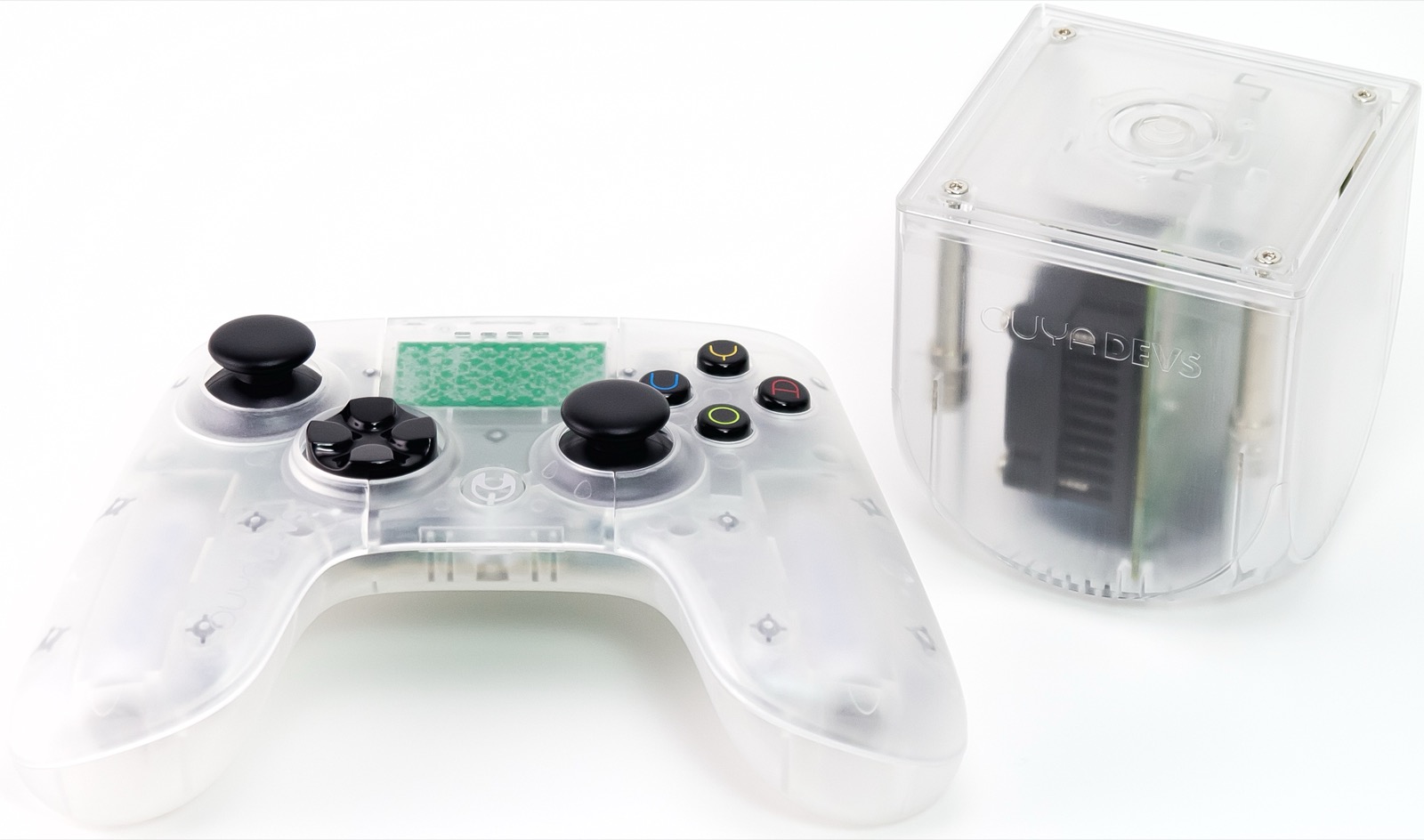
Ouya was a small games console that ran Android and plugged into a TV, sold for $99 by a Santa Monica, California company of the same name. Julie Uhrman founded the company and ran it as CEO.
Its Kickstarter pitch courted developers. It said "every OUYA console is a dev kit," with no license to buy, and that rooting it wouldn't void the warranty. The one condition for games was that "at least some gameplay has to be free."
Yves Behar designed the box. Inside, The Verge wrote, it was basically an Android smartphone, built around a Tegra 3 chip.
What happened
The Kickstarter campaign opened on July 10, 2012, with a goal of $950,000. It passed $1 million in just over eight hours, the fastest of any Kickstarter project to that point, Kickstarter said the next day. When it closed on August 9, 2012, 63,416 backers had pledged $8,596,475.
Consoles started shipping to backers in March 2013, and the early reviews, written on backers' units, were rough.
Ouya went on sale in the US, UK and Canada on June 25, 2013, at $99, with over 170 games, TechCrunch reported. Some backers still didn't have theirs, and Uhrman apologized to them that morning.
NPD analyst Liam Callahan called its first month of retail sales, not counting Ouya's own store, "relatively light for a new console," Joystiq reported. The first of three possible reasons he gave was "the lack of a major marquee title." Uhrman answered that Ouya "sold every unit available launch week."
Organ Trail's developer told Gamasutra the game had made 501 sales from 13,112 downloads, GamesIndustry.biz reported that July.
On July 18, 2013, Ouya launched the Free the Games Fund, $1 million to match the Kickstarter money of games that stayed exclusive to Ouya for at least six months. Several of the games that qualified were suspected of "astroturfing," Gigaom reported, and Uhrman changed the fund's rules.
In 2014 Ouya started offering its games on other companies' devices, including Mad Catz's MOJO console. That August, Polygon reported, citing Reuters, that Ouya had reached a partnership with Xiaomi.
In April 2015, Fortune reported that Ouya had tripped a debt covenant and hired a bank to sell itself.
Razer said on July 27, 2015, that it had bought Ouya's software, content catalog and store in a deal that closed on June 12. It didn't take the hardware, which Ars Technica reported was discontinued. Min-Liang Tan, Razer's CEO, told TechCrunch there were "about 200,000 users on the OUYA platform."
Razer set June 25, 2019, as the day it would shut the Ouya store and deactivate accounts, its support page said. Downloaded games might still work if they didn't check a purchase at launch. By August 2019, the ouya.tv address redirected to that notice.
Why it failed
Reporting at the time blamed Ouya's failure on an unfinished console, a thin catalog and stronger rivals. Ouya itself conceded that its games fund wasn't working and that developers struggled with its free-to-try rule, and its CEO's memo tied the pace of the sale to its debt holder.
What Ouya said
I found no post-mortem from Ouya and no interview in which Uhrman named a cause.
When the Free the Games Fund drew suspect campaigns in 2013, Uhrman said, "We hear you loud and clear that the program isn't working," Polygon later reported. She told Gigaom that developers had warned Ouya it was "too idealistic" and "too naive."
In March 2014, an Ouya blog post said it would let developers charge up front instead of offering a free trial. Many of them, it said, "had trouble meeting the requirement, didn't want to make a demo, or weren't sure how to monetize their game."
In her April 2015 memo, as Fortune quoted it, Uhrman wrote, "Given our debtholder's timeline, the process will be quick."
Ed Fries, an Ouya board member, told Ars Technica the week before the sale was announced that Ouya had not really become a competitor for Xbox or PS4. "We should be more realistic about what's possible," he said.
What reporting showed
Reviewers agreed the console wasn't ready. Engadget's Tim Stevens kept finding the face buttons "getting stuck" under the controller's faceplate. The Verge's David Pierce wrote, "This console isn't finished," and said backers had "signed up to beta-test a game console, whether they meant to or not." After the retail launch, Polygon's review said "the Ouya's controller is awful," with face buttons that "routinely stick."
Pierce's review noted that Ouya's best "exclusive" was Final Fantasy III, a 1990 game sold elsewhere, and said the platform "desperately needs" a game like Grand Theft Auto.
TowerFall, the top title on Ouya, had sold 7,000 copies there by April 2014, Engadget reported, citing an interview its developer gave Eurogamer.
Ouya "had a difficult time making inroads" in a US console market dominated by Sony and Microsoft and also competed with cheap streaming boxes such as Amazon's Fire TV, The Wall Street Journal reported. That pressure and the cost of making hardware pushed Ouya toward licensing its games, the paper said. ExtremeTech wrote in 2014 that its $100 price point "is being matched by superior devices."
The Verge's Adi Robertson wrote in 2015 that Ouya's most successful games had expanded to other platforms, "reducing the incentive to buy the hardware."
What later analysis found
Looking back in May 2015, XDA's Mike McCrary wrote that early buyers found the console "could have used more time in the oven." By the time its major bugs were worked out, he wrote, "the internals were completely obsolete."
The platform, he added, "had stopped attracting high-quality developers, mostly due to lack of consumer interest."
As the store was closing in 2019, Vice's Nicole Carpenter wrote that the delayed launch, the flawed controller and the free-to-try model "plagued Ouya's release and development."
The stage it reached
Ouya died in the introduction stage, the launch period when awareness is low and sales are small.
A product is in introduction when most of its sales still need a demo or a free trial first. Ouya required every game to be free to try, then said in March 2014 that it would make that optional. NPD's analyst listed "low awareness due to Ouya being a new brand" among the possible reasons for its light first month.
It never reached growth, so on the product life cycle I count it as a failure, not a decline. Like Google Stadia, it was a games platform caught between too few players and too few big games.
The lesson
I think Ouya's Kickstarter measured the wrong thing. The campaign proved that 63,416 people liked the idea of a cheap, open console. It didn't prove they'd buy games on it, and that's the number developers needed.
If you're building a platform, prove the side that pays before you scale up the hardware. A handful of developers earning real money on it tells you more than a pledge total. If the first units are a beta, tell the backers paying for them.
Causes at a glance
Company statementMissing apps, content or partners
Ouya said its exclusive-games fund wasn't working and devs struggled with free-to-try
Company statementBusiness model and costs
Its CEO's memo put a quick sale on the debt holder's timeline
Source15
Reporting at the timeQuality and reliability
Reviewers found a controller with sticking buttons and a console that wasn't finished
Reporting at the timeWeak demand
NPD called its first month light, and its top game sold 7,000 copies there
Reporting at the timeCompetition
It struggled against Sony and Microsoft, and better devices matched its $100 price
Later analysisRushed launch
It shipped before it was ready; its internals were obsolete once major bugs were fixed
Source17
Sources
- 1.Ouya (Kickstarter), OUYA: A New Kind of Video Game Console
July 2012 · Company statement
- 2.Kickstarter, Ouya's Big Day
July 2012 · Reporting at the time
- 3.Engadget, OUYA review (founding backer edition)
April 2013 · Reporting at the time
- 4.The Verge, Ouya review: can an indie console take on Sony and Microsoft?
April 2013 · Reporting at the time
- 5.TechCrunch, OUYA Gets Its Official Retail Release, But The $99 Game Console Still Hasn't Reached Every Early Backer
June 2013 · Reporting at the time
- 6.Joystiq, June NPD: 3DS still on top, Ouya sales 'light' [update]
July 2013 · Reporting at the time
- 7.GamesIndustry.biz, Ouya devs reveal sales figures
July 2013 · Reporting at the time
- 8.Polygon, Ouya review
July 2013 · Reporting at the time
- 9.Gigaom, Ouya CEO Uhrman: We were "too naive" about its Free The Games fund trouble
October 2013 · Reporting at the time
- 10.Ouya, It's about CHOICE
March 2014 · Company statement
- 11.Engadget, 'Towerfall,' OUYA's most popular game, only sold 7,000 copies
April 2014 · Reporting at the time
- 12.Polygon, Ouya strikes a deal to bring games to China
August 2014 · Reporting at the time
- 13.ExtremeTech, The stillborn revolution: Ouya fails to sell, developer seeks buyout
September 2014 · Reporting at the time
- 14.The Wall Street Journal, Alibaba Breathes New Life Into Game-Console Maker Ouya
January 2015 · Reporting at the time
- 15.Fortune, Exclusive: Gaming startup OUYA needs to find a buyer quickly
April 2015 · Reporting at the time
- 16.The Verge, Gaming company Ouya is reportedly putting itself up for sale
April 2015 · Reporting at the time
- 17.XDA Developers, Ouya: A Look Back
May 2015 · Later analysis
- 18.Razer, Razer Acquires OUYA Software Assets
July 2015 · Company statement
- 19.TechCrunch, Razer Confirms Acquisition Of Ouya's Software, Tech And Dev Teams In All-Cash Deal
July 2015 · Reporting at the time
- 20.Ars Technica, So long, Ouya! Razer acquires microconsole's storefront, technical team
July 2015 · Reporting at the time
- 21.Polygon, This is why Razer bought Ouya (Hint: China)
July 2015 · Reporting at the time
- 22.Polygon, Indie devs scrambling as Ouya reportedly backs out of promised $1 million fund
July 2015 · Reporting at the time
- 23.Razer, Razer Forge TV support page (Forge TV and Ouya shutdown notice)
May 2019 · Company statement
- 24.Vice, Preservationists Are Racing to Save Ouya's Games Before They Disappear
June 2019 · Later analysis
- 25.Polygon, Kickstarter responds to the strange case of Ouya's Free the Games program
August 2013 · Reporting at the time
More from the graveyard
Jan 2023
Google Stadia
Google Games and consoles
Shut down on January 18, 2023, with hardware and game purchases refunded
Aug 1996
Virtual Boy
Nintendo Games and consoles
Nintendo dropped it in Japan in December 1995 and for good in August 1996
Feb 2025
Humane AI Pin
Humane Wearables AI
Sales ended February 18, 2025; Humane said the Pins would go offline February 28, 2025