Games and consoles NOV 13, 2026 7 MIN READ
Google Stadia
My post on failed products examples covers twelve famous cases from tech and why each one failed.



The timeline as text
- March 2019Google announces Stadia at the Game Developers Conference
- November 19, 2019Launches in 14 countries with the $129.99 Founder's Edition
- April 2020Players in 14 countries get two free months of Stadia Pro
- February 1, 2021Google says it is winding down its Los Angeles and Montreal studios
- July 29, 2022Stadia's official account says Stadia is not shutting down
- September 29, 2022Google announces it is winding Stadia down, with refunds
- January 18, 2023Stadia shuts down
- Company
- Category
- Games and consoles
- Launched
- November 2019
- Ended
- January 2023
- Stage reached
- Introduction
- AI product
- No
- Status
- Shut down on January 18, 2023, with hardware and game purchases refunded
Google Stadia streamed big-budget games from Google's servers, with no console needed. It failed because too few people played it and too few big games came to it, and each shortage kept the other in place, by the account of Google's own product director.
What it was
Google Stadia was a cloud gaming service, where games ran on Google's servers and streamed to the player's TV, computer or phone.
Phil Harrison, the vice president who ran it, unveiled Stadia at the Game Developers Conference in March 2019. In his announcement post, he wrote that a viewer watching a game on YouTube could click "play now" and be playing it seconds later, with "no downloads, no updates, no patches and no installs."
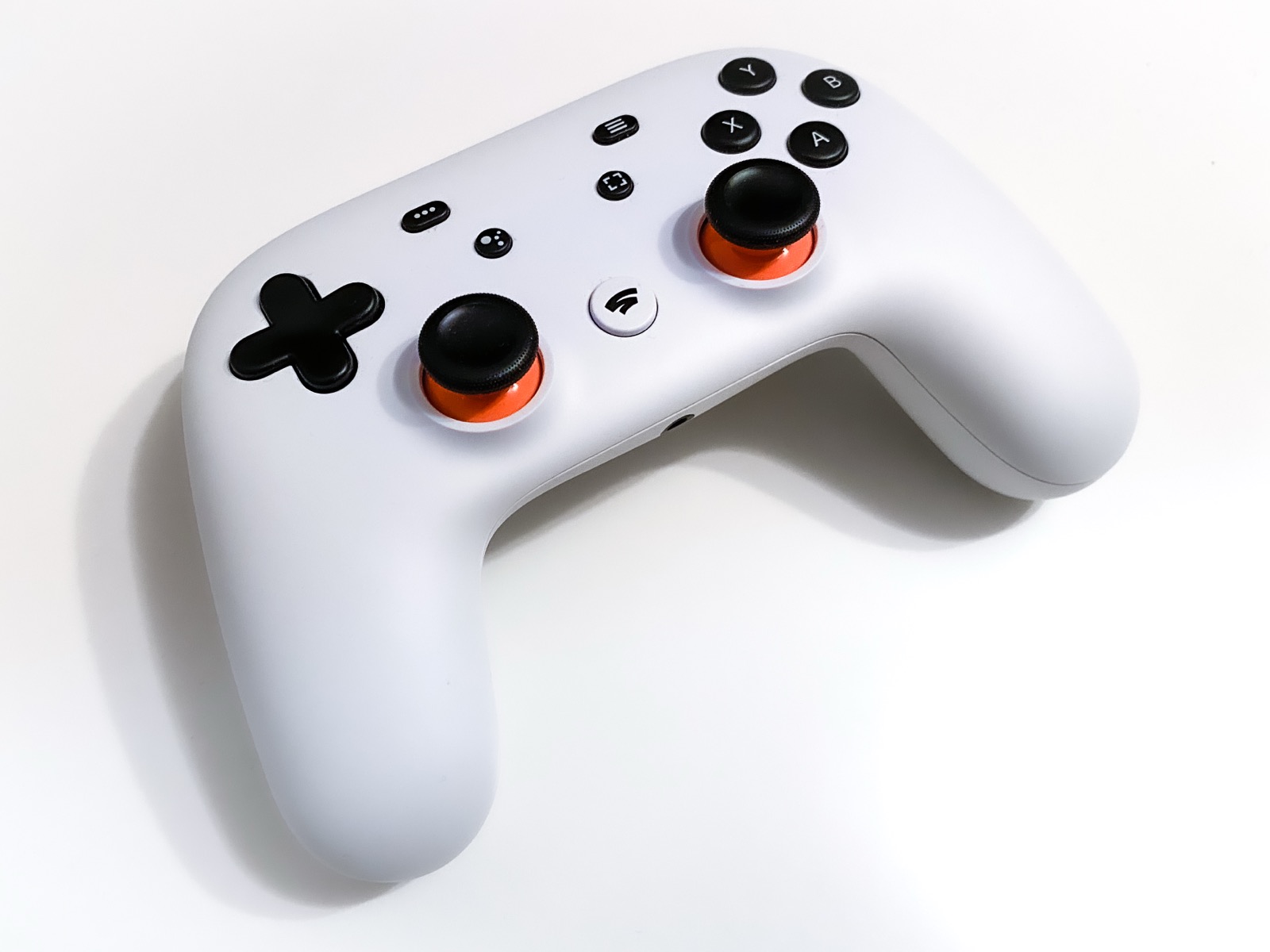
The first way in was the $129.99 Founder's Edition, with a Chromecast Ultra, a controller and three months of Stadia Pro. After that, Pro cost $9.99 a month. Google promised Stadia Base for 2020, a way to play games you'd bought without a Pro subscription.
What happened
Stadia launched on November 19, 2019, in 14 countries at once.
Sean Hollister's review in The Verge called it "effectively a beta that Google is charging real money for." He counted 22 games, most of which you could "already buy everywhere else," and wrote that "a lot of the features Google promised in March simply don't exist yet."
In April 2020, with people stuck at home, Google gave players in 14 countries two free months of Stadia Pro. Stadia also became free for anyone with a Gmail account, TechCrunch reported, which cited a Sensor Tower estimate of about 750,000 app downloads.
On February 1, 2021, Google said it would stop making exclusive games of its own, "beyond any near-term planned games." The Verge reported that Google was shutting down its studios in Los Angeles and Montreal, and that Jade Raymond, who led them, was leaving the company. Kotaku put the number of developers affected at about 150.
Business Insider reported in 2022 that Stadia had been "deprioritized within Google" while Google pitched its streaming technology to other companies.
On July 29, 2022, Stadia's official account told a user that "Stadia is not shutting down," PC Gamer reported.
Google announced on September 29, 2022, that it was winding Stadia down. It promised refunds for Stadia hardware bought from the Google Store and for games and add-ons bought in the Stadia store. The service shut down on January 18, 2023.
Why it failed
Google's public reason was that too few people used Stadia. Its product director later tied that to a shortage of big games, and reporting added a launch that came before the product was ready and a price model players disliked.
What Google said
Harrison's shutdown post said Stadia was "built on a strong technology foundation" but "hasn't gained the traction with users that we expected." It gave no other reason.
When Google decided to close the studios in 2021, he wrote that making top games "takes many years and significant investment, and the cost is going up exponentially." He also told staff that Microsoft's planned purchase of Bethesda was one of the factors behind the decision, Kotaku reported, citing sources.
A fuller account came from Dov Zimring, Google's director of product management for Stadia, who led its shutdown. In a declaration signed in December 2022, which became an exhibit in the FTC's case against Microsoft, he named "the cost and difficulty of securing content" as a significant factor.
Stadia's own research found that gamers choose a platform for its catalog and for where their friends play, he wrote, and Stadia never had the big-game library of Xbox, PlayStation or Steam. He called the result "a self-sustaining cycle," in which players wouldn't subscribe without the big games and many big developers wouldn't build for so few players.
Google had built Stadia on Linux, which "increased the cost for external game studios" to bring games over, he wrote, even though Google helped by covering "some or all of the costs" of porting. After Google's "drastic reduction in expectation" in February 2021, Stadia "was still unable to attract enough subscribers to maintain a viable business."
What reporting showed
Bloomberg's Jason Schreier reported in 2021 that some Stadia developers had argued Google should "position the launch as another beta test," because the fall 2019 deadline wouldn't let them deliver what players expected. Harrison and others on the leadership team resisted, his sources said.
Bloomberg also reported that Stadia missed its targets for controller sales and monthly active users "by hundreds of thousands." Players disliked buying games one at a time instead of subscribing to a catalog like Xbox Game Pass, it said.
At launch, Hollister wrote that Google's pricing left early adopters "paying three times," for the hardware, the service and the games.
Business Insider reported that Stadia's leaders set a goal of 1 million monthly active users by the end of 2020 and missed it by about 25%, according to one person, who said, "Retention was a real problem."
Google paid "tens of millions of dollars" to bring games like Red Dead Redemption 2 to Stadia, Bloomberg reported. Without exclusives of its own after the studios closed, it wrote, Stadia had "little hope of competing with big consoles."
What later analysis found
The UK's Competition and Markets Authority looked at Stadia while reviewing Microsoft's planned purchase of Activision Blizzard. In provisional findings in February 2023, it said its evidence suggested Stadia's failure "was caused at least in part by a lack of gaming content, which was connected to its use of a Linux OS."
The CMA cited evidence that porting a game to a different operating system is expensive and that developers are generally unwilling to make games for one "without a large installed user base." By its estimates, Stadia had 5 to 10% of the average monthly users of the cloud gaming services it compared, worldwide, from March to December 2021, and 0 to 5% from January to July 2022.
The stage it reached
Stadia died in the introduction stage, the launch period when almost nobody beyond early adopters has used a product.
It sold a bundle to early adopters, then gave away two free months of Stadia Pro, the kind of trial an introduction-stage product leans on. By the reported numbers it missed its 2020 user goal, and the CMA put its share of the cloud gaming users it counted at 10% or less.
It never reached growth, so on the product life cycle I count it as a failure, not a decline.
The lesson
I think Google built the part of Stadia it was good at and came up short on the part players choose by.
A data center can't supply a catalog or a crowd of friends, the two things Stadia's research said players pick a platform for. Paying for ports didn't close that gap, by Zimring's account. It's the same loop that sank Windows Phone, where Microsoft paid developers too.
Some of Stadia's developers wanted a beta, and Google's own mantra, as Bloomberg relayed it, was "think big but start small." Stadia launched big, in 14 countries at once.
If you're launching a platform, size the launch to the catalog you have on day one, not the one you plan to buy. When the product isn't ready, launch it as a beta and don't charge full price for it.
Causes at a glance
Company statementWeak demand
Google said Stadia hadn't gained the traction with users it expected
Source12
Company statementMissing apps, content or partners
Its product director said few big games and few players kept each other away
Source14
Reporting at the timeRushed launch
Some staff wanted a beta, and it shipped without features Google had promised
Reporting at the timePricing
Early buyers paid for hardware, a subscription and most games one by one
Reporting at the timeChange of company strategy
Without its own studios' exclusives, it had little hope of competing, Bloomberg wrote
Later analysisBusiness model and costs
Its Linux base made ports costly, which the UK regulator tied to its thin catalog
Source16
Sources
- 1.Google, Stadia: a new way to play
March 2019 · Company statement
- 2.Google, Become a Stadia "founder" with our first collection of games
June 2019 · Company statement
- 3.The Verge, Google Stadia review: the best of cloud gaming is still just a beta
November 2019 · Reporting at the time
- 4.Google, Stadia launches today
November 2019 · Company statement
- 5.Google, Play Stadia Pro for free, starting today
April 2020 · Company statement
- 6.TechCrunch, Google Stadia is now free for everyone, with a two-month trial for Pro tier
April 2020 · Reporting at the time
- 7.Google, Focusing on Stadia's future as a platform, and winding down SG&E
February 2021 · Company statement
- 8.The Verge, Google is shutting down its in-house Stadia game development studios
February 2021 · Reporting at the time
- 9.Kotaku, Stadia Leadership Praised Development Studios For 'Great Progress' Just One Week Before Laying Them All Off
February 2021 · Reporting at the time
- 10.Bloomberg, via The Star, Google's Stadia problem? A video game unit that's not Googley enough
March 2021 · Reporting at the time
- 11.PC Gamer, Google denies rumor that Stadia is shutting down
July 2022 · Reporting at the time
- 12.Google, A message about Stadia and our long term streaming strategy
September 2022 · Company statement
- 13.Business Insider, Inside Google's Last-Ditch Effort to Save Its Stadia Gaming Service
September 2022 · Reporting at the time
- 14.Google (Dov Zimring, court declaration), Declaration of Dov Zimring, FTC v. Microsoft, exhibit PX8003
December 2022 · Company statement
- 15.9to5Google, This is what the death of Stadia looked like
January 2023 · Reporting at the time
- 16.UK Competition and Markets Authority, Anticipated acquisition by Microsoft of Activision Blizzard, Inc.: provisional findings report
February 2023 · Later analysis
More from the graveyard
Dec 2019
Windows Phone and Nokia Lumia
Microsoft and Nokia Phones
Microsoft ended support for Windows 10 Mobile on December 10, 2019
Apr 2019
Google+
Google Social networks
Consumer Google+ shut down on April 2, 2019; its workplace successor, Currents, closed in 2023
Mar 2023
Google Glass
Google Wearables
Google stopped selling Glass Enterprise Edition on March 15, 2023
Dec 2020
Quibi
Quibi Streaming
The app stopped working on December 1, 2020; Roku bought its content distribution rights in January 2021