Apps and online services NOV 24, 2026 7 MIN READ
Google Reader
My post on failed products examples covers twelve famous cases from tech and why each one failed.
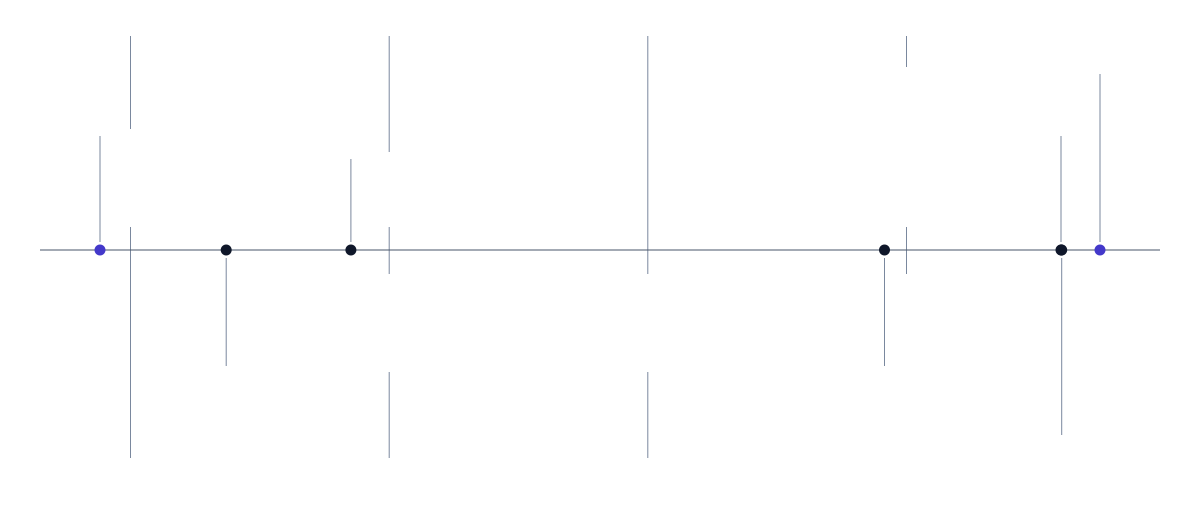

The timeline as text
- October 7, 2005Google adds Reader to Google Labs as an experiment
- September 28, 2006A redesign adds unread counts, folders and one-click sharing
- September 2007Reader leaves Google Labs
- October 31, 2011Google+ sharing replaces Reader's own sharing features
- March 13, 2013Google announces Reader will close on July 1, 2013
- March 15, 2013The Next Web reports a Reader petition has passed 100,000 signatures
- July 1, 2013Google shuts Reader down
- Company
- Category
- Apps and online services
- Launched
- October 2005
- Ended
- July 2013
- Stage reached
- Decline
- AI product
- No
- Status
- Google shut Reader down on July 1, 2013, after announcing the closure that March
Google Reader failed because Google stopped backing it, by the accounts of reporters at the time and the people who built it. The company said usage had declined, while those accounts point to Google+, which took over Reader's sharing and drew away its team.
What it was
Google Reader was a web app for following websites through their RSS and Atom feeds. In 2013, Google said it had launched Reader "to make it easy for people to discover and keep tabs on their favorite websites."
Chris Wetherell, a Google software engineer, announced it on Google's blog on October 7, 2005, as "a new experiment" in Google Labs.
It started as a demo Wetherell built after Jason Shellen, a product manager, asked him for an app to show how the Atom feed format worked, The Verge reported in 2023.
Two weeks in, Wetherell wrote that Reader accounts numbered "in the hundreds of thousands".
What happened
Google Reader took off after a 2006 redesign, lost its own sharing features to Google+ in 2011, and closed on July 1, 2013.
The first version "bombed," Wetherell told The Verge. A redesign on September 28, 2006 added unread counts, "mark all as read", folders and one-click sharing to a public page, and The Verge dates Reader's take-off to it. Reader left Google Labs in September 2007.
With its sharing features, Reader had also become "a social network in its own right," Rob Fishman wrote in BuzzFeed in December 2012. He reported that user growth more than doubled while Brian Shih was its product manager, from fall 2008.
Google said on October 20, 2011 that it would bring Reader and Google+ "closer together". On October 31, it swapped Reader's Like button for a +1, moved sharing to circles on Google+ and turned off "friending, following, shared items and comments".
Users protested. TechCrunch's Sarah Perez reported that Iranians were upset, citing a blog post that said Reader had been their way to get news "outside of government control."
On March 13, 2013, Urs Hölzle, Google's senior vice president of technical infrastructure, announced that Google would retire Reader on July 1, in a batch of closures that Google said brought its total since 2011 to 70 features or services.
A Change.org petition to save Reader passed 100,000 signatures in under 48 hours, The Next Web reported on March 15. Feedly, a rival reader, said more than 500,000 Reader users had joined it in 48 hours, and that more than 3 million new users had joined by early April.
Reader went offline on July 1, 2013. Google's farewell post said subscription data would be "permanently, and irrevocably deleted."
Why it failed
Google said Reader's usage had declined and that it wanted to focus on fewer products. Reporting pointed to Google+, to a company that judged Reader too small, and to Twitter and Facebook taking over how people followed the web.
What Google said
"While the product has a loyal following, over the years usage has declined," Hölzle wrote.
Alan Green, a Google engineer, gave "two simple reasons" on the Reader blog: declining usage, and that "as a company we're pouring all of our energy into fewer products."
Neither post gave a usage figure. A Google spokesperson declined to discuss the petition with The Next Web and pointed back to the two blog posts. Google didn't respond to The Verge's request for comment in 2023.
Green had made the same argument in 2011, writing that retiring Reader's sharing "helps us focus on fewer areas, and build an even better experience across all of Google."
What reporting showed
In October 2011, Perez called Reader "neglected" and wrote that its social features were being removed "in favor of deeper integration with Google+." When the change shipped, she wrote that Google had "ignored the cries of the niche community of Google Reader sharing enthusiasts".
"There was always a political fight internally on keeping people staffed on this little project," Shih told BuzzFeed.
"If Reader were its own startup, it's the kind of company that Google would have bought," he said, but inside Google, "it's tiny and isn't worth the investment." Jenna Bilotta, a Reader designer, said the company's senior people "would look at absolute user numbers," not market saturation. "So Reader was constantly on the chopping block."
On the day of the announcement, TechCrunch's Anthony Ha quoted Frederic Lardinois, who had written the previous fall that Google was "barely investing in Google Reader anymore" and, as far as TechCrunch knew, had moved almost all of its team to other projects.
Others blamed the format. RSS "lacked general consumer appeal," Drew Olanoff wrote in TechCrunch the same day, and "Twitter is a big RSS reader." He said he got more than enough to read from "Twitter, Flipboard and Facebook."
When Reader closed, Perez wrote, "Following websites using RSS feeds is just not something the 'normals' do." Reader "couldn't rival something like Twitter," she added.
What later analysis found
Two days after the shutdown, Marco Arment, who created Instapaper, wrote that he believed Google's usage explanation but didn't "believe that's the entire reason." Reader "conflicted with their far more important Google+ strategy," he argued, because Google needed people "reading and sharing everything through Google+."
In 2023, David Pierce interviewed the people who built Reader for The Verge. He put its peak at "just north of 30 million users," and wrote that executives "always seemed to regard Reader as a rounding error" at a company whose big products counted users in the hundreds of millions.
The team never grew past about a dozen people, many on loan from other teams, and by early 2011 Reader had been put into "maintenance mode," Pierce wrote. Before Google+, the team had stayed alive by promising to be "the guinea pig" for Google's other social ideas, including Google Buzz.
Google+'s leaders then wanted a number of Reader's people, according to The Verge, and many chose to leave Google instead. "As far as I could tell, nobody ever won against them," said Mihai Parparita, one of Reader's last engineers.
The stage it reached
Google Reader died in the decline stage, which my product life cycle guide describes as the stage when sales fall because the market has moved on to a substitute.
Reader found its market first, so I count it as a decline, not a failure to launch. Google later said usage had declined, and reporting named the substitutes, Twitter and Facebook.
The Verge's account of maintenance mode from early 2011 matches the decline post's advice to stop building features, though Google still shipped a redesign that October.
The lesson
I think Reader is a decline its owner helped along. By the time Google said usage had fallen, it had already given Reader's sharing to Google+, and the team behind it had been shrinking for years.
Neither of Google's posts said how much usage would have been enough.
If a product is too small for your company, as Shih said Reader was for Google, say so early. Then fund it properly or let it go somewhere that will. Wetherell told The Verge that outside Google, "VCs would have been throwing money at us left and right."
The shutdown itself was decent, with a fixed date and a way to export your subscriptions through Google Takeout. That part I'd copy.
Causes at a glance
Company statementWeak demand
Google said usage had declined over the years, despite a loyal following
Company statementChange of company strategy
Google said it was putting all of its energy into fewer products
Reporting at the timeChange of company strategy
Google swapped Reader's sharing for Google+ in 2011, over users' protests
Reporting at the timeCompetition
Following and sharing links moved to Twitter and Facebook
Reporting at the timeBusiness model and costs
Insiders called it too small to staff, and TechCrunch said Google was barely investing
Later analysisChange of company strategy
Later accounts say Google+ pulled away Reader's engineers and clashed with it
Sources
- 1.Google, Feed the world
October 2005 · Company statement
- 2.Google Reader Blog, Google Reader: Two weeks
October 2005 · Company statement
- 3.Google Reader Blog, Something looks... different.
September 2006 · Company statement
- 4.Google Reader Blog, Breaking up isn't hard to do
September 2007 · Company statement
- 5.Google Reader Blog, Upcoming changes to Reader: a new look, new Google+ features, and some clean-up
October 2011 · Company statement
- 6.TechCrunch, Iranians Upset Over Google Reader Changes
October 2011 · Reporting at the time
- 7.Google Reader Blog, New in Reader: a fresh design, and Google+ sharing
October 2011 · Company statement
- 8.TechCrunch, And Here It Is: The New Google Reader Revealed
October 2011 · Reporting at the time
- 9.BuzzFeed, Google's Lost Social Network
December 2012 · Reporting at the time
- 10.Google, A second spring of cleaning
March 2013 · Company statement
- 11.Google Reader Blog, Powering Down Google Reader
March 2013 · Company statement
- 12.TechCrunch, Google Closes The Book On Google Reader On July 1, Seven Other Products Also Get The Chop
March 2013 · Reporting at the time
- 13.TechCrunch, Google Reader's Death Is Proof That RSS Always Suffered From Lack Of Consumer Appeal
March 2013 · Reporting at the time
- 14.The Next Web, Petition to save Google Reader passes 100,000 signatures, but don't expect Google to reverse its decision
March 2013 · Reporting at the time
- 15.Feedly, Priorities: Keeping the site up, listening and adding new features.
March 2013 · Company statement
- 16.Feedly, Announcing the New Feedly Mobile
April 2013 · Company statement
- 17.TechCrunch, We Were The (1000+). Goodbye, Google Reader
July 2013 · Reporting at the time
- 18.Google Reader Blog, A final farewell
July 2013 · Company statement
- 19.Marco Arment, Lockdown
July 2013 · Later analysis
- 20.The Verge, Who killed Google Reader?
June 2023 · Later analysis
More from the graveyard
Apr 2019
Google+
Google Social networks
Consumer Google+ shut down on April 2, 2019; its workplace successor, Currents, closed in 2023
Dec 2011
Google Buzz
Google Social networks
Google retired Buzz in December 2011, about two months after saying it would focus on Google+
Apr 2012
Google Wave
Google Apps and online services
Google ended standalone development in August 2010 and shut the service down in April 2012