Apps and online services NOV 16, 2026 6 MIN READ
Google Wave
My post on failed products examples covers twelve famous cases from tech and why each one failed.
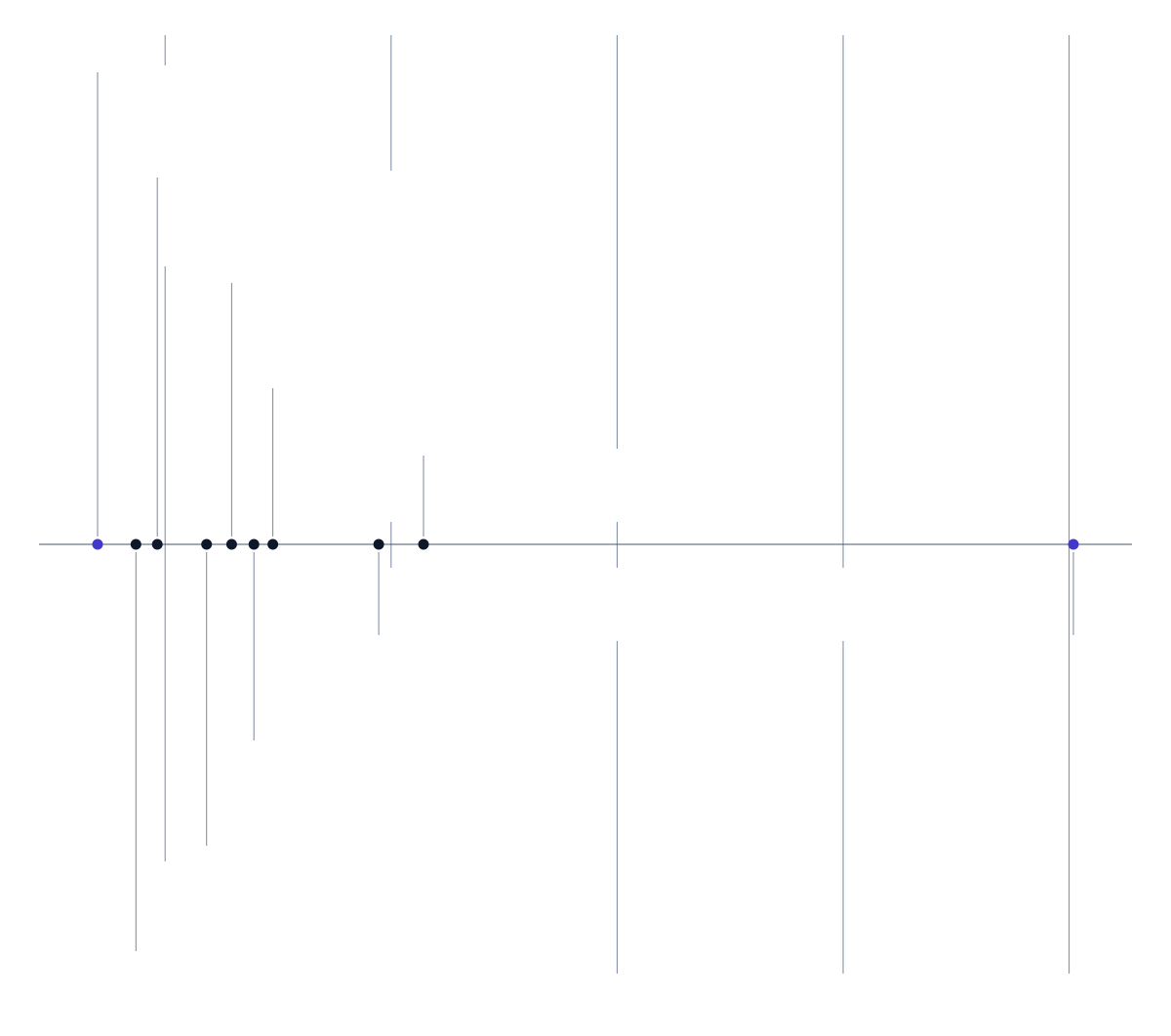
The timeline as text
- May 28, 2009Google unveils Wave at I/O as a preview for developers
- September 29, 2009Google says it will send more than 100,000 preview invitations
- December 7, 2009Google says everyone who asked for an invitation has been sent one
- May 2010Wave opens to everyone, with no invitation needed
- August 4, 2010Google stops developing Wave as a standalone product
- October 2010Wave co-creator Lars Rasmussen leaves Google for Facebook
- December 2010Wave enters the Apache Software Foundation's incubator
- November 22, 2011Google sets the shutdown for April 30, 2012
- April 2012The service shuts down and accounts are deleted
- January 15, 2018Apache retires its Wave project
- Company
- Category
- Apps and online services
- Launched
- May 2009
- Ended
- April 2012
- Stage reached
- Introduction
- AI product
- No
- Status
- Google ended standalone development in August 2010 and shut the service down in April 2012
Google Wave failed because few people could work out what it was for, and its invite-only preview left early users with few contacts to use it with. Google stopped developing it as a standalone product about 14 months after unveiling it.
What it was
Google Wave was a web app for real-time communication and collaboration, which Google unveiled at its I/O developer conference on May 28, 2009.
Lars Rasmussen, who had co-founded the mapping startup behind Google Maps with his brother Jens, announced it on Google's blog. He described a wave as "equal parts conversation and document". People in a wave saw each other's typing appear "nearly instantly", and a playback feature rewound the wave to show how it had changed.
The brothers built it with Stephanie Hannon in Google's Sydney office, TechCrunch reported. "Wave is what email would look like if it were invented today," the site quoted Rasmussen as saying.
Google described three layers: the product, a platform with open APIs, and a protocol meant to let anyone's Wave service work with Google's. "We want it to be an open system like email," Rasmussen told TechCrunch.
What happened
Google Wave went from a developer preview in May 2009 to the end of standalone development in August 2010, and the service shut down in April 2012.
On September 29, 2009, Google said it would start sending more than 100,000 invitations to a wider preview the next day. The post said Wave "isn't quite ready for prime time" and warned of "a crash every now and then".
Mashable reported on September 30 that thousands of people were still waiting for an invitation, and that bids on one listed on eBay had reached $70. In December 2009, Google said it had sent invitations to everyone who had requested one through its form, and TechCrunch reported that a million had gone out.
Google opened Wave to everyone through Google Labs in May 2010, with no invitation needed. Rasmussen told TechCrunch it had about a million active users.
On August 4, 2010, Urs Hölzle, a Google senior vice president, wrote that Google didn't "plan to continue developing Wave as a standalone product". Rasmussen left Google for Facebook at the end of October.
The Apache Software Foundation took Wave into its incubator in December 2010. In October 2011, TechCrunch said a new Google+ feature, Ripples, seemed a throwback to Wave's playback. On November 22, 2011, Google said Wave would become read-only on January 31, 2012, and be turned off on April 30. The Guardian reported in September 2012 that accounts weren't completely deleted until April 2012.
Apache retired its Wave project on January 15, 2018.
Why it failed
Google's stated reason was low adoption. Reporting at the time blamed a product that was hard to explain, released as an unfinished, invite-only preview that left users with few contacts on it.
What Google said
Hölzle's post said that despite "numerous loyal fans, Wave has not seen the user adoption we would have liked." He wrote that Google had been excited about Wave internally, "even though we weren't quite sure how users would respond to this radically different kind of communication."
The same day, CEO Eric Schmidt said after a panel at the Techonomy conference that Google liked Wave's interface and much of its technology, TechCrunch reported. "Remember, we celebrate our failures," he said.
A November 2009 survey post on Google's Wave blog said users' top request was more invitations, adding that "it's hard to communicate and collaborate if you have no contacts". Users also asked to be alerted to new waves, and said it was sometimes too slow.
In May 2010, Rasmussen told TechCrunch that the I/O demo video hadn't answered the question "what do we do with it right now?" "That's because we weren't sure," he admitted.
Days after leaving Google, he told the Sydney Morning Herald that Wave was "not quite the success that Google was hoping for" and that he had tried to persuade Google not to pull the plug. "I think Google was just not patient," he said.
What reporting showed
Charles Arthur wrote in The Guardian in March 2010 that everyone had tried Wave "and couldn't figure out what to do with it, and how to keep spammers out, and how to find other people who were using it."
The day after Google's announcement, Jemima Kiss suggested in The Guardian that "the difficulty in describing its function" was its biggest problem.
A guest post by Martin Seibert on TechCrunch in November 2009 called Wave "not suitable for real usage as too few people have an account." TechCrunch's MG Siegler wrote that December that he didn't keep Wave open all the time because "usage among people I know is too sporadic."
After the announcement, Siegler argued that "Google's get-it-out-there-early mentality failed", because the product was somewhat complex and "Google itself didn't know what to do with it, or how to pitch it." He also said Google cut it too soon, less than three months after it opened to everyone.
Siegler suggested putting Wave inside Gmail, as Google had done with Buzz, or wrapping it into Google Docs.
What later analysis found
In 2019, Gizmodo's Catie Keck wrote that Wave didn't last, "primarily because its tools were confusing".
Joseph Gentle, a former Google intern who worked on Wave around 2010, described a deeper problem in a 2020 post. To replace email, a wave had to span companies' servers the way an email thread does. "We got it working, kinda, but it was complex and buggy," he wrote, and "it never really worked."
The stage it reached
Google Wave died in the introduction stage, which my product life cycle guide describes as the launch period, when awareness is low and sales are small.
Wave was free, so there were no sales to count, only use. It was a preview for developers and invited users until May 2010, and Google stopped developing it as a standalone product less than three months after anyone could sign up.
I count it as a failure, not a decline, because it never found a market.
The lesson
I think Wave's lesson is that a communication tool is only useful when the people you talk to are on it, and Google rationed exactly that.
Google's survey post said so in November 2009, and Wave still needed an invitation until May 2010 while the team worked on scale and speed.
Rasmussen's own conclusion that May was that "it's about groups of people adopting Wave". Google then gave the open version less than three months.
If your product only works when a group adopts it, let whole groups in at once. And decide how long you'll give it from the day everyone can get in, not from the day of the demo.
Causes at a glance
Company statementWeak demand
Google said Wave hadn't seen the user adoption it would have liked
Reporting at the timeUnclear value
Users couldn't work out what it was for, and Rasmussen admitted the team wasn't sure
Reporting at the timeRushed launch
An unfinished, invite-only preview left early users with few contacts on it
Reporting at the timeChange of company strategy
Google cut it under three months after opening it; Rasmussen said Google wasn't patient
Later analysisQuality and reliability
Joseph Gentle, who worked on Wave, later wrote its federation never really worked
Source23
Sources
- 1.Google, Went Walkabout. Brought back Google Wave.
May 2009 · Company statement
- 2.TechCrunch, Google Wave Drips With Ambition. A New Communication Platform For A New Web.
May 2009 · Reporting at the time
- 3.Google, Surf's up Wednesday: Google Wave update
September 2009 · Company statement
- 4.Mashable, Google Wave Invite Selling for $70 on eBay
September 2009 · Reporting at the time
- 5.TechCrunch, Why Google Wave Sucks, And Why You Will Use It Anyway
November 2009 · Reporting at the time
- 6.Google Wave Blog, Your thoughts on waving so far
November 2009 · Company statement
- 7.Google Wave Blog, A million stamps licked ... and counting
December 2009 · Company statement
- 8.TechCrunch, A Million People Riding Google Wave. Most Of Them On Their Stomachs.
December 2009 · Reporting at the time
- 9.The Guardian, Google Wave is turning out to be more of a ripple
March 2010 · Reporting at the time
- 10.Google Wave Blog, Google Wave Available for Everyone
May 2010 · Company statement
- 11.TechCrunch, Now Open To Everyone, Google Believes Wave Is Finally Ready To Roll
May 2010 · Reporting at the time
- 12.Google, Update on Google Wave
August 2010 · Company statement
- 13.TechCrunch, Schmidt Talks Wave's Death: "We Celebrate Our Failures."
August 2010 · Reporting at the time
- 14.The Guardian, Google kills Wave - but the concept is here to stay
August 2010 · Reporting at the time
- 15.TechCrunch, The Google Wave That Crashed
August 2010 · Reporting at the time
- 16.The Sydney Morning Herald, Why I quit Google to join Facebook: Lars Rasmussen
November 2010 · Reporting at the time
- 17.Google Wave Developer Blog, Introducing Apache Wave
December 2010 · Company statement
- 18.TechCrunch, Google+ Resurrects Playback Feature From Wave, Renames It "Ripples"
October 2011 · Reporting at the time
- 19.Google, More spring cleaning out of season
November 2011 · Company statement
- 20.The Guardian, As Apple cans Ping, five other notable deaths in the social media world
September 2012 · Reporting at the time
- 21.Apache Incubator, Wave Incubation Status
Company statement
- 22.Gizmodo, What in the Hell Was Google Wave Trying to Be Anyway?
May 2019 · Later analysis
- 23.Joseph Gentle, I was wrong. CRDTs are the future
September 2020 · Later analysis
More from the graveyard
Apr 2019
Google+
Google Social networks
Consumer Google+ shut down on April 2, 2019; its workplace successor, Currents, closed in 2023
Mar 2023
Google Glass
Google Wearables
Google stopped selling Glass Enterprise Edition on March 15, 2023
Sep 2014
Orkut
Google Social networks
Google shut Orkut down on September 30, 2014