Phones NOV 11, 2026 6 MIN READ
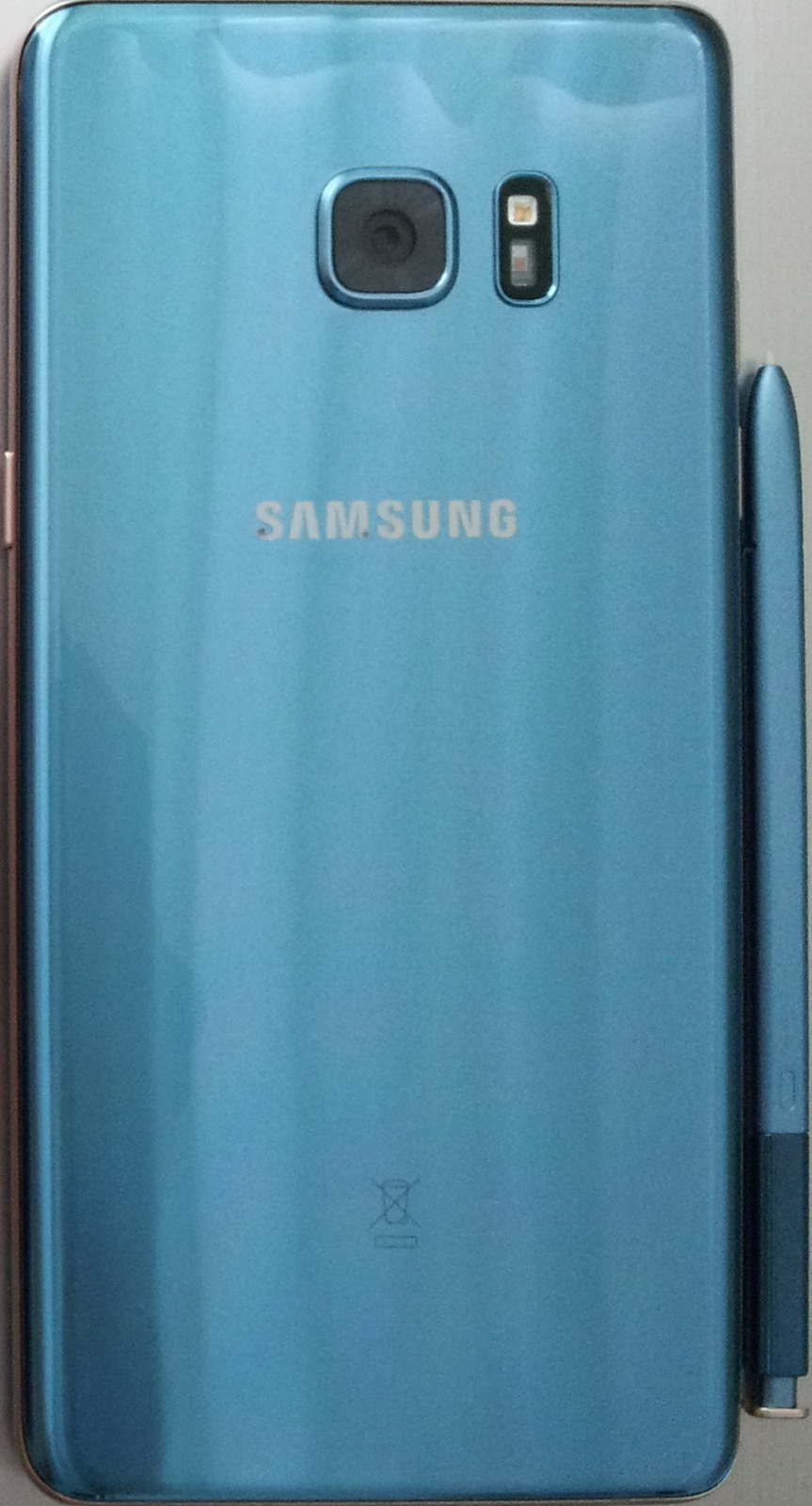
Galaxy Note 7
My post on failed products examples covers twelve famous cases from tech and why each one failed.



The timeline as text
- August 2, 2016Samsung unveils the Galaxy Note 7 in New York
- August 19, 2016On sale in US stores
- September 2, 2016Samsung stops sales after 35 reported battery cases
- September 15, 2016Formal US recall of about 1 million phones
- October 5, 2016A Note 7 starts smoking on a Southwest plane, which is evacuated
- October 10, 2016Samsung says it will ask partners to stop sales and exchanges
- October 11, 2016Samsung says it has decided to halt sales and production
- October 14, 2016US regulators order the phone banned from all US airline flights
- January 23, 2017Samsung blames two separate battery flaws
- August 23, 2017Samsung unveils the Galaxy Note 8
- Company
- Samsung
- Category
- Phones
- Launched
- August 2016
- Ended
- October 2016
- Stage reached
- Introduction
- AI product
- No
- Status
- Samsung said on October 11, 2016 that it had decided to halt sales and production; it unveiled the Galaxy Note 8 in August 2017
The Galaxy Note 7 failed because its batteries caught fire, and so did the replacement phones Samsung sent out to fix it. Samsung stopped making it less than eight weeks after it went on sale.
What it was
The Galaxy Note 7 was Samsung's large-screen phone for 2016, with an S Pen stylus, an iris scanner and a 3,500 mAh battery.
Samsung Electronics unveiled it in New York on August 2, 2016.
It went on sale in US stores on August 19. "Simply put, the Galaxy Note7 is the best phone we've ever built," said Tim Baxter, president of Samsung Electronics America, that day.
What happened
The Galaxy Note 7 was on sale for two weeks before Samsung first stopped selling it.
On August 31, 2016, The Guardian reported that Samsung had delayed shipments in South Korea, amid unconfirmed local reports of batteries exploding while charging. A Samsung spokesperson told Reuters the delay was "due to additional tests being conducted for product quality."
On September 2, Samsung said it had found "a battery cell issue" after 35 reported cases worldwide, and stopped sales. DJ Koh, president of Samsung's Mobile Communications Business, announced at a press conference in Seoul that Samsung would replace all 2.5 million phones shipped so far, Bloomberg reported.
On September 15, the US Consumer Product Safety Commission announced Samsung's formal recall of about 1 million phones. Samsung had received 92 US reports of batteries overheating, including 26 of burns and 55 of property damage, "including fires in cars and a garage."
AT&T and T-Mobile expected replacement phones by September 21, The Verge reported.
On October 5, a Note 7 began "popping and smoking" on a Southwest Airlines plane at Louisville before takeoff, and the plane was evacuated, USA Today reported. It was apparently one of the replacements Samsung had deemed safe, the paper said.
On October 10, Samsung said it would ask "all carrier and retail partners globally to stop sales and exchanges of the Galaxy Note7." The Verge called it a worldwide recall, issued after at least five replacement phones caught fire in a week.
A day later Samsung said, "we have decided to halt sales and production of the Galaxy Note 7," The Verge reported.
On October 14, US regulators banned the phone from US airline flights from noon the next day, even switched off.
By January 2017 Samsung had recalled 3.06 million Note 7 phones and estimated the problems would cost it at least $5.3 billion through early 2017, the Associated Press reported.
The Note line survived. Samsung unveiled the Galaxy Note 8 on August 23, 2017, with a 3,300 mAh battery.
Why it failed
The Galaxy Note 7 failed because both batteries Samsung used in it could short-circuit and catch fire, its investigation found. Bloomberg traced the crisis to Samsung's rush to launch ahead of Apple's next iPhone.
What Samsung said
In September 2016, Samsung blamed one supplier. It said in a statement, quoted by Bloomberg, that "this issue is isolated to the battery cell from one supplier only," and that all replacement phones would have batteries from other suppliers.
Samsung announced its findings on January 23, 2017. Koh presented them in Seoul alongside executives from UL, Exponent and TUV Rheinland, which had run their own investigations.
Samsung said 700 staff on the investigation tested 200,000 phones and 30,000 additional batteries, Recode reported.
According to Samsung, a design flaw in the upper right corner of the first battery made the electrodes prone to bend, which in some cases led to a short circuit. The second battery, from a different supplier, had a welding defect from manufacturing, it said. Some of those were also missing insulation tape, The Verge reported.
Samsung tied the second battery's problems to its supplier's push to increase production quickly once the first was pulled, Recode wrote. "We believe if not for that manufacturing issue on the ramp [of battery B], the Note 7 would still be on the market," Baxter told Recode.
Samsung told Recode its design, while demanding on battery suppliers, was not the reason the batteries failed. It said it was "taking responsibility for our failure to ultimately identify and verify the issues," the AP reported.
None of the Samsung statements I read names launch timing as a cause. Samsung declined to tell Bloomberg whether it moved the launch up because of the iPhone, and said timing was based on "the proper completion of the development process and the readiness of the product for the market."
What reporting showed
Bloomberg reported in September 2016 that Samsung's top managers, including Koh, "decided to accelerate the launch" after hearing Apple's next iPhone wouldn't have "any eye-popping innovations," citing people familiar with the matter.
They "pushed suppliers to meet tighter deadlines, despite loads of new features," another person told Bloomberg. According to Bloomberg, Samsung's leaders approved a launch date 10 days earlier than the year before, for a phone with a 3,500 mAh battery against 3,000 mAh in the previous model.
Bloomberg also reported that Samsung's phone division blamed battery maker Samsung SDI, whose managers argued the problem could be in the phone design or insulation. Samsung said there was no ongoing debate. The CPSC's chairman said the battery was slightly too big for its compartment, according to Bloomberg.
After the January findings, Forrester analyst Frank Gillett said Samsung needed to find ways to keep commercial pressures, such as getting a phone out quickly, from pushing engineers into bad decisions, the AP reported. The same story said the Note 7 "was timed, in part, to beat Apple's iPhone 7 by weeks."
What later analysis found
In a December 2016 post, Anna-Katrina Shedletsky of Instrumental, which sells manufacturing inspection tools, described the company's teardown of a Note 7. The battery and adhesive in its two-month-old unit were 5.2 mm thick, "resting in a 5.2 mm deep pocket."
"There should have been a 0.5 mm ceiling," she wrote, room for a battery to swell as it ages. Her verdict was that "Samsung took a deliberate step towards danger."
That teardown came before Samsung's findings, which said nothing was wrong with the phone itself. In an October 2017 follow-up, she still called the root cause "a design flaw that did not leave enough thickness for the battery."
The stage it reached
The Galaxy Note 7 died in the introduction stage. Samsung pulled it before it could reach growth, so I count it as a failure, not a decline.
It's an odd fit, since my product life cycle guide describes that stage as the launch period, when sales are small. Bloomberg put Note 7 shipments at 2.5 million by September 2.
The lesson
I think the second round of fires is the part to study. A supplier's bad battery can happen to anyone. Shipping a replacement that also catches fire is a process failure.
I'd treat a recall replacement as a new launch. Find the root cause first, then test units from the production line itself, after it has sped up.
Before I'd fix a launch date, I'd budget the battery testing and the supplier's ramp into it.
Causes at a glance
Company statementQuality and reliability
Samsung's investigation found two different battery flaws from two suppliers
Company statementRushed launch
Samsung tied the replacement battery's defect to its supplier's fast production ramp
Source13
Reporting at the timeRushed launch
Bloomberg reported Samsung sped up the launch and pushed suppliers on deadlines
Later analysisQuality and reliability
An engineering teardown found no room left for the battery to swell
Sources
- 1.Samsung Newsroom U.S., Samsung Unveils the New Galaxy Note7: The Smartphone That Thinks Big
August 2016 · Company statement
- 2.Samsung Newsroom U.S., With the Launch of Galaxy Note7, Samsung Empowers Users To Do More
August 2016 · Company statement
- 3.The Guardian, Samsung delays shipments of Galaxy Note 7 for quality control testing
August 2016 · Reporting at the time
- 4.Samsung Newsroom U.S., [Official Statement] Galaxy Note7
September 2016 · Company statement
- 5.U.S. Consumer Product Safety Commission, Samsung Recalls Galaxy Note7 Smartphones Due to Serious Fire and Burn Hazards
September 2016 · Company statement
- 6.The Verge, Samsung formally recalls the Note 7 in the US
September 2016 · Reporting at the time
- 7.Bloomberg, Rush to Take Advantage of a Dull iPhone Started Samsung's Battery Crisis
September 2016 · Reporting at the time
- 8.USA Today, Smoking, popping Samsung Galaxy Note 7 prompts Southwest evacuation
October 2016 · Reporting at the time
- 9.Samsung Newsroom U.S., Samsung Will Ask All Partners to Stop Sales and Exchanges of Galaxy Note7 while Further Investigation Takes Place
October 2016 · Company statement
- 10.The Verge, The Galaxy Note 7 is dead
October 2016 · Reporting at the time
- 11.The Verge, The Galaxy Note 7 will be banned from all US airline flights
October 2016 · Reporting at the time
- 12.Instrumental, Samsung Galaxy Note 7 Teardown: How Aggressive Design Caused Battery Explosions
December 2016 · Later analysis
- 13.Recode, Samsung says two separate battery issues were to blame for all of its Galaxy Note 7 problems
January 2017 · Reporting at the time
- 14.Associated Press (Las Vegas Sun), Samsung: Note 7 battery design, manufacturing caused fires
January 2017 · Reporting at the time
- 15.Samsung Global Newsroom, Samsung Electronics Announces Cause of Galaxy Note7 Incidents in Press Conference
January 2017 · Company statement
- 16.Associated Press (The Jakarta Post), Samsung details causes of Note 7 fires but questions remain
January 2017 · Reporting at the time
- 17.The Verge, Samsung's Galaxy Note 8 comes with a 6.3-inch screen and dual camera
August 2017 · Reporting at the time
- 18.Instrumental, Beyond the Teardown: How we think about failure analysis, Samsung Galaxy Note 7 edition
October 2017 · Later analysis
- 19.The Verge, Samsung says bad batteries and rushed manufacturing doomed the Galaxy Note 7
January 2017 · Reporting at the time
More from the graveyard
No end date
Samsung Galaxy Fold (2019)
Samsung Phones
Launch delayed in April 2019, on sale from September; Samsung launched the Galaxy Z Fold8 in August 2026
No end date
Apple Maps (2012 launch)
Apple Apps and online services
Still live as of October 2026; Apple rebuilt the map and finished the US rollout in January 2020
Aug 2015
Amazon Fire Phone
Amazon Phones
Amazon ceased sales in August 2015, when the phone sold out