Consumer hardware NOV 15, 2026 7 MIN READ
Apple Newton
My post on failed products examples covers twelve famous cases from tech and why each one failed.

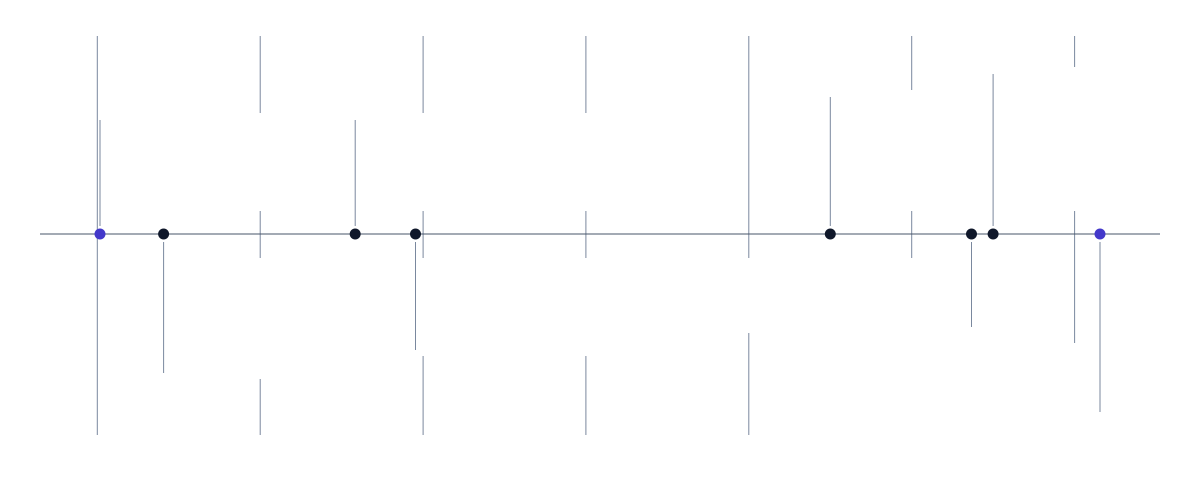
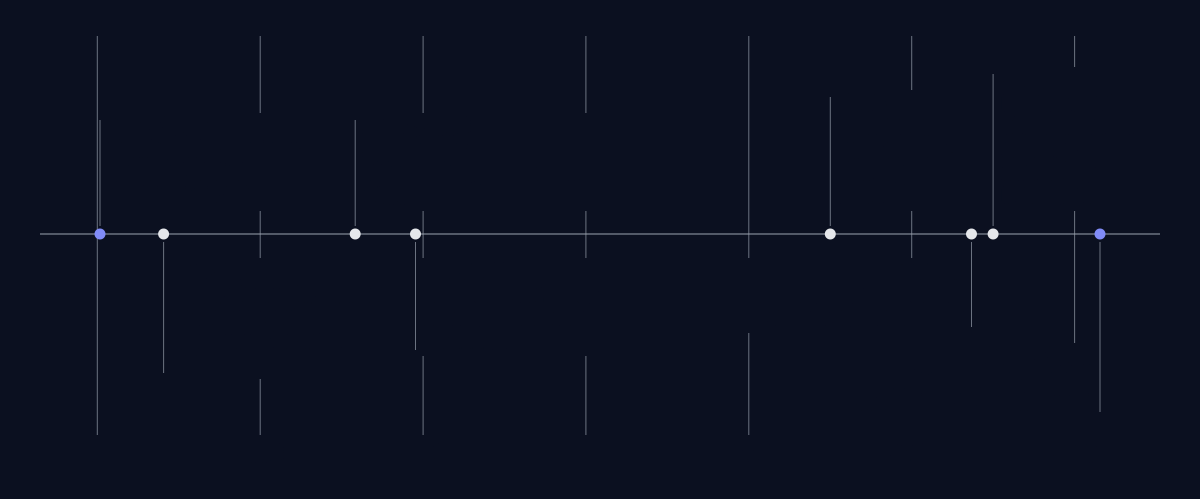
The timeline as text
- January 7, 1992Sculley coins the term personal digital assistant at CES
- May 29, 1992Apple shows the Newton in Chicago and promises it for early 1993
- August 2, 1993Apple ships the MessagePad, priced from $699
- December 1993The New York Times reports little more than 50,000 sold
- 1996Palm's Pilot goes on sale, starting at $299
- 1997Newton has 6% of handheld OS share by mid-1997, per Dataquest
- May 1997Apple spins the Newton off into a separate unit
- February 27, 1998Apple announces the end of Newton OS development
- Company
- Apple
- Category
- Consumer hardware
- Launched
- August 1993
- Ended
- February 1998
- Stage reached
- Introduction
- AI product
- No
- Status
- Apple announced the end of Newton development on February 27, 1998
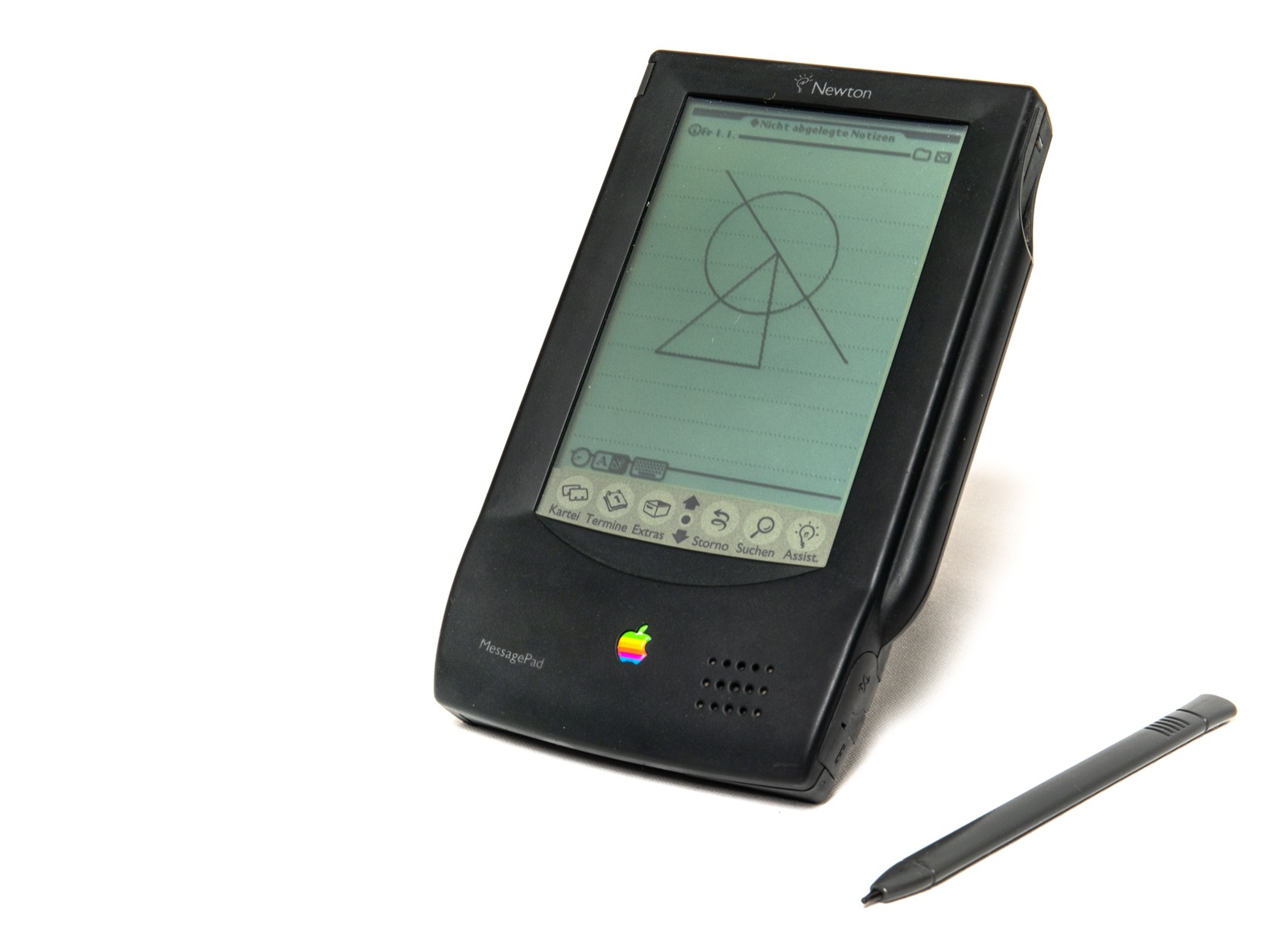
The Apple Newton failed because the first MessagePad, sold on its ability to read handwriting, became a running joke for misreading it, and Palm's smaller, cheaper Pilot took the market Apple had named. Apple announced the end of Newton development in February 1998.
What it was
The Newton was Apple's pen-based handheld computer, sold as the MessagePad. You entered notes, appointments and contacts mainly by writing on the screen with a stylus.
John Sculley, Apple's CEO, coined the term personal digital assistant at the Consumer Electronics Show in Las Vegas on January 7, 1992, and promised PDAs "selling for under $1000" in 1993, Time's Harry McCracken wrote. The Newton was "little more than a rough prototype" then, The New York Times later reported.
On May 29, 1992, Apple showed a Newton at the Summer Consumer Electronics Show in Chicago. Its press release promised devices that would read a user's handwriting and "transform it into text as they write." It said the first one would be available "in early 1993."
What happened
Apple said on July 30, 1993, that the MessagePad would ship on August 2, priced "from $699 to $949, depending on configuration." It went on sale at Macworld Expo in Boston, fourteen months after the Chicago demo, according to Time. Knight-Ridder reported that it was widely viewed as "critical for the troubled company's future."
By December, The New York Times reported, Apple had sold "little more than 50,000" Newtons in four months, and Apple insiders said sales had "slowed to a trickle" after an early burst.
Sculley had left Apple by then, and the Times wrote that the Newton project "contributed to Mr. Sculley's fall."
Apple kept releasing models, up to the MessagePad 2100 and the eMate 300, a keyboard version for students. In May 1997 it spun the Newton off into a separate unit and looked for an investor, Wired reported later.
After Steve Jobs returned, Apple folded the unit back in. On February 27, 1998, it announced that it would discontinue development of the Newton operating system and the products built on it, including the MessagePad 2100 and the eMate 300.
TidBITS noted that Apple had "reabsorbed the short-lived Newton, Inc. spin-off" less than six months earlier.
Why it failed
Apple said ending the Newton fit its plan to put all its software work into the Mac. Reporters blamed the first MessagePad and the rise of Palm.
What Apple said
Apple's announcement quoted Jobs, then its interim CEO, saying the decision was "consistent with our strategy to focus all of our software development resources on extending the Macintosh operating system."
A Newton FAQ linked from the release said Apple had concluded "that the market opportunity targeted by Newton was not aligned with our new business strategy."
On a conference call, chief financial officer Fred Anderson told reporters that the opportunity in "a vertical market like the MessagePad is very small compared to the opportunity for the Mac OS," Wired reported.
Neither the release nor the FAQ mentions handwriting recognition, sales figures or Palm. Pen Computing's David MacNeill called the missing answer to "Why?" the release's "most galling omission."
What reporting showed
In December 1993, John Markoff wrote in The New York Times that the Newton had been "ridiculed for its mistakes in translating handwriting and called unworthy of its price, $699 and up."
He named Sculley as perhaps the main problem, an executive who "promised the computer buyer too much too soon." The Newton's completion, first scheduled for April 1992, slipped to August 1993, he wrote, and it shipped without many planned features, such as wireless communications and some artificial intelligence.
When Apple ended the line, Wired quoted Jupiter Communications analyst Ross Rubin: "Its handwriting recognition was the butt of jokes, and they only sold 80,000 in the first year."
Wired wrote that the MessagePad had been "overwhelmed" by 3Com's PalmPilot and by devices running Microsoft's Windows CE. Citing Dataquest, it put the Newton at 6 percent of the handheld operating system market in the first half of 1997, against 66 percent for the PalmPilot and 20 percent for Windows CE.
What later analysis found
Harry McCracken used a first-generation MessagePad for six weeks for Time in 2012. He agreed with its early admirers, Walt Mossberg among them, that its handwriting recognition was the finest anyone had seen up to then. It "needed to be good enough to be useful," he wrote, "and in its original form, it wasn't."
People remember a week of Doonesbury strips in August 1993 in which a Newton-like PDA's handwriting recognition didn't work, he noted. Later Newtons got much better at it. "That didn't help enough," he wrote.
He also pointed to its size, roughly that of a VHS tape, as Mossberg had noted in his 1993 review. Palm's Pilot went on sale in 1996 and used Graffiti, which had users enter simplified characters one at a time. "Starting at just $299," McCracken wrote, it "became the phenomenon that the Newton was supposed to be but never was."
The Register's Tony Smith wrote in 2013 that the real flaw in early units was "not the recognition code but a memory-handling bug" that made the recognizer lose data unless the MessagePad was rebooted often. He concluded that "it was too early." Built-in cellular, he wrote, would have raised the price beyond what most businesses could justify.
In Pen Computing's June 1998 issue, David MacNeill counted the lack of a shirt-pocket Newton selling for under $400 among Apple's "most heartbreaking mistakes." Steve Capps, an original leader of the Newton group, told him some of his team had wanted a Pilot-size Newton, but the technology wasn't there in 1991. "We should have believed in our own thinking," he said. "Palm didn't make the same mistakes and they deserve their success."
The stage it reached
The Newton never left the introduction stage, which the product life cycle guide describes as the launch period, when awareness is low and sales are small.
It stayed on sale for four and a half years and sold 150,000 to 300,000 units, by Cult of Mac's estimate. The market was "fast-growing," Wired wrote, and the PalmPilot led it.
I count it as a failure, not a decline, because it never had a growth period to decline from. The Humane AI Pin ended in the same stage in 2025, and The Verge's David Pierce ranked it among gadget failures "up there with Quibi, the Fire Phone, and the Apple Newton."
The lesson
I think the Newton's mistake was made in January 1992, when Apple announced a new category on a rough prototype and promised it for the next year.
Everything after that was a race to match the promise. By the Times' account, the team cut features to ship. McCracken found that the feature people judged it on, reading handwriting, wasn't good enough in its original form.
Palm aimed lower, with a pocket-sized device at $299 that asked people to learn a simpler way of writing. I'd copy that.
If your product rests on one hard feature, test it with ordinary users before you announce anything, and cut the promise down to what works.
When Apple launched the first iPhone nine years after ending the Newton, McCracken wrote, the technology finally let it build the kind of device it had wanted in the 1990s.
Causes at a glance
Company statementChange of company strategy
Apple said Newton's market didn't fit its plan to focus on the Mac OS
Reporting at the timeQuality and reliability
Its handwriting recognition was ridiculed and became the butt of jokes
Reporting at the timeRushed launch
Its completion slipped from April 1992 to August 1993, and planned features were cut
Reporting at the timeCompetition
Overwhelmed by the PalmPilot and Windows CE, it had 6% of handheld OS share by mid-1997
Source7
Later analysisPricing
It was VHS-tape sized at $699; Palm's pocketable Pilot started at $299
Later analysisTiming
It came too early; built-in cellular would have priced it out of reach
Source11
Sources
- 1.Apple (AppleLink release, BBS in a Box archive), Apple Unveils Newton Technology
May 1992 · Company statement
- 2.Apple (Pen-Based Computing History Museum copy), Newton MessagePad press release of July 30, 1993
July 1993 · Company statement
- 3.Roanoke Times (Knight-Ridder Newspapers), Apple Computer Unveils the Newton
August 1993 · Reporting at the time
- 4.The New York Times (John Markoff, reprint), Marketer's Dream, Engineer's Nightmare
December 1993 · Reporting at the time
- 5.Apple, Apple Discontinues Development of Newton OS
February 1998 · Company statement
- 6.Apple, Newton Technology FAQ
February 1998 · Company statement
- 7.Wired, Apple Dumps Newton
February 1998 · Reporting at the time
- 8.TidBITS, Newton Falls from Apple's Tree
February 1998 · Reporting at the time
- 9.Pen Computing Magazine, Why Did Apple Kill Newton?
June 1998 · Later analysis
- 10.Time, Newton, Reconsidered
June 2012 · Later analysis
- 11.The Register, Stylus counsel: The rise and fall of the Apple Newton MessagePad
September 2013 · Later analysis
- 12.Cult of Mac, Today in Apple history: Apple bids farewell to the Newton
February 2026 · Later analysis
- 13.The Verge, The Humane AI Pin never had a chance
February 2025 · Later analysis
More from the graveyard
Feb 2025
Humane AI Pin
Humane Wearables AI
Sales ended February 18, 2025; Humane said the Pins would go offline February 28, 2025
No end date
Apple Maps (2012 launch)
Apple Apps and online services
Still live as of October 2026; Apple rebuilt the map and finished the US rollout in January 2020
Mar 2023
Google Glass
Google Wearables
Google stopped selling Glass Enterprise Edition on March 15, 2023