Consumer hardware AI NOV 25, 2026 7 MIN READ
Moxie
My post on failed products examples covers twelve famous cases from tech and why each one failed.
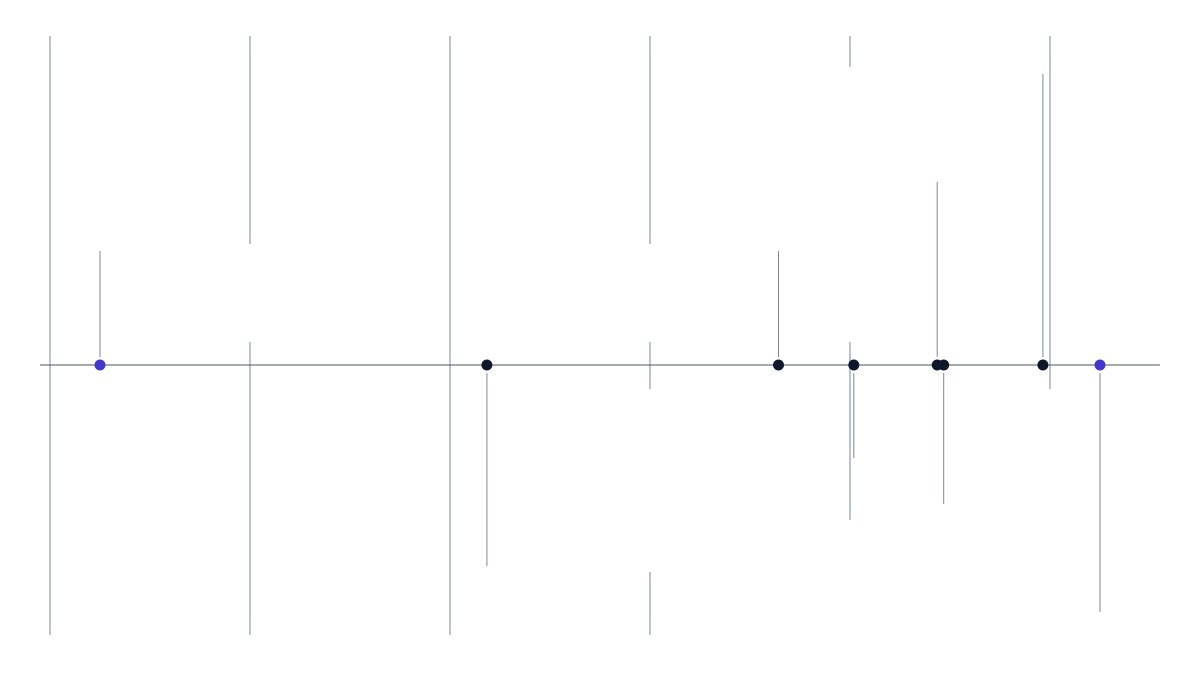
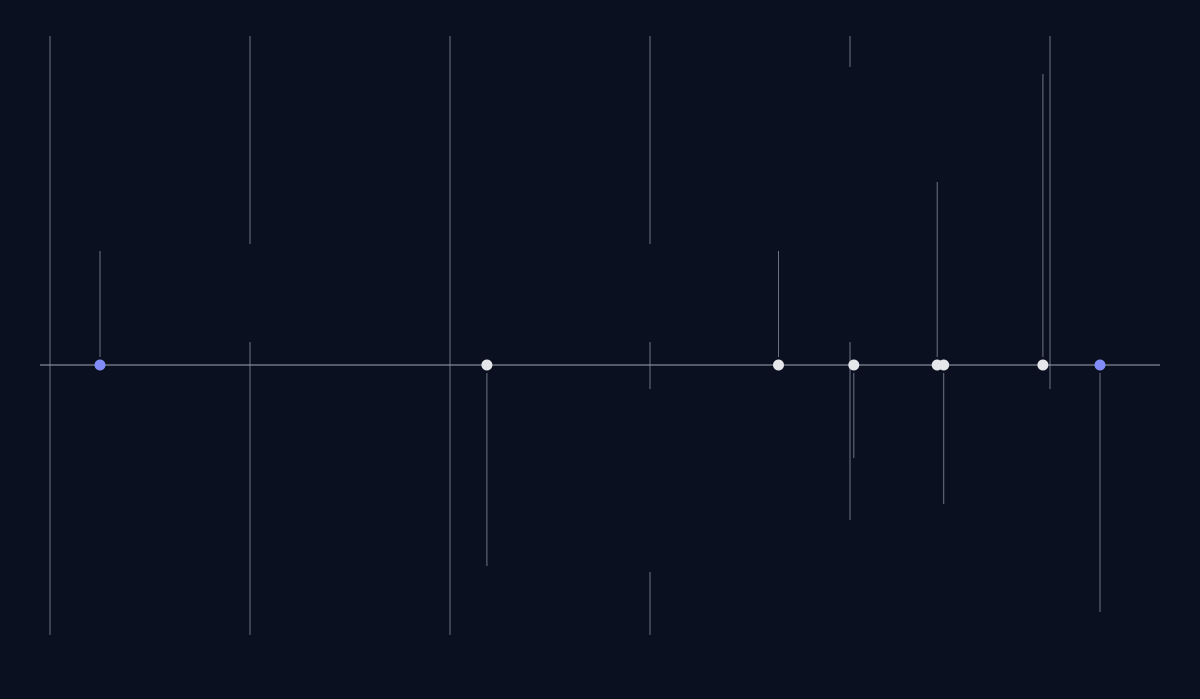
The timeline as text
- 2016Maja Matarić and Paolo Pirjanian founded Embodied in Los Angeles
- May 2020Reservations open for the $1,499 robot, due to ship in the fall
- April 2023Listed at $1,499 with a lifetime family membership included
- January 2024Listed at $799 with no subscription required
- November 2024Embodied posted a Closing FAQ saying its lead investor pulled out
- December 9, 2024Aftermath and The Verge reported the closure
- December 6, 2025Moxie Robots, Inc. said it had acquired Moxie and began reactivations
- 2026Moxie Robots said it was sunsetting Moxie after a beta
- Company
- Embodied
- Category
- Consumer hardware
- Launched
- 2020
- Ended
- 2024
- Stage reached
- Introduction
- AI product
- Yes
- Status
- Embodied said in November 2024 that it was closing; a new owner began reactivating robots in December 2025 and said in 2026 it was sunsetting Moxie
Moxie failed because Embodied couldn't raise the money to keep going after its lead investor pulled out of a critical funding round at the last minute, the company said. The robot relied on Embodied's cloud for its core features, so the closure left it unable to work.
What it was
Moxie was a social robot for children that, in Embodied's words, used "play-based conversational learning to teach emotional and social skills to kids ages 5-10."
It weighed 7 pounds, Fast Company reported, and stood roughly a foot tall, with its face shown on a screen. Each week it worked through a theme such as kindness, friendship, empathy or respect, TechCrunch reported.
USC robotics professor Maja Matarić and Paolo Pirjanian, a former iRobot CTO, founded Embodied in Los Angeles in early 2016, TechCrunch wrote. By May 2020 it had raised $41 million from investors including Amazon, Intel, Sony and Toyota, according to Fast Company.
What happened
By May 4, 2020, reservations were open for Moxie, priced at $1,499, TechCrunch reported, with shipping planned for the fall.
Embodied's pricing post called $1,499 a limited-time launch price with 12 months of subscription included, then $59.99 a month, if paid annually. The subscription paid for "unlimited cloud computing resources (used to process Moxie's speech recognition)," it said.
In April 2023, Embodied's store page listed Moxie at $1,499 with a "Lifetime family membership" and "GPT-powered AI" included.
By January 2024, the store page listed it at $799 with "No Subscription Required." That month Embodied unveiled new AI features at CES, Fast Company reported, and Moxie was also getting better memory and "enhanced large language model-powered conversational skills," with tutoring due later in the year.
By November 26, 2024, when the Internet Archive first saved it, Embodied had posted a Closing FAQ. Aftermath reported it was also emailed to owners.
The FAQ said services would likely cease "within days" and that Embodied was unable to offer refunds, though it would try to put purchases from the last 30 days first if the company or its assets were sold. Warranties, repairs and the parent app would end. It included a letter to help parents explain the news to their children.
Aftermath and The Verge reported the closure on December 9, 2024, and Ars Technica the next day.
On December 6, 2025, a new company, Moxie Robots, Inc., said it had acquired the rights to Moxie and began reactivating robots. After Embodied shut down, it wrote, children "kept talking to their silent robots."
In November 2026, the company's support page listed $29.99 a month for the AI service Moxie needs. It also said the company was sunsetting Moxie after a six-month beta with "a few hundred kids," and had decided "not to roll out to the public." When the robots' connection to its servers ends, the page says, they can connect to OpenMoxie "for serverless operations."
Why it failed
Embodied blamed a funding round that collapsed. Reporting pointed to the price and to the cost of a robot that talked through the cloud, and the company that later bought Moxie said it saw no future in AI companionship for children.
What Embodied said
"Embodied is closing due to financial challenges," the Closing FAQ said. "A critical funding round fell through, leaving us unable to sustain operations."
It said a lead investor "prepared to close the round" withdrew "at the last minute," and that Embodied couldn't find a replacement in time. Ars Technica noted that the company didn't name the investor or give more detail.
The FAQ said Moxie "relies on cloud connectivity for its core features" and that its cloud services "cannot be replicated locally." It doesn't mention the price, sales or running costs.
In January 2024, Pirjanian had told Fast Company that children "believe it to be a living being," so they expect it to do "anything a human can do." He said Embodied would not be able to close that gap "in the foreseeable future," though it was "relentlessly working" on it.
What reporting showed
In May 2020, TechCrunch's Brian Heater called Moxie "price-prohibitive at $1,499" and noted that Anki and Jibo, two funded social robot projects, had been "unable to sustain."
Fast Company's Mark Wilson asked how many people could afford "the $1,500 price and the $60 a month subscription fee," and wrote that Moxie, "like other social robots, will face an uphill battle in the market."
When Embodied closed, Chris Person wrote in Aftermath that "any cloud based device is subject to the health of the company and LLMs are not cheap to run." He also argued that relying on large language models to socialize children "seems like a bad idea on every single level."
The Verge noted the robots would shut down "despite otherwise functioning hardware." Ars added that the FTC had said in November 2024 that smart device makers that don't commit to software support may be breaking the law.
What later analysis found
The fullest later account I found comes from the company that bought Moxie.
In its sunset notice, Moxie Robots, Inc. said its beta hit "the limitations of Moxie's current hardware." It also said, "We don't see a future in AI companionship for children."
The company had wanted to make Moxie "a champion" in each child's interests, the notice said, but couldn't see a way to do that with this robot.
The stage it reached
Moxie died in the introduction stage, the first stage, when sales are small and costs run well ahead of revenue.
It still showed the stage's signs years after launch. In April 2023, Embodied sold it with a "30 Day In-Home Trial" and a "Join a Demo" link. Its price had moved from $1,499 at launch to $1,699 by January 2021, according to a later copy of the same pricing post, then back to $1,499 by April 2023. Between April 2023 and January 2024 it fell to $799.
At the end, Embodied's Our Story page said thousands of kids chatted and learned with Moxie every day. I found no sales figures from Embodied or in the reporting.
It never reached growth, so I count it as a failure, not a decline. Like the Humane AI Pin and Amazon Astro for Business, it was an AI device that couldn't work without its maker's service.
The lesson
I think Moxie's prices moved the wrong way for a product whose core ran in the cloud.
In 2020, Embodied said its subscription would cost $59.99 a month after the first year and would cover cloud computing for speech recognition, among other things. By April 2023, a lifetime family membership came included, and by January 2024 the store page said "No Subscription Required," though Pirjanian told Fast Company the planned tutoring features were "likely to require a subscription." The Closing FAQ said the core features still depended on the cloud.
I don't see how a one-time price pays for a service a child uses every day for years, unless the company keeps raising money. Moxie's second owner listed $29.99 a month for its AI service.
If your product runs on model costs that grow with use, price it so each customer keeps paying for their share. Then decide what the device does if your servers go away, and write that down before the first sale.
Causes at a glance
Company statementBusiness model and costs
Embodied said its lead investor pulled out of a critical funding round at the last minute
Reporting at the timePricing
Launch coverage called the robot expensive at $1,499, plus $60 a month after year one
Reporting at the timeBusiness model and costs
Aftermath said a cloud device rests on its maker's health, and LLMs aren't cheap to run
Source11
Later analysisUnclear value
Moxie's later owner said it saw no future in AI companionship for children
Source15
Sources
- 1.TechCrunch, Moxie is a technically impressive childhood robot from iRobot's former CTO
May 2020 · Reporting at the time
- 2.Fast Company, Moxie is a Pixar-inspired robot backed by Toyota, Sony, Amazon, and Intel
May 2020 · Reporting at the time
- 3.The Verge, Moxie is a $1,500 robot for kids
May 2020 · Reporting at the time
- 4.Embodied, Bringing Moxie to Market at the Lowest Price Possible (archived September 2020)
September 2020 · Company statement
- 5.Embodied, Bringing Moxie to Market at the Lowest Price Possible (archived January 2021)
January 2021 · Company statement
- 6.Embodied, Moxie Robot store page (archived April 2023)
April 2023 · Company statement
- 7.Fast Company, Kids robot Moxie gets AI upgrade and tutoring features
January 2024 · Reporting at the time
- 8.Embodied, Moxie Robot store page (archived January 2024)
January 2024 · Company statement
- 9.Embodied, Closing FAQs
November 2024 · Company statement
- 10.Embodied, Our Story
December 2024 · Company statement
- 11.Aftermath, AI Company That Made Robots For Kids Goes Under, Robots Die
December 2024 · Reporting at the time
- 12.The Verge, AI robot companions for kids go dark as company shutters
December 2024 · Reporting at the time
- 13.Ars Technica, Startup will brick $800 emotional support robot for kids without refunds
December 2024 · Reporting at the time
- 14.Moxie Robots, Inc., Moxie Robot is Acquired
December 2025 · Company statement
- 15.Moxie Robots, Inc., Help and Support
2026 · Company statement
More from the graveyard
Feb 2025
Humane AI Pin
Humane Wearables AI
Sales ended February 18, 2025; Humane said the Pins would go offline February 28, 2025
Jul 2024
Amazon Astro for Business
Amazon Enterprise and B2B AI
Discontinued on July 3, 2024; TechCrunch reported the robots would stop working on September 25, 2024
Sep 2017
Juicero
Juicero Consumer hardware
Juicero suspended sales of the Press and its Produce Packs on September 1, 2017